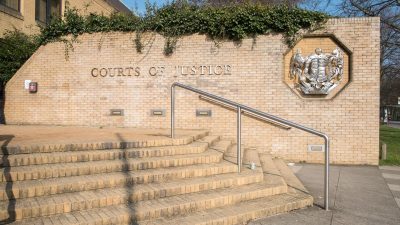

The commencement of merits hearings before the International Court of Justice in The Gambia v Myanmar marks one of the most legally consequential moments in the modern history of international law. For the first time in decades, the world’s principal judicial organ is being asked not merely to pronounce on provisional urgency, but to determine whether a state has breached the most fundamental obligation known to international law: the duty to prevent and punish genocide.

This case is not only about the Rohingya. It is about the credibility of the Genocide Convention, the enforceability of erga omnes obligations, and the capacity of international adjudication to restrain sovereign violence in real time.

The Jurisdictional Foundation: Why The Gambia Can Sue Myanmar

At the heart of the case lies a question that once divided scholars but is now largely settled: standing.

Myanmar has repeatedly argued that The Gambia lacks a direct legal interest, given the absence of territorial, national or diplomatic connection to the Rohingya. That argument failed at the provisional measures stage and will not succeed on the merits.

Article IX of the Convention on the Prevention and Punishment of the Crime of Genocide confers jurisdiction on the ICJ for disputes relating to the interpretation, application or fulfilment of the Convention. Crucially, obligations under the Convention are obligations erga omnes partes, owed to all other state parties.

This position was authoritatively confirmed by the ICJ in Bosnia and Herzegovina v Serbia and Montenegro and reinforced in Belgium v Senegal. The duty to prevent genocide is not bilateral. It is collective. The Gambia’s standing is therefore not derivative or political. It is doctrinally orthodox.

In January 2020, the ICJ ordered Myanmar to adopt provisional measures under Article 41 of the ICJ Statute. This is not a symbolic step. The Court only orders such measures where it finds plausibility of rights and a real and imminent risk of irreparable prejudice.

The Court explicitly recognised that the Rohingya constitute a protected group under Article II of the Genocide Convention and that there was a serious risk of irreparable harm to rights protected under the Convention.

From a legal standpoint, this finding already represents a seismic moment. The Court did not merely acknowledge humanitarian suffering. It recognised the plausibility of genocidal acts and intent.

Myanmar’s subsequent failure to demonstrably comply with those measures will be central to the merits analysis. Under international law, breach of provisional measures constitutes an independent violation, engaging state responsibility under the Articles on Responsibility of States for Internationally Wrongful Acts.

The Core Legal Question: Genocidal Intent

The merits phase will hinge on one element: intent.

Article II of the Genocide Convention requires proof that prohibited acts were committed with intent to destroy, in whole or in part, a national, ethnic, racial or religious group as such.

Myanmar has consistently argued that its actions constitute counterinsurgency operations rather than genocidal conduct. This defence, however, is legally fragile.

The ICJ has repeatedly held that genocidal intent may be inferred from a pattern of conduct where such conduct cannot reasonably be explained otherwise. Systematic killings, mass sexual violence, destruction of villages, denial of food and medical care, and policies of forced displacement are all relevant indicators.

The evidentiary record before the Court is substantial. It includes reports from the United Nations Independent International Fact Finding Mission on Myanmar, findings by the Office of the High Commissioner for Human Rights, satellite imagery, survivor testimony and internal state communications.

Importantly, the Court is not required to identify individual perpetrators. It is assessing state responsibility, not criminal guilt. The threshold is therefore whether organs of the state engaged in conduct attributable to Myanmar with the requisite intent.

Under the Articles on State Responsibility, conduct of the armed forces and security services is attributable to the state irrespective of internal political changes.

Myanmar’s military coup does not interrupt continuity of state responsibility. Nor does it shield the state from accountability for acts committed by its de facto authorities.

This is critical. The ICJ will assess conduct both before and after the coup insofar as it relates to the same protected group and the same pattern of destruction. Continued persecution strengthens, rather than weakens, the inference of intent.

The remedies sought by The Gambia extend beyond declaratory relief. They include reparations and assurances of non repetition.

While monetary compensation in genocide cases is rare, the Court has authority to order forms of satisfaction, rehabilitation and guarantees of non recurrence. These may include legal reforms, restoration of citizenship rights, dismantling of discriminatory frameworks and international monitoring mechanisms.

Any judgment finding Myanmar in breach would have binding legal effect under Article 94 of the United Nations Charter. While enforcement depends on political will, the legal consequences would be profound.

The Rohingya case is being watched closely in The Hague and beyond because it is shaping the jurisprudential contours of parallel proceedings.

The case brought by South Africa against Israel similarly invokes Article IX of the Genocide Convention and relies on erga omnes obligations. The ICJ’s reasoning in The Gambia v Myanmar will influence standards of intent, evidentiary thresholds and the scope of provisional measures in future cases.

What is emerging is a revitalisation of the Genocide Convention as a living legal instrument rather than a historical artefact.

Limits of International Justice: A Necessary Critique

Yet no serious legal analysis can ignore the structural weaknesses exposed by this case.

The ICJ lacks enforcement power. Provisional measures have not halted atrocities. Refugee flows continue. Accountability at the individual level remains stalled, particularly as Myanmar is not a party to the Rome Statute of the International Criminal Court.

This exposes a chronic gap between legal obligation and political reality. The law is clear. Compliance is not.

Nevertheless, the existence of a binding judicial process matters. It shapes diplomatic pressure, supports sanctions regimes, strengthens universal jurisdiction cases in domestic courts and preserves an authoritative historical record.

A Test of Legal Integrity!

The ICJ hearings on the Rohingya genocide represent far more than a bilateral dispute. They test whether the prohibition of genocide remains the supreme norm of international law or whether it has become a rhetorical commitment without consequence.

For the Rohingya, justice has been delayed for decades. For international law, this case will determine whether delay becomes denial.

If the Court applies the Genocide Convention rigorously, without political accommodation or evidentiary timidity, it will reaffirm that no state stands above the law when it comes to the gravest crime known to humanity.

If it fails, the damage will not be confined to Myanmar. It will reverberate across every future claim of collective protection under international law.

The world is watching. So is history.