

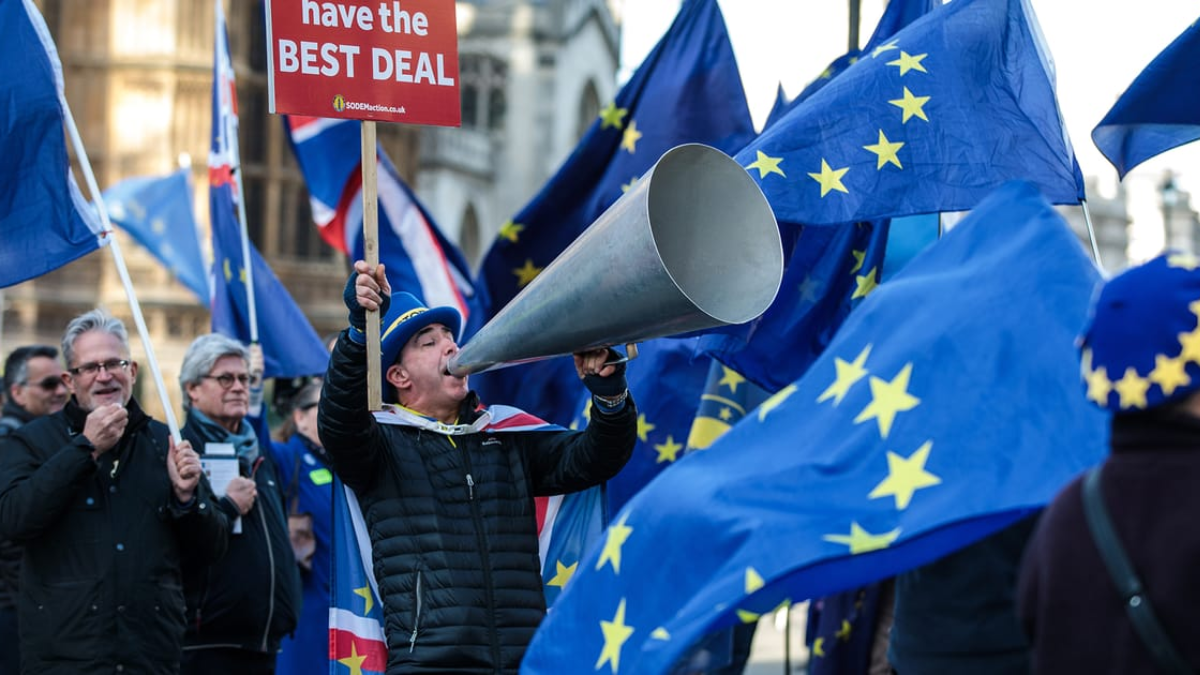
The public mood suggests Britain is more divided now than at the time of the Brexit referendum, and that perception is not just political theatre. The original EU split has hardened into a wider argument about identity, trust, immigration, constitutional stability, and whether the country still has a shared national direction.
Why the divide feels wider
Brexit did not simply end with the vote; it left behind durable camps that still shape how many people see politics and one another. What began as a referendum on EU membership has evolved into a broader cultural fault line, with Leaver and Remainer identities surviving long after the formal process ended. That matters because divisions become more dangerous when they stop being about policy and start becoming about identity. Once that happens, every new issue, from immigration to the cost of living, is interpreted through the same hostile lens.
What changed after 2016
The post-referendum years did not heal the rupture. Instead, the Brexit divide merged with other pressures, including economic stagnation, disputes over public spending, constitutional tensions in Scotland and Northern Ireland, and persistent arguments about border control and sovereignty. As a result, people no longer experience division as a single constitutional question. They experience it as a cumulative national strain, where disagreement over one issue reinforces mistrust over every other issue.
Why is the mood so bleak?
A major reason this feels worse now is that Brexit was supposed to settle a question, but in practice, it intensified the sense that Britain lacks a common project. Many people now see national politics as reactive, fragmented, and incapable of producing a unifying settlement that commands broad consent. That creates a stronger social effect than ordinary disagreement. When citizens conclude that institutions are not resolving conflict but reproducing it, division stops feeling temporary and starts feeling structural.
The political consequence
This kind of division is politically costly because it weakens trust in parties, Parliament, the media, and even the idea of compromise itself. It also makes public debate more tribal, because people increasingly assume opponents are not merely wrong but illegitimate. The result is a country that can still function, but one that often feels more brittle than it did in 2016. So while Brexit was the event that exposed the fracture, the years since have made that fracture feel broader, deeper, and harder to repair.