

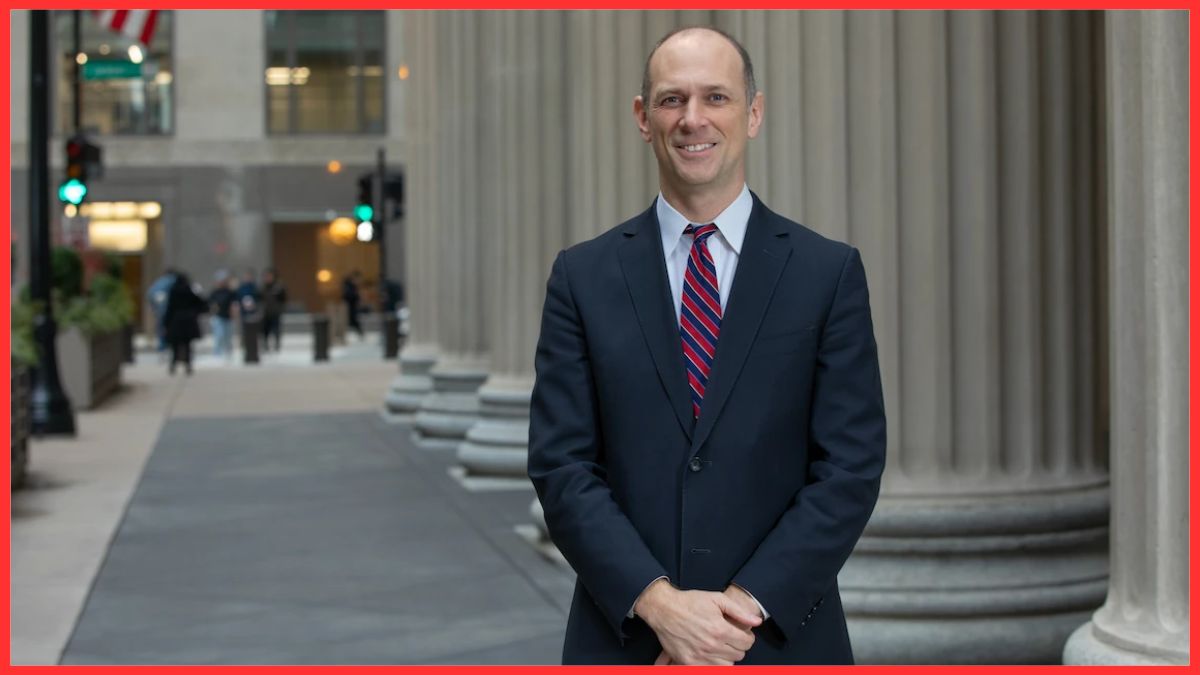
Austan Goolsbee, President of the Federal Reserve Bank of Chicago, has issued a measured yet cautionary assessment of the United States economy, underscoring growing unease over emerging stagflationary pressures and institutional challenges. Speaking in a recent public engagement, Goolsbee indicated that while the labor market remained stable, it did not demonstrate robust strength, reflecting a broader economic landscape marked by fragility. He emphasized that his immediate concern centered on a potential stagflationary shock driven by rising oil prices, particularly at a time when tariff-induced price pressures had not yet dissipated. He explained that such a convergence of factors could complicate the inflation outlook, noting that inflation could resurge sharply under these conditions. Goolsbee further acknowledged that policymakers were navigating an “uncomfortable” environment without a clear procedural framework, suggesting that conventional policy responses may not suffice. In addition, he highlighted the importance of safeguarding the independence of the Federal Reserve, cautioning that any active discourse around undermining that autonomy would be detrimental. He clarified that the statutory mandate of the Federal Reserve, as defined by the Federal Reserve Act, did not include ensuring stock market performance or political satisfaction, reinforcing the institution’s focus on macroeconomic stability. His remarks, derived from official statements and public commentary, reflect a broader institutional concern regarding inflation persistence, energy-driven price shocks, and the complexities of monetary policy calibration in the current economic cycle.
Austan Goolsbee’s Economic Analysis: Oil Price Shock, Inflation Risks, and Federal Reserve Independence Debate
Goolsbee’s perspective carries significant weight given his extensive policy background, including his tenure as chair of the Council of Economic Advisers under former President Barack Obama and his academic role at the University of Chicago. His experience during the global financial crisis, where he worked closely with Paul Volcker, informs his current analytical approach to economic shocks. The emphasis on oil-driven stagflation highlights a critical concern for transatlantic markets, particularly as energy volatility continues to influence inflation trajectories across both the Middle East and the European Union. By situating current risks within a broader institutional and historical framework, Goolsbee’s remarks underscore the delicate balance central banks must maintain between inflation control and economic stability, especially in an environment where external shocks and policy constraints intersect.