

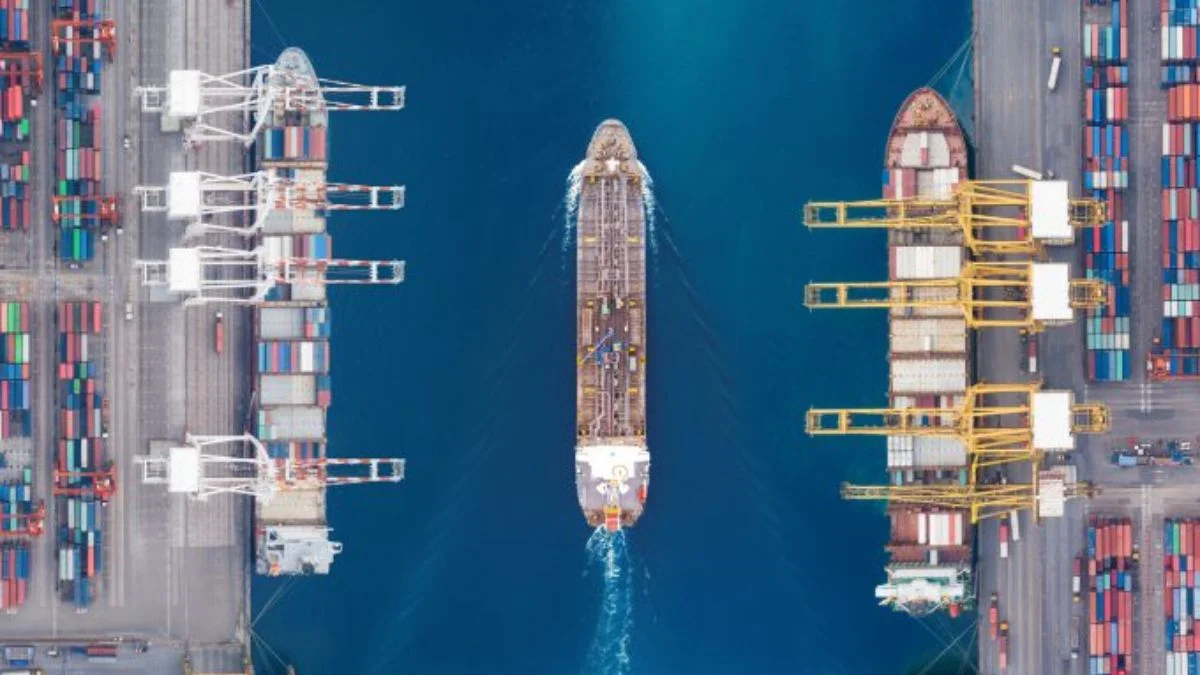
The latest wave of capital deployment into strategic port infrastructure across Africa and India with the announcement that CMA CGM will invest 820 million dollars into the modernisation and expansion of two terminals at the Port of Mombasa, alongside GENMA securing a crane supply contract for JSW Infrastructure Ltd. at the Kolkata Container Terminal, must be understood as interconnected manifestations of a broader legal and economic contest over control of critical logistics corridors.
From a legal practitioner’s vantage point, the Mombasa transaction stands as a textbook illustration of the increasing reliance on public private partnership models across emerging markets. The agreement, concluded under a cooperation framework between CMA CGM and the Kenyan government during the Africa Forward Summit in Nairobi, attended by Emmanuel Macron, points the growing entanglement between sovereign policy objectives and private capital deployment in infrastructure of national significance.
The Port of Mombasa, as East Africa’s largest maritime gateway, occupies a legally and commercially sensitive position within regional trade architecture. Serving not only Kenya but also landlocked economies including Uganda, Rwanda, South Sudan, and the Democratic Republic of Congo, the port operates as a critical node governed by a complex interplay of domestic law, regional trade agreements under the East African Community framework, and international maritime conventions. The fact that it handled 2.11 million teu last year, representing a growth of 5.5 per cent and operating at near full capacity, creates a compelling factual basis for expansion. However, necessity does not obviate the legal risks inherent in such large scale concessions. The proposed investment by CMA CGM aims to enhance cargo handling capacity, strengthen regional trade corridors, and improve connectivity to global shipping routes in response to rising maritime demand. These objectives align closely with Kenya’s broader infrastructure policy direction, particularly its National Treasury’s April 2025 articulation of a financing strategy based on infrastructure bonds targeted at institutional investors such as pension funds and insurance companies. This approach is emblematic of contemporary infrastructure law, where states increasingly leverage long term capital markets to fund strategic assets while retaining varying degrees of sovereign oversight.
Yet, in my professional experience, such arrangements often conceal latent tensions. The allocation of risk between the public and private sectors, particularly in jurisdictions where regulatory enforcement may be evolving, frequently becomes the subject of protracted dispute. Questions surrounding tariff setting, concession duration, environmental compliance, and dispute resolution mechanisms under bilateral investment treaties or international arbitration frameworks such as ICSID are rarely settled at the outset with the clarity that investors might assume. It is in these grey areas that the true test of such partnerships emerges over time.
CMA CGM’s historical presence in Kenya since 2005 and its broader expansion across the African continent, including involvement in the Kribi Container Terminal in Cameroon, the Lekki Deep Sea Port in Nigeria, and a deepwater terminal in Pointe Noire in Congo, demonstrates a deliberate strategy of embedding itself within key maritime jurisdictions. The recent establishment of its African regional office in Abidjan further consolidates this footprint. From a legal standpoint, this raises important considerations regarding competition law, particularly under regional frameworks, as well as the potential for vertical integration across shipping, terminal operations, and inland logistics.
The emphasis on improving inland logistics networks connecting Mombasa to East and Central Africa is particularly significant. Infrastructure law does not operate in silos, and port efficiency gains can be rapidly undermined by deficiencies in hinterland connectivity. Therefore, the success of this investment will depend not only on maritime infrastructure but also on compliance with transport corridor agreements, customs harmonisation protocols, and cross border regulatory alignment within the region.
Parallel to developments in Africa, the contract awarded to GENMA for the supply of three ship to shore cranes and nine rubber tyred gantry cranes to the JSW Kolkata Container Terminal reveals a different but equally instructive dimension of the global port economy. JSW Infrastructure Ltd., as India’s second largest private commercial port operator, is advancing its strategic expansion along both eastern and western seaboards, with a stated emphasis on efficiency and environmental sustainability. The Kolkata terminal project is not without its legal and operational complexities. The Hooghly River system imposes strict vessel size restrictions, which in turn influence terminal design and operational planning. The additional constraint of monsoon conditions introduces further layers of contractual risk, particularly in relation to project timelines, force majeure clauses, and liability allocation. The scheduled commencement of crane deliveries in 2027 reflects the long lead times inherent in such infrastructure projects and the necessity for meticulous planning. Statements by Rajendra Patil, regional sales director at GENMA, emphasise the company’s capacity to deliver tailored engineering solutions and comprehensive project management in the face of these challenges. While such assurances are standard in commercial discourse, they also carry legal weight, particularly where performance guarantees, liquidated damages clauses and compliance with technical specifications are concerned. Any deviation from agreed standards can trigger significant financial and legal consequences under supply and construction contracts.
The alignment of the project with the sustainability policies of the broader JSW Group introduces an additional layer of regulatory scrutiny. Environmental compliance in India is governed by an extensive statutory framework, including the Environment Protection Act 1986, the Coastal Regulation Zone Notification, and various state level regulations. The integration of energy efficient technologies and green design principles is no longer merely a matter of corporate responsibility but a legal necessity, particularly in light of increasing judicial activism in environmental matters.
In advising clients across similar transactions, I have often observed that the greatest risks are not those explicitly identified in contractual documentation but those arising from shifting regulatory landscapes and geopolitical recalibrations. In Africa, the growing involvement of foreign operators in critical infrastructure has already prompted debates around economic sovereignty and regulatory control. In India, the balancing act between rapid infrastructure development and environmental protection continues to generate legal contestation. Ultimately, these investments must be assessed not only on their immediate economic merits but also on their capacity to withstand the complex interplay of law, policy, and market dynamics that define modern maritime trade. The infusion of capital into ports such as Mombasa and Kolkata may well enhance capacity and efficiency in the short term, but without robust legal frameworks, transparent governance, and equitable risk allocation, they risk becoming flashpoints for dispute rather than engines of sustainable growth.