

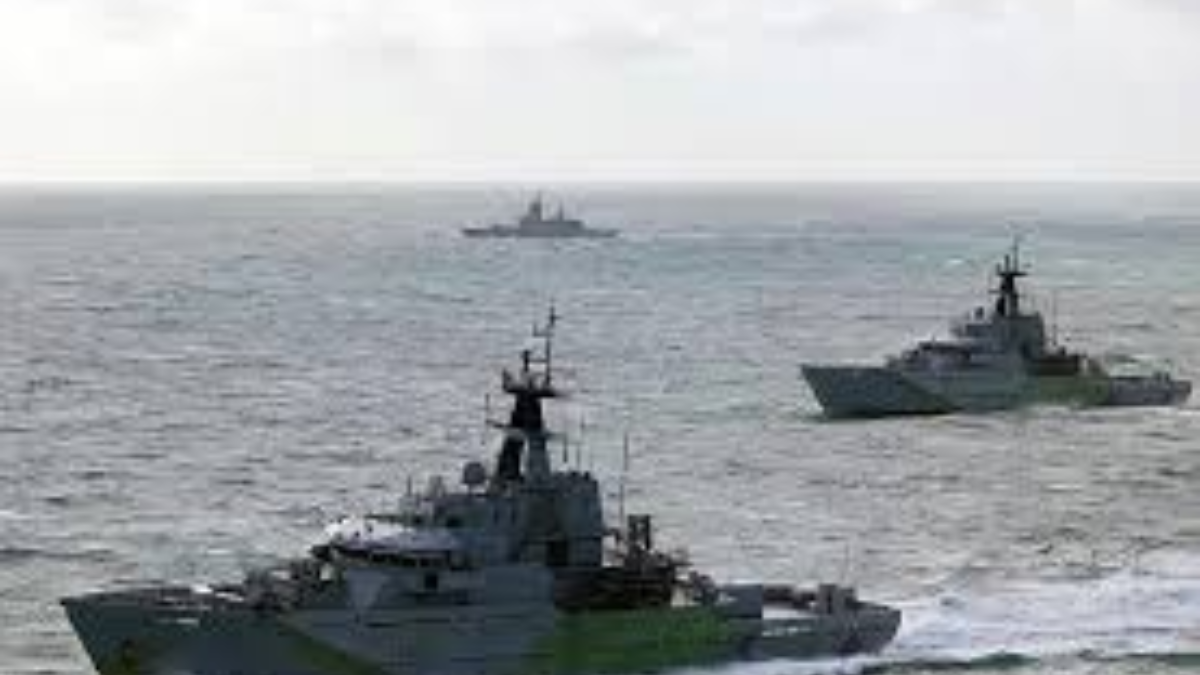
The UK’s decision to publicly expose a covert Russian submarine operation is not merely a news briefing, but a deliberate strategic warning to Vladimir Putin. By revealing that Russian naval assets were detected, tracked, and monitored near British waters, London is trying to send a clear message that covert pressure on the UK’s undersea infrastructure will not remain hidden or cost-free.
Deterrence Through Visibility
At the heart of this move is deterrence by exposure. The UK wants Moscow to understand that its submarines and special undersea units can be found, followed, and publicly identified, even when they are operating under the cover of secrecy. That is important because Russian naval activity in the North Atlantic has long been viewed in Britain as part of a broader pattern of hybrid pressure, aimed not at open war but at testing vulnerabilities, mapping infrastructure, and creating strategic uncertainty. The logic is straightforward. If Russia believes a mission can be conducted silently and without consequence, the incentive to repeat it grows stronger. But if the mission is exposed, politicised, and framed as a failed hostile act, the reputational cost rises sharply. In that sense, the public announcement is itself a form of defensive action.
Why Undersea Infrastructure Matters
The stakes are unusually high because Britain’s underwater infrastructure is not a peripheral asset but a central pillar of national security and economic life. Subsea cables carry the overwhelming majority of international data traffic, including internet communications, banking systems, emergency links, and commercial transactions. Pipelines and cables together form a hidden backbone of modern state power, and any attempt to interfere with them could have immediate consequences far beyond the military sphere. That is why the issue cannot be dismissed as routine naval manoeuvring. A hostile submarine mission near this infrastructure is not only a military concern but also an economic and legal one. Any damage to cables or pipelines could disrupt trade, financial services, and public communications, while also raising serious questions about responsibility, attribution, and retaliation under international law.
The Strategic Message to Moscow
The UK’s broader aim is to make Russian operations less attractive by denying them the secrecy on which such missions depend. Russian undersea units have long been associated with intelligence gathering, cable mapping, and preparation for sabotage or coercive leverage. By going public, Britain is signalling that it is not just watching in real time, but willing to turn detection into political embarrassment. This matters in a wider geopolitical sense. Moscow has repeatedly tested Western resolve through activities that sit below the threshold of open warfare but above the level of ordinary peacetime conduct. Public exposure changes that calculation by transforming a covert mission into evidence of hostile intent. It also reassures allies, particularly in NATO, that the UK is treating undersea security as a collective issue rather than a narrow domestic one.
Legal and Security Implications
From a legal standpoint, the UK is effectively asserting its right to defend critical national infrastructure and to monitor potentially hostile activity in adjacent waters. The public framing also helps build a record that could matter later if further incidents occur. If sabotage or interference ever takes place, earlier disclosures make attribution easier and strengthen the diplomatic case for a collective response. Security-wise, the announcement also reflects a shift in how Britain sees the undersea domain. This is no longer just a matter for the navy or intelligence services. It is now a strategic theatre where surveillance, deterrence, infrastructure protection, and public signalling all operate together. In that sense, the message to Putin is not subtle: Britain knows the threat exists, is prepared to name it, and intends to make covert aggression harder to execute.