

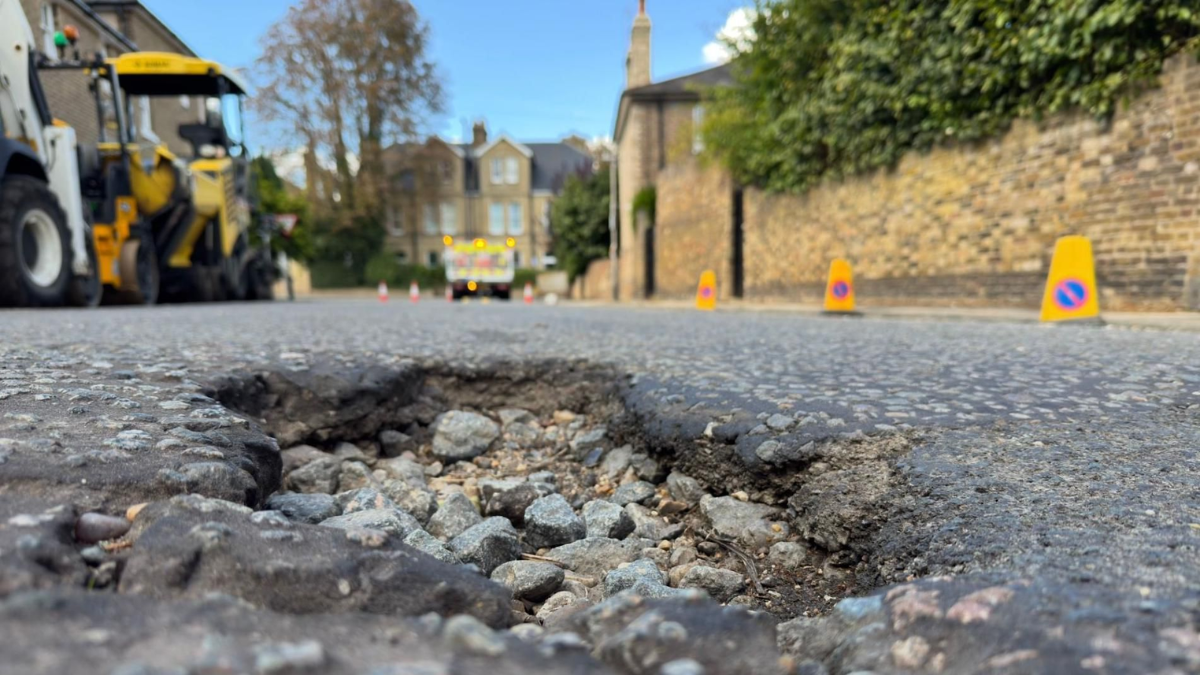
The connection between the war in Iran and Britain’s pothole crisis runs through a single commodity: oil. Bitumen, the oil-derived material used to fill potholes and resurface roads, is directly priced against crude oil, meaning that any geopolitical shock that drives up oil prices automatically inflates road repair costs for local councils across the UK.
The Strait of Hormuz Effect
Iran’s de facto closure of the Strait of Hormuz, the critical waterway responsible for transporting approximately 20% of the world’s oil supply and liquefied natural gas, has sent Brent Crude prices surging to their highest levels since 2022, exceeding $109 per barrel. Since bitumen is a by-product of crude oil refining, councils that purchase it wholesale for road repairs are now facing significantly steeper procurement costs at exactly the moment when Britain’s roads are in their worst recorded condition. Ann Carruthers, Director of Environment and Transport at Leicestershire County Council, stated explicitly at a recent council meeting: “There are emerging risks surrounding the war in Iran and its impact on fuel prices; the prices of oil-based materials have significantly risen, which directly affects our highway maintenance operations.”
A Crisis Compounded
Britain’s pothole problem was already at breaking point well before the Iran war began. The Asphalt Industry Alliance warned in March 2026 that the estimated cost of repairing deteriorating roads in England and Wales had risen to £18.6 billion, with a 12-year completion timeline even under adequate funding. Leicestershire alone recorded 2,933 pothole reports in February 2026, a staggering rise from 791 in the same month the previous year and 1,143 in February 2024, driven largely by what Carruthers described as Leicestershire’s wettest winter since records began in 1856. The government had raised national road repair funding to £1.6 billion for the previous financial year, but this figure is dwarfed by the £18.6 billion backlog, meaning councils were already doing far more with far less before oil price shocks entered the equation.
What This Means Practically
In practical terms, councils across England are now caught in a three-way squeeze: rising bitumen costs driven by the Iran war, record pothole volumes caused by extreme rainfall, and chronically underfunded local authority budgets. Hiring agency workers to manage the repair surge is costing councils roughly twice as much as using their own staff, owing to intense national demand for road repair labour. Some countries have already begun implementing fuel rationing measures in response to the oil supply disruption, and if the conflict prolongs Iran’s Strait of Hormuz restrictions, British councils could find their repair budgets effectively halved in real terms before the summer season even begins.