

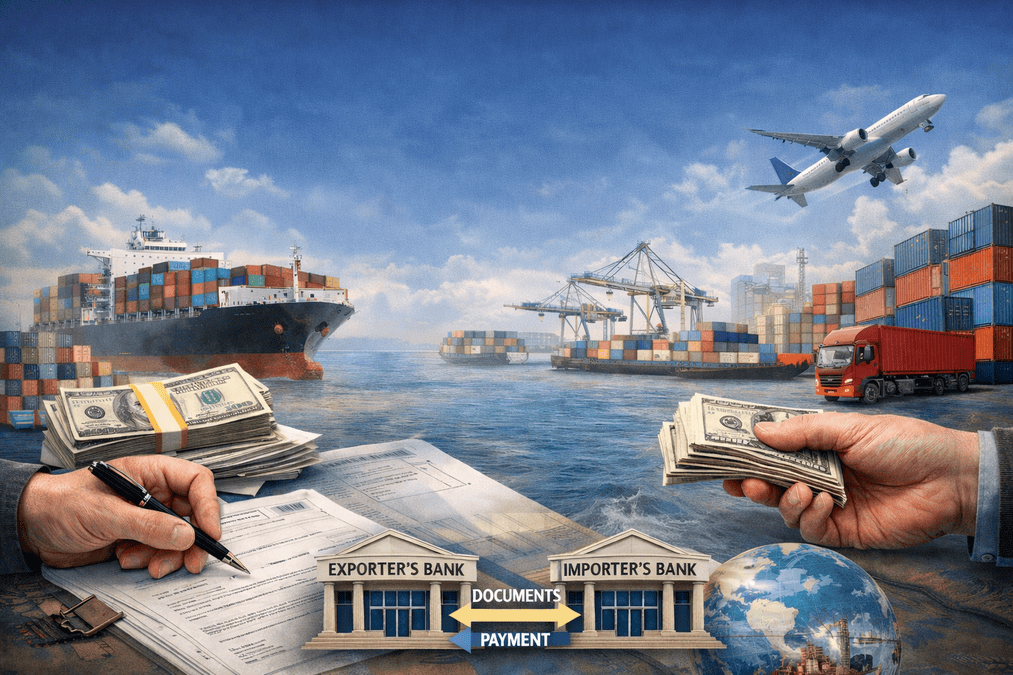
The exchange of cash in cross-border trade is frequently the key factor compared to the goods shipped. The distance between dispatch and payment poses an ever-present pressure on working capital to many exporters, particularly when they have thin margins and financing through banks is costly. Documentary collections provide a less vocal yet effective means to relieve that burden by conditioning the delivery of shipping documents on payment or acceptance at a lower cost burden than a letter of credit.
The process is simple. The exporter delivers the goods and submits the shipping documents to a bank, which sends them to the bank of the importer. The documents are only provided to the importer as soon as he/she pays immediately, in the case of documents against payment, or the payment is agreed to be paid at a later date, in the case of documents against acceptance. Such an arrangement will not eradicate payment risk but will result in a more disciplined settlement process. Documents collections assist in reducing delays and maintaining the structure of the transaction, which is why they enable exporters to move receivables quicker than an open-account sale.
Of particular significance to this instrument today is the wider strain on trade finance. Lots of enterprises, especially small and middle-sized exporters, have more difficulties with borrowing and restricting access to credit. A cheaper collection based settlement method may be appealing in such an environment. It might not provide the same security as a letter of credit, but it can be accompanied by reduced banking charges and less documentation. To exporters dealing with the trusted customer in relatively stable markets, such a trade- off may be well compensated since it allows them to maintain cash and minimizes the sums of money that are held by the unpaid invoices.
Documentary collections are also important since they are in between trust and caution. They are not so dangerous to the buyer as prepayment, nor are they so expensive to the exporter as highly guaranteed instruments provided by banks. That mid line status renders them practical in a long-term business relationship where the two parties are more concerned with efficiency than absolute protection. When this occurs, the instrument would not be so much about credit substitution but facilitating the flow of trade.
Documentary collections have their hidden value in the balance. They are not the answer to all financing issues and are inappropriate where there is a large political or commercial risk or payment risk. However, when used appropriately, they can also help decrease the cash-conversion cycle, decrease friction, and relieve working capital pressure in a more practical manner. To exporters who find it difficult to sustain trade by straining their balance sheets, that makes documentary collections a more ancient instrument with a new dimension.