

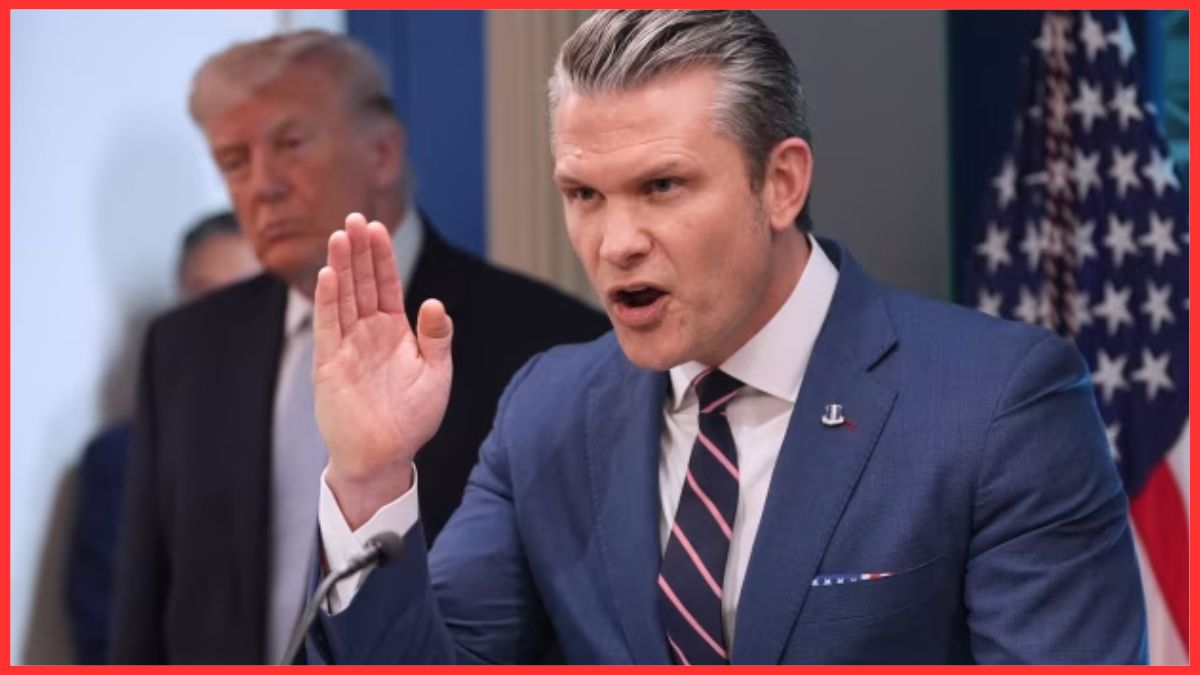
The United States is set to execute its most extensive round of military strikes since the beginning of its current operation involving Iran, according to statements made by US Defense Secretary Pete Hegseth in an official briefing. Hegseth indicated that the volume of strikes scheduled for today would surpass all previous operational days, marking a significant escalation in military activity. He further conveyed that plans were already in place for an even greater intensity of strikes the following day, underscoring a deliberate and phased escalation strategy. These remarks align with prior statements he has issued throughout the course of the conflict, consistently emphasizing increasing operational pressure. The Defense Secretary also referenced a strategic decision point for Iran, indirectly linking the escalation to an ultimatum previously articulated by Donald Trump, who had called on Iran to take steps regarding the Strait of Hormuz. The Strait remains a critical global energy transit chokepoint, making its status central to international trade and security considerations, particularly for stakeholders in the Middle East and the European Union. The statements were delivered as part of an official communication from the US Department of Defense, serving as the primary source of confirmation for the operational developments described.
Escalation Strategy, Maritime Security Stakes, and Global Trade Implications in Focus
Hegseth’s remarks reflect a calibrated escalation model, where incremental increases in strike volume are used to exert strategic leverage without immediate full-scale confrontation. By tying military actions to specific geopolitical conditions involving the Strait of Hormuz, the United States appears to be signaling the intersection of military objectives with global economic security concerns. For European Union economies and Middle Eastern states alike, developments around the Strait carry direct implications for energy supply stability, insurance costs, and maritime logistics. The Pentagon’s communication suggests that operational tempo is being used as a policy instrument, reinforcing diplomatic pressure points through demonstrable military capability.