The United States’ January 3, 2026, military operation in Caracas—culminating in the capture of Venezuelan President Nicolás Maduro and the declaration that Washington will temporarily “run Venezuela”—marks one of the most consequential unilateral interventions in Latin America in the post–Cold War era. Unlike prior U.S. actions framed narrowly as sanctions enforcement or diplomatic pressure, this operation combines extraterritorial criminal prosecution, direct military intervention, maritime interdiction, and effective economic occupation of an oil-dependent state.

The episode sits at the intersection of sovereignty, the use of force, sanctions regimes, maritime law, and global energy markets. The explicit linkage made by the Trump administration between counter-narcotics enforcement, terrorism designations, oil seizures, and regime change introduces a novel—and deeply controversial—model of coercive economic governance. The decision to place Venezuelan oil operations under U.S. corporate control further elevates the matter beyond a security dispute into a systemic trade and investment shock with global implications.

How did this situation arise?

U.S.–Venezuela relations have deteriorated over more than two decades, driven primarily by ideological divergence, energy nationalism, and competing interpretations of sovereignty. Under President Hugo Chávez (1999–2013), Venezuela explicitly framed its foreign policy as resistance to U.S. influence in Latin America, while pursuing closer ties with U.S. adversaries such as Cuba, Russia, and Iran. The nationalization of oil assets and the reorientation of Petróleos de Venezuela (PDVSA) away from U.S. corporate control entrenched economic hostility.

Under Nicolás Maduro, relations worsened further as Venezuela entered a prolonged economic collapse marked by hyperinflation, declining oil production, mass emigration, and widespread allegations of human rights abuses. The United States responded with escalating sanctions, diplomatic isolation, and, in 2019, recognition of opposition leader Juan Guaidó as interim president. Although that effort ultimately failed to dislodge Maduro, it institutionalized U.S. non-recognition of his government.

By the early 2020s, formal diplomatic channels were minimal, trust was nonexistent, and Venezuela’s oil sector—despite holding approximately 17 percent of global proven reserves—was severely undercapitalized due to sanctions, technical degradation, and the heavy nature of Orinoco Belt crude. This structural fragility made Venezuela uniquely vulnerable to external economic coercion.

What are the odds in the U.S.-Venezuelan relations?

The immediate catalyst for escalation was the Trump administration’s decision during its second term to reframe Venezuelan state actors not merely as sanctioned officials but as participants in “narco-terrorism.” The designation of the Cartel de los Soles and Tren de Aragua as Foreign Terrorist Organizations, combined with allegations linking Maduro personally to cocaine trafficking, created a legal narrative enabling the use of military force beyond traditional law-enforcement cooperation.

This doctrinal shift was operationalized through a series of lethal maritime strikes beginning in September 2025, targeting vessels allegedly involved in drug trafficking along the Venezuelan coast. These strikes, which resulted in at least 105 deaths, were publicly acknowledged and justified as counter-narcotics operations. However, their scale and lethality blurred the line between policing and armed conflict.

The seizure of the oil tanker Skipper in December 2025 further escalated the dispute by extending U.S. sanctions enforcement into direct maritime interdiction. Venezuela’s characterization of the seizure as “international piracy” underscores the legal ambiguity surrounding unilateral enforcement actions conducted outside recognized blockade regimes or UN Security Council authorization.

The December 16, 2025, declaration of a blockade on sanctioned oil tankers represented a decisive break from sanctions toward de facto economic warfare. Under international law, a blockade is traditionally regarded as an act of war unless authorized multilaterally. This set the legal and strategic conditions for the January 3, 2026, operation in Caracas, which the United States framed as the execution of criminal indictments rather than an invasion.

What holds in the future for either country?

Venezuela

For Venezuela, the immediate impact is the collapse of effective sovereignty. The removal of the head of state by foreign military force, combined with U.S. control over oil operations, represents an unprecedented intrusion into domestic governance. Economically, the blockade and seizure of oil assets strike at the core of Venezuela’s fiscal survival, as hydrocarbons remain its dominant source of foreign exchange.

Legally, Venezuela faces a profound challenge in asserting its rights under international law, particularly given its limited leverage in international institutions and the absence of effective enforcement mechanisms against a major power. Domestically, the operation risks triggering internal fragmentation, as military and civilian institutions must navigate the tension between resistance and accommodation.

United States

For the United States, the operation entails both strategic gains and substantial legal exposure. Securing control over the world’s largest proven oil reserves offers potential long-term energy and commercial advantages, particularly if U.S. firms can rehabilitate Orinoco Belt production. However, the extraterritorial arrest of a sitting head of state and the assumption of administrative control over a foreign country raise serious questions under the UN Charter and customary international law.

Politically, the lack of congressional notification highlights internal constitutional tensions regarding war powers. Economically, the operation may stabilize certain energy supply channels while simultaneously increasing geopolitical risk premiums.

How will this impact the neighbouring countries?

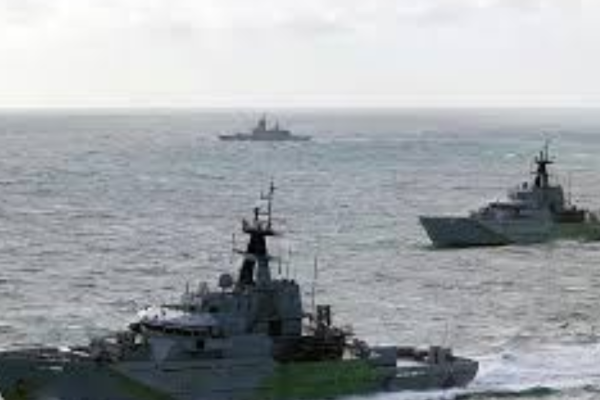
The spillover effects across Latin America and the Caribbean are substantial. The concentration of U.S. naval power in the southern Caribbean disrupts regional shipping routes and raises insurance costs for maritime trade. Neighbouring states face heightened uncertainty regarding airspace, maritime jurisdiction, and the potential precedent of unilateral intervention.

Politically, the operation reinforces fears of revived interventionism, particularly among governments with adversarial relations with Washington. Economically, countries dependent on Venezuelan oil—either directly or through intermediary trade—must rapidly diversify supply, increasing short-term costs and logistical complexity.

How will it affect the international trade relations?

The global trade implications of the U.S.–Venezuela confrontation are systemic rather than localized. First, the blockade and tanker seizures disrupt established norms governing sanctions enforcement. Traditionally, sanctions rely on financial restrictions and trade prohibitions enforced through compliance mechanisms. The use of military force to interdict commercial shipping introduces a coercive element that undermines predictability in global trade.

Second, global oil markets face structural uncertainty. Venezuela’s heavy crude is not easily substitutable, requiring specialized refining capacity. Disruptions therefore ripple through downstream markets, affecting fuel prices, petrochemicals, and shipping costs. Even if U.S. companies restore production, transitional instability may constrain output for extended periods.

Third, multinational corporations confront heightened legal risk. The assertion that Venezuelan oil assets are effectively U.S. property, as suggested by Trump’s rhetoric, challenges established principles of sovereign ownership and investment protection. Firms operating in sanctioned or politically contested jurisdictions may reassess exposure, accelerating trade fragmentation and regionalization.

Fourth, global trade institutions such as the WTO are marginalized. The absence of multilateral authorization and the framing of trade restrictions as security measures weaken dispute-settlement mechanisms and encourage unilateralism. For emerging markets, this signals increased vulnerability to coercive economic measures tied to security narratives.

What will be the future course of this crisis?

The January 2026 U.S. intervention in Venezuela represents a critical inflection point in international relations, where counter-narcotics enforcement, sanctions policy, and energy geopolitics converge into a single coercive framework. While the United States has framed its actions as lawful responses to criminal conduct and terrorism, the scale and scope of intervention challenge foundational norms of sovereignty and non-intervention.

From an international trade perspective, the episode accelerates the erosion of multilateral governance in favor of power-based enforcement. The long-term consequences may include increased trade fragmentation, higher risk premiums in energy markets, and diminished confidence in international legal protections.

Whether this approach yields strategic stability or entrenches global economic volatility will depend on how other states, corporations, and institutions respond. What is clear is that the U.S.–Venezuela case is no longer a bilateral dispute; it is a stress test for the contemporary international order.

TOPICS: Donald Trump