In a case that could redefine the intersection of constitutional rights and foreign policy enforcement, a United States federal judge has raised serious concerns over the government’s decision to block former Venezuelan president Nicolás Maduro from accessing state funds to finance his legal defence in a high profile narcoterrorism prosecution.

Presiding over proceedings in Manhattan, Alvin Hellerstein openly questioned whether sanctions based restrictions can override a defendant’s Sixth Amendment right to counsel of choice. While declining to dismiss the charges, the court’s remarks signal a growing judicial discomfort with the expansive use of economic sanctions in criminal proceedings.

At the heart of the dispute lies a fundamental constitutional guarantee. The Sixth Amendment ensures that defendants in criminal prosecutions have the right to be represented by counsel of their choosing. Maduro’s legal team argues that this right is being effectively nullified by the United States government’s refusal to allow the use of Venezuelan state funds to pay legal fees.

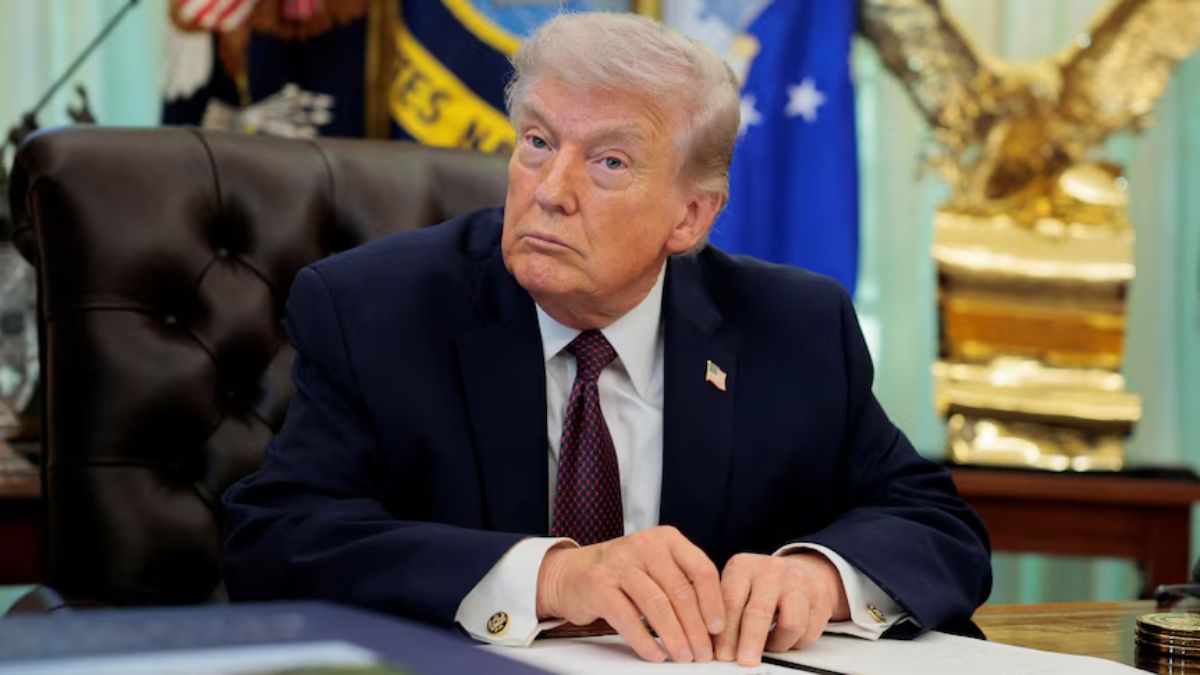
The prosecution, however, maintains that the restriction flows directly from existing sanctions imposed on Venezuela, justified by national security and foreign policy considerations. These sanctions have historically been used to isolate the Maduro regime, particularly under the administration of Donald Trump. Judge Hellerstein’s scepticism reflects a critical legal tension: whether executive branch sanctions can constitutionally impair an individual’s access to legal representation, especially where the defendant is physically present within United States jurisdiction and no longer poses an active national security threat.

The case is extraordinary not only in its legal complexity but also in its geopolitical context. Maduro, once the sitting president of Venezuela, now appears in a United States courtroom in prison attire following his capture in a covert operation by US special forces in Caracas.

He and his wife, Cilia Flores, face multiple felony charges, including narcoterrorism conspiracy. This statute, which criminalises drug trafficking activities linked to organisations deemed terrorist, has rarely been tested at trial. Available data indicates limited prosecutorial success, with a notable proportion of convictions overturned due to evidentiary concerns, particularly relating to witness credibility. The rarity of such prosecutions adds further weight to the proceedings, positioning the case as a potential test of the statute’s durability under judicial scrutiny.

A central pillar of the government’s argument is that Maduro is not recognised by the United States as Venezuela’s legitimate president. Since 2019, Washington has denied the legitimacy of his administration, a position that underpins its refusal to permit the use of Venezuelan public funds for his defence.

However, this position introduces a legal paradox. Maduro’s defence asserts that under Venezuelan law, the state is responsible for covering the legal expenses of its head of state and first lady. By blocking access to these funds while simultaneously prosecuting him within its jurisdiction, the United States may be creating a structural imbalance in the adversarial process. Judge Hellerstein’s remarks suggest that this contradiction could carry constitutional implications, particularly if it results in a denial of effective legal representation.

The immediate risk is not theoretical. Maduro’s legal counsel, reportedly led by an experienced defence attorney who has previously represented high profile international clients, has indicated a willingness to withdraw from the case if funding constraints persist. Should this occur, Maduro and Flores would likely be assigned public defenders. While constitutionally permissible, such an outcome raises broader concerns about equality of arms in complex international prosecutions involving extensive evidence, geopolitical dimensions and high stakes legal strategy.

The case cannot be separated from its geopolitical context. Relations between Washington and Caracas have been defined by years of sanctions, diplomatic isolation and competing claims of legitimacy. Maduro has consistently characterised the charges against him as politically motivated, alleging that they form part of a broader effort to control Venezuela’s vast oil reserves.

At the same time, the United States has recently eased certain sanctions following political developments in Venezuela, including the emergence of an interim leadership. This evolving policy landscape further complicates the government’s reliance on national security justifications in court. The judge’s observation that Maduro “presents no further national security threat” highlights the shifting nature of the rationale underpinning the sanctions regime.

If the court ultimately finds that sanctions cannot impede a defendant’s right to counsel, the implications could extend far beyond this case. Such a ruling would place constitutional limits on the application of economic sanctions in criminal proceedings, potentially affecting future prosecutions involving sanctioned individuals and entities. It would also force policymakers to reconsider how sanctions interact with due process rights, particularly in cases where the United States exercises extraterritorial jurisdiction.

For now, the charges against Maduro and Flores remain intact, and the court has not granted their request for dismissal. However, the questions raised during the hearing suggest that the legal battle is far from settled. With additional charges reportedly under consideration and the defence facing potential funding constraints, the case is poised to become one of the most closely watched legal confrontations in recent years.

The proceedings against Nicolás Maduro encapsulate a broader and increasingly relevant legal dilemma: how to balance the imperatives of national security and foreign policy with the foundational guarantees of constitutional law. As the case unfolds, it will test not only the strength of the prosecution’s evidence but also the resilience of the United States legal system in upholding due process under politically charged circumstances. In doing so, it may well establish new boundaries for the reach of sanctions and the protection of individual rights in an era where law and geopolitics are more intertwined than ever.