
The circulation of an AI generated video depicting the destruction of the Statue of Liberty, grotesquely altered with the head of Baal and obliterated by a missile strike, marks a deeply unsettling moment in the evolving architecture of modern geopolitical confrontation. Shared widely across digital platforms and amplified by state aligned media ecosystems including RT citing Fars News, the video is not merely an exercise in digital provocation but a calculated narrative instrument designed to consolidate grievance, mobilise sentiment, and reshape perceptions of legitimacy in an increasingly fragmented international order.
At its core, the video operates as a visual indictment of the United States, stitching together a chronological tapestry of conflicts that have defined American military and strategic engagement over decades. It begins with imagery evocative of indigenous dispossession in North America, an implicit critique of the foundational contradictions of American statehood. This is followed by a stark evocation of Hiroshima, where the symbolic presence of a child amidst ruins resurrects the enduring moral debate surrounding the atomic bombings of the Second World War. The sequencing is deliberate, constructing a continuum of suffering that positions the United States not as a stabilising force but as a recurrent agent of devastation.
The narrative then transitions through Vietnam, Yemen, and Gaza, each scene meticulously crafted to reflect theatres of conflict where American involvement has been either direct or structurally embedded. The visual language is consistent, with solitary figures gazing skyward, suggesting a shared anticipation of violence descending from above. This motif is not accidental but rather a sophisticated attempt to universalise victimhood and align disparate geopolitical contexts under a singular accusatory framework. In Gaza, the imagery acquires additional contemporary resonance, given the United States’ unwavering strategic alignment with Israel, thereby reinforcing perceptions of complicity in ongoing humanitarian crises.
Perhaps more controversially, the inclusion of Epstein Island introduces a domestic dimension to the critique, blurring the boundaries between foreign policy conduct and internal moral decay. By invoking associations with Jeffrey Epstein and alleged connections to elite political figures including Donald Trump, the video attempts to erode the moral authority of American leadership, suggesting that external aggression is mirrored by internal corruption. This conflation of narratives is emblematic of modern information warfare, where credibility is targeted as aggressively as physical infrastructure.
The segment focusing on Minab in southern Iran represents a particularly contentious and potentially inflammatory claim. The portrayal of a schoolgirl in the aftermath of an alleged missile strike attributed to the United States, reportedly resulting in the deaths of over 160 girls, introduces a highly emotive and unverified element that demands rigorous scrutiny. In the absence of independently corroborated evidence, such depictions risk functioning as disinformation, yet their emotional potency ensures widespread traction regardless of factual integrity. This underscores a critical challenge in contemporary media ecosystems, where the velocity of dissemination often outpaces verification.
The reappearance of General Qasem Soleimani, whose killing in a United States drone strike in Baghdad in 2020 remains a defining moment in US Iran tensions, serves to anchor the narrative in recent history. The subsequent depiction of Ayatollah Ali Khamenei, portrayed as witnessing a missile launch and described within the video’s narrative as having been killed in a joint US Israeli strike, further escalates the speculative and propagandistic tone. There is no credible evidence to support claims of Khamenei’s death, rendering this element a clear fabrication designed to dramatise and intensify the narrative of confrontation.
The culmination of the video, in which a missile obliterates the Statue of Liberty, represents a symbolic inversion of power. The transformation of the statue’s head into that of Baal, a figure historically associated with false worship and contested theological interpretations, is a deliberate act of semiotic aggression. It seeks to recast American ideals of liberty and democracy as hollow or idolatrous constructs, thereby justifying their destruction within the narrative framework of retributive justice. This act is framed explicitly as collective vengeance, encapsulated in the phrase “one vengeance for all,” which functions as both slogan and ideological anchor.
The resonance of this imagery is amplified by its alignment with prior symbolic acts within Iran, including the burning of Baal like effigies during commemorations of the 1979 Islamic Revolution in Tehran’s Azadi Square. Such continuity suggests a sustained effort to embed these symbols within a broader cultural and राजनीतिक lexicon, reinforcing their legitimacy and recognisability among domestic and international audiences.
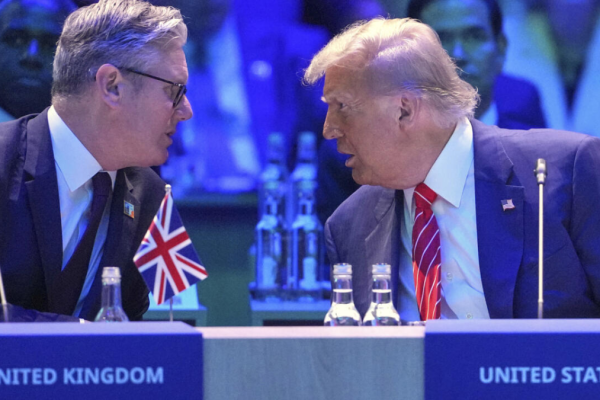
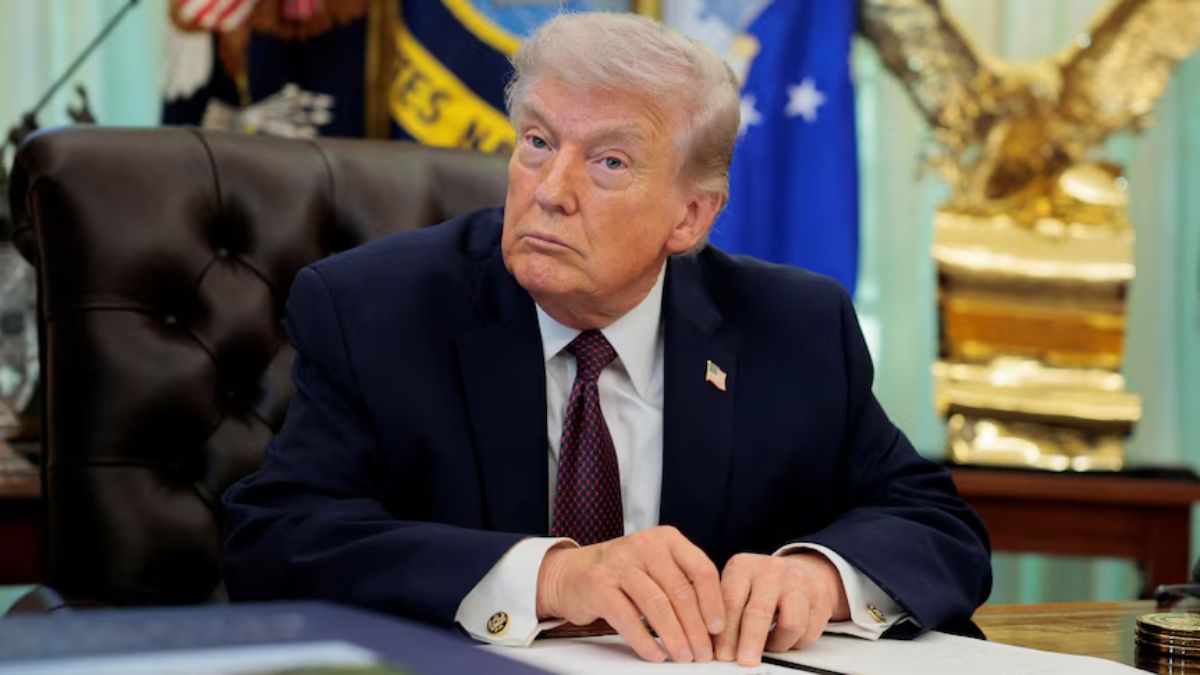
Compounding the symbolic escalation is the report of a cruise missile launch by Iran towards the USS Abraham Lincoln aircraft carrier, an act that, if substantiated, would represent a significant deterioration in an already volatile security environment. This development stands in stark contrast to earlier statements by Donald Trump indicating that Iran was “talking sense,” highlighting the fragility and unpredictability of diplomatic signalling in the current climate.
From a legal and international relations perspective, the implications of this episode are profound. The deployment of AI generated content from state-aligned messaging raises urgent questions regarding the applicability of existing frameworks governing propaganda, incitement, and the use of emerging technologies in conflict. The absence of clear regulatory mechanisms for such content creates a permissive environment in which states and non state actors can engage in narrative warfare with minimal accountability.
Moreover, the video exemplifies a broader shift towards hybrid conflict, where psychological operations, digital manipulation, and symbolic acts are deployed alongside conventional military capabilities. This convergence complicates traditional notions of aggression and response, challenging policymakers to develop strategies that address not only physical threats but also the cognitive and perceptual dimensions of security.
In strategic terms, the video should not be dismissed as mere provocation. Its sophistication, narrative coherence, and targeted symbolism indicate a deliberate effort to influence both domestic and international audiences. For the United States and its allies, the appropriate response requires a calibrated approach that balances the need to counter disinformation with the जोखिम of amplifying it. Overreaction may inadvertently validate the narrative, while inaction could allow it to proliferate unchecked.
Ultimately, this episode serves as a stark reminder that the battleground of modern geopolitics extends far beyond physical territories. It encompasses the realms of perception, memory, and identity, where images can be as consequential as missiles. The destruction of the Statue of Liberty in this वीडियो may be fictional, but the strategic intent behind it is anything but.