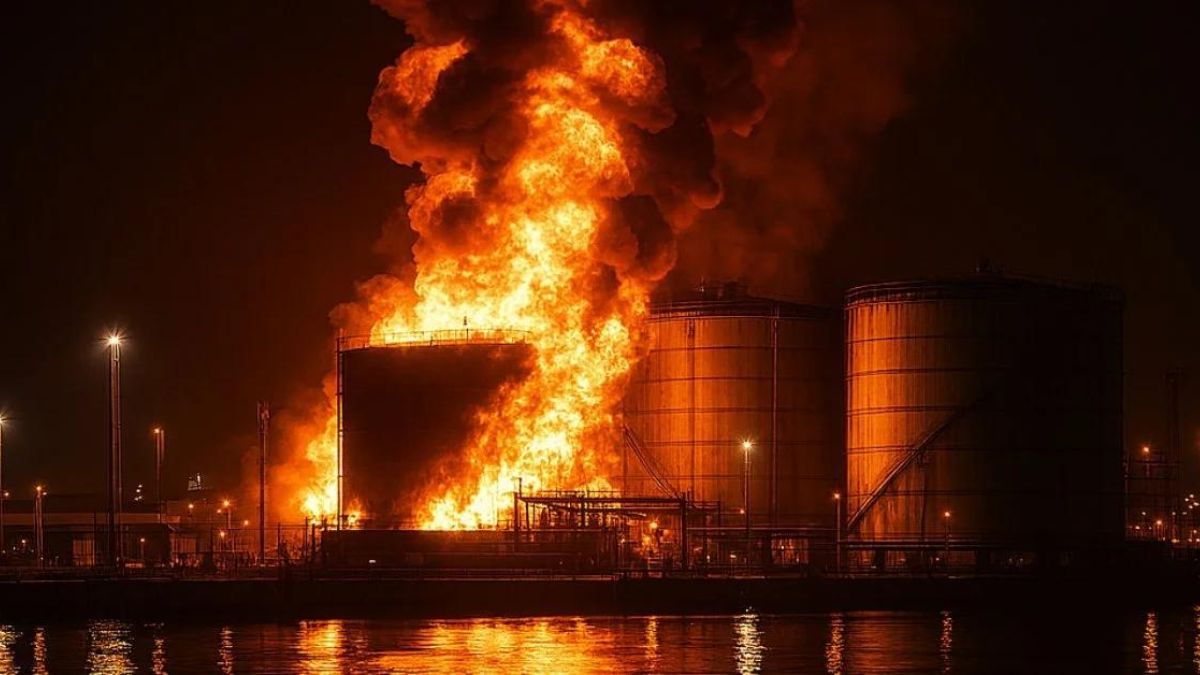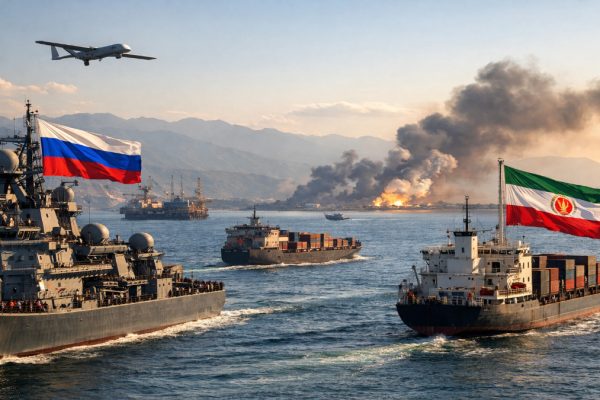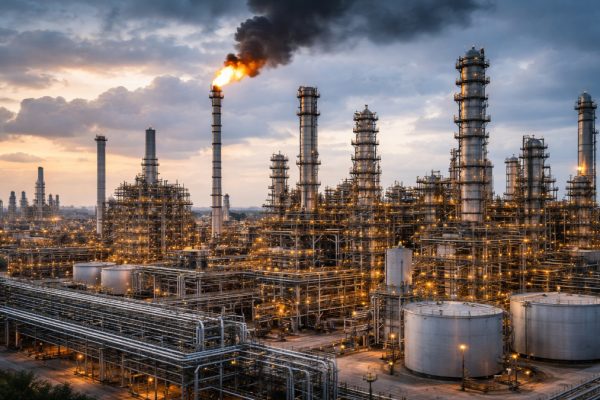
The attempted targeting of operational units linked to the Kuwait National Petroleum Company marks a moment that serious observers of energy security and regional geopolitics cannot afford to trivialise. According to the Kuwaiti Ministry of Defence, two drones struck facilities associated with the country’s refining infrastructure, igniting limited fires without causing casualties. Over a mere twenty four hour period, Kuwait’s air defence network reportedly tracked eighteen hostile drones within national airspace, intercepting thirteen. This is not an isolated anomaly. It is a structural warning.

At stake is far more than a minor tactical breach. The Kuwait Petroleum Corporation ecosystem represents one of the most strategically concentrated downstream petroleum architectures in the Gulf. KNPC alone operates the Mina Al Ahmadi and Mina Abdullah refineries with a combined throughput capacity of approximately eight hundred thousand barrels per day. These installations are not simply industrial assets. They are pressure points within the global hydrocarbon supply chain, intricately linked to pricing stability, shipping logistics, and the broader energy security calculus that underpins both Asian and European markets.

To understand the gravity of these drone incursions, one must move beyond the language of “limited fires” and “no casualties”, phrases that often mask systemic vulnerability. The modern refinery complex is a dense, interdependent network of distillation columns, catalytic crackers, hydrogen units, and storage terminals. Even minimal disruptions can trigger cascading operational inefficiencies, insurance recalibrations, and precautionary shutdowns that ripple outward into global markets. The absence of immediate human loss does not equate to strategic insignificance. On the contrary, it reveals a calibrated probing of defences, a rehearsal rather than a culmination.

The pattern of drone activity over Kuwait’s airspace suggests a doctrinal evolution in asymmetric warfare across the Gulf. Low cost unmanned aerial systems are now being deployed not merely as instruments of disruption but as tools of strategic signalling. The detection of eighteen hostile drones within a single day indicates saturation tactics designed to test interception thresholds, response latency, and radar discrimination capabilities. The destruction of thirteen units, while tactically commendable, simultaneously implies that five penetrated deeper into the defensive envelope, a statistic that should concern any serious military planner.

From a legal and international relations standpoint, the implications are equally profound. The targeting of energy infrastructure falls within a grey zone of international law where attribution remains contested and enforcement mechanisms are weak. If state responsibility cannot be conclusively established, the deterrence framework collapses into ambiguity. Kuwait, a state that has historically relied on a combination of diplomatic balancing and external security guarantees, now faces the uncomfortable reality that its critical infrastructure is exposed to actors operating below the threshold of conventional warfare.

The broader geopolitical context cannot be ignored. The Gulf region has, for decades, functioned under an implicit security architecture heavily influenced by external powers, particularly the United States. However, the proliferation of drone technology has democratised the capacity to inflict strategic disruption. Non state actors and smaller regional players can now challenge infrastructure that was once considered secure under traditional military doctrines. This erosion of deterrence is not theoretical. It is operational, visible in the skies over Kuwait.

Economically, the implications extend far beyond Kuwait’s borders. KNPC’s role in refining, gas liquefaction, and distribution ensures that it is deeply embedded in both domestic supply chains and international export networks. The company supplies gasoline, diesel, kerosene, and gas not only to local markets but also to global buyers who depend on Gulf stability for predictable energy flows. Its Clean Fuels Project, designed to upgrade refinery output to environmentally compliant standards, represents a long term investment in aligning Kuwait’s energy sector with global sustainability expectations. Disruptions to such projects introduce uncertainty into the already fragile transition narrative from fossil fuels to cleaner energy systems.

The workforce dimension further complicates the picture. With more than ninety two percent of its approximately six thousand five hundred employees being Kuwaiti nationals, KNPC is not merely an industrial entity but a socio economic pillar. Any sustained threat to its operations carries domestic political implications, particularly in a rentier state model where economic stability is closely tied to hydrocarbon revenues.

What emerges from this episode is a stark mismatch between the evolving threat landscape and the existing defensive posture. Traditional air defence systems, optimised for high altitude and high speed threats, are being forced to adapt to swarms of low altitude, low radar cross section drones. This requires not just technological upgrades but doctrinal rethinking. Layered defence systems, integration of artificial intelligence in threat detection, and regional intelligence sharing mechanisms are no longer optional. They are urgent necessities.

The incident also raises uncomfortable questions about global complacency. International energy markets have, in recent years, demonstrated a tendency to absorb geopolitical shocks with surprising resilience. However, this resilience is contingent upon the assumption that disruptions remain contained. A sustained campaign targeting refining infrastructure across the Gulf would challenge this assumption, potentially triggering price volatility, supply bottlenecks, and strategic recalibrations by major importing nations.

In strictly analytical terms, the attempted strikes on KNPC facilities should be interpreted as an inflection point rather than an isolated security lapse. They reveal intent, capability, and a willingness to engage critical infrastructure in ways that blur the boundaries between war and peace. For policymakers, military strategists, and energy economists, the message is unambiguous. The security of the Gulf’s oil infrastructure can no longer be assessed through the lens of past conflicts. It must be re evaluated in light of a rapidly transforming threat environment where precision, deniability, and persistence define the new normal.

Kuwait’s response in the coming weeks will therefore be closely scrutinised, not only for its immediate defensive adjustments but for its broader strategic orientation. Whether it chooses to deepen alliances, invest in indigenous defence capabilities, or pursue diplomatic de escalation will shape the next phase of this unfolding dynamic. What is certain, however, is that the era of assuming invulnerability for critical energy infrastructure in the Gulf has ended. The drones over Kuwait have made that abundantly clear.