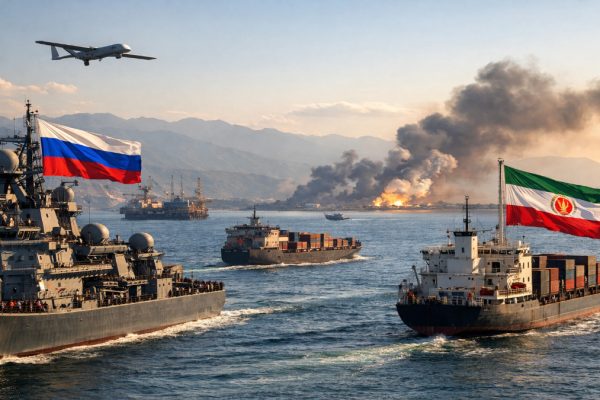
A striking recalibration in global strategic dynamics has emerged following the United States military action against Iran, with Volodymyr Zelensky now perceived as holding increased leverage within the alliance system. The observation, originally framed in commentary associated with The Wall Street Journal opinion discourse, reflects a broader transformation in which technological capabilities, particularly drone warfare, are redefining power relationships among states. The irony of the situation is underscored by earlier remarks attributed to Donald Trump suggesting that Ukraine lacked strategic leverage. The current environment suggests the opposite, as allies reportedly look to Ukraine’s battlefield experience and drone capabilities to address emerging security challenges. From a legal and international relations perspective, this development illustrates how technological asymmetry and operational expertise can shift influence within alliances without formal changes to treaty obligations.
Drone warfare and the transformation of military capability
Ukraine’s growing strategic relevance is closely linked to its extensive experience in deploying unmanned aerial systems in high-intensity conflict. Over recent years, Ukrainian forces have developed advanced operational techniques involving surveillance drones, strike platforms and coordinated swarm tactics. These capabilities are increasingly viewed as critical in modern warfare, particularly in environments where traditional military assets may be less effective against dispersed or asymmetric threats. The conflict involving Iran has highlighted vulnerabilities in conventional defence systems, prompting allies to seek expertise from actors with practical experience in drone operations. The rise of drone warfare also raises important legal questions under international humanitarian law, particularly regarding targeting, proportionality and accountability. While drones themselves are not prohibited, their use must comply with established legal principles governing armed conflict.
Legal implications of technology transfer and military assistance
The growing interest in Ukrainian drone expertise introduces complex legal considerations related to military assistance and technology transfer. Under international law, states may provide support to allies, but such assistance must comply with obligations related to neutrality, arms control and non-proliferation. The transfer of military technology or operational knowledge may also engage domestic legal frameworks regulating defence exports. Governments must ensure that such transfers do not violate existing treaties or contribute to unlawful uses of force. In the context of ongoing conflicts, providing assistance that enhances offensive capabilities may raise questions about indirect participation in hostilities. Legal scholars often debate whether such support could render assisting states co participants in armed conflict under certain circumstances.
Alliance dynamics and the redistribution of influence
The apparent shift in leverage towards Ukraine reflects broader changes in alliance dynamics. Traditionally, influence within alliances has been determined by economic strength, military capacity and geopolitical position. However, specialised expertise in emerging forms of warfare is increasingly becoming a source of strategic influence. Ukraine’s experience in drone warfare provides it with a unique form of capital that allies may find difficult to replicate quickly. This creates a situation in which smaller or less traditionally dominant states can exert disproportionate influence within alliance structures. Such developments challenge conventional assumptions about power distribution and highlight the importance of adaptability in modern security arrangements.
International law and the use of force in evolving conflicts
The intersection of the Iran conflict and Ukraine’s rising strategic importance also raises questions about the broader legal framework governing the use of force. As states confront new forms of warfare, existing legal principles must be applied to increasingly complex scenarios. The United Nations Charter continues to provide the foundational rules governing the use of force, including the prohibition on aggression and the right of self-defence. However, the application of these principles becomes more challenging when conflicts involve indirect participation, technological assistance and hybrid warfare strategies. The evolving nature of conflict, therefore, places pressure on international law to adapt while maintaining its core principles.
Strategic consequences for global security architecture
The shift in perceived leverage towards Ukraine has implications that extend beyond the immediate context of the Iran conflict. It signals a broader transformation in the global security architecture in which technological innovation and operational expertise can alter traditional power hierarchies. Allies seeking to enhance their defensive capabilities may increasingly rely on partners with specialised knowledge, leading to more fluid and dynamic alliance structures. This trend may also encourage states to invest in emerging technologies as a means of increasing their strategic relevance. At the same time, the proliferation of advanced military technologies raises concerns about escalation, arms races and the potential for misuse.
The role of narrative in shaping geopolitical perception
The narrative that Ukraine now “holds the cards” reflects the importance of perception in international relations. Political statements, media commentary and public discourse all contribute to shaping how power is understood and exercised. While legal frameworks provide the structure for state behaviour, perceptions of strength and capability can influence decision-making in ways that extend beyond formal rules. The interaction between narrative and legal reality is therefore a critical component of modern geopolitics.
Conclusion: technology, law and the shifting balance of power
The evolving relationship between the United States, Ukraine and the broader alliance system demonstrates how rapidly the balance of power can change in response to technological and strategic developments. Ukraine’s growing influence highlights the importance of adaptability in both military strategy and legal analysis. As conflicts become more complex and interconnected, the ability to integrate technological innovation within the constraints of international law will be essential. The current situation underscores the need for a coherent approach that recognises both the opportunities and the risks associated with emerging forms of warfare. The interplay between legal norms, strategic necessity and technological capability will continue to define the trajectory of international relations in the years ahead.