In a development that underscores the fragile and increasingly volatile security landscape of the Middle East, the United States has confirmed targeted strikes against Iran aligned militia groups operating within Iraq. The announcement, delivered by General Dan Caine, reflects a deliberate effort to contain emerging threats while avoiding a broader regional conflagration. According to official statements, the strikes were carried out using AH 64 Apache attack helicopters, a platform specifically designed for precision engagement in complex operational environments. The stated objective was to suppress threats posed by militia groups to United States forces and strategic interests in Iraq, signalling a posture that is both defensive in articulation and assertive in execution.

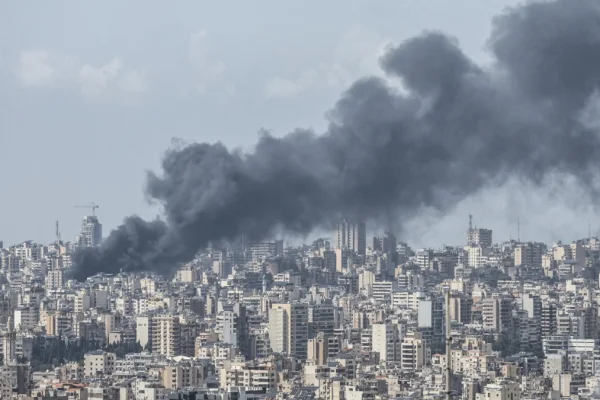
The strikes cannot be viewed in isolation. They occur against the backdrop of a broader and intensifying confrontation involving Iran, Israel, and the United States. As tensions escalate across multiple theatres, Iraq once again finds itself at the centre of proxy dynamics that have historically defined regional instability. Iran aligned militia groups in Iraq have long been a focal point of concern for Washington. These groups, often operating with varying degrees of autonomy, are perceived by the United States as extensions of Tehran’s regional influence architecture. Their capacity to target military installations, logistical convoys, and diplomatic assets elevates them from a domestic security concern to a strategic threat vector. In this context, the use of aerial assets such as the AH 64 is particularly significant. Unlike large scale air campaigns, helicopter based strikes allow for rapid response, tactical flexibility, and minimised collateral exposure. This suggests a calculated approach aimed at deterrence rather than escalation.

From a legal perspective, the strikes raise critical questions concerning the use of force within the territory of a sovereign state. Under international law, the prohibition on the use of force is subject to limited exceptions, most notably the inherent right of self defence under Article 51 of the United Nations Charter. The United States has consistently framed such operations as acts of collective and individual self defence, particularly where non state actors pose an imminent threat. However, the application of this doctrine within Iraq is inherently complex. It requires a careful balancing of Iraq’s sovereign rights against the operational necessity of neutralising threats that may not be fully within the control of the host state. This legal tension is further compounded by the ambiguous status of many militia groups. While they are not formally state actors, their alignment with Iran introduces elements of state responsibility and indirect attribution. For legal practitioners, this creates a challenging interpretative landscape where traditional doctrines are increasingly strained by hybrid modes of conflict.

The decision to publicly confirm the strikes carries its own strategic significance. By articulating both the means and the intent of the operation, the United States is engaging in calibrated signalling. It communicates resolve to adversaries while simultaneously reassuring domestic and allied audiences of its commitment to force protection. The emphasis on suppressing threats rather than eliminating adversaries is equally telling. It reflects an understanding that the objective is not the complete dismantling of militia networks, which would likely require sustained and escalatory engagement, but rather the management of risk through targeted disruption. For Iran, such actions are likely to be interpreted within a broader pattern of containment. While direct confrontation remains a high cost scenario for all parties, the persistence of these limited engagements increases the probability of miscalculation. Each strike, while tactically justified, contributes incrementally to an environment of heightened sensitivity and reduced margin for error.

For Iraq, the situation presents a profound dilemma. As a sovereign state, it must navigate the competing pressures of maintaining internal stability, managing relations with neighbouring Iran, and sustaining its strategic partnership with the United States. Repeated external military actions on its soil risk undermining domestic legitimacy and complicating governance. At the same time, the presence and activity of armed militia groups pose a direct challenge to state authority. This dual pressure places Iraq in a position where its territorial integrity and political autonomy are continually tested.

The strikes highlight a broader transformation in the nature of modern conflict. Traditional distinctions between war and peace, state and non state actors, and domestic and international theatres are increasingly blurred. What emerges instead is a continuum of low intensity, persistent engagements that operate below the threshold of declared war. In this environment, tools such as precision helicopter strikes become instruments not of decisive victory, but of ongoing management. They are designed to shape behaviour, impose costs, and maintain strategic equilibrium without triggering full scale escalation.

The United States strikes against Iran aligned militias in Iraq represent a textbook example of calibrated military action within a highly uncalibrated regional environment. They reflect a strategy that seeks to balance deterrence with restraint, legality with necessity, and immediate security concerns with long term stability. Yet, the inherent unpredictability of the region ensures that even the most measured actions carry significant risk. As the interplay between United States, Iran, and their respective allies continues to evolve, the margin for strategic miscalculation remains uncomfortably narrow. For observers and policymakers alike, the central challenge is not merely to interpret these actions, but to anticipate their cumulative impact on a region where every tactical move resonates far beyond its immediate context.