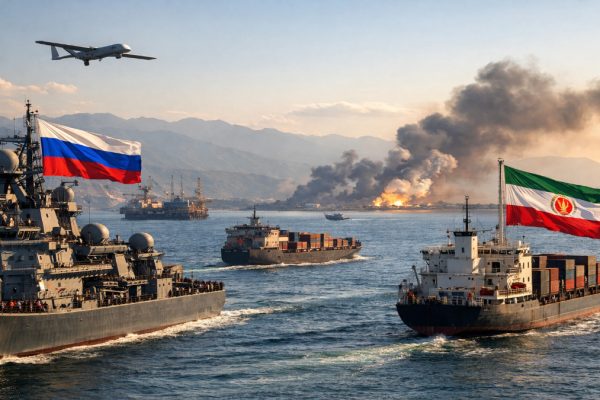
In the evolving theatre of modern naval warfare, few doctrines have generated as much strategic intrigue and legal complexity as the concept of the “mosquito fleet”. Traditionally associated with the use of numerous small, fast, and lightly armed vessels to overwhelm larger adversaries, the doctrine has found renewed relevance in the operational playbook of Iran, particularly through the activities of the Islamic Revolutionary Guard Corps Navy. At its core, mosquito fleet warfare represents an asymmetric strategy designed to neutralise technologically superior naval forces through speed, dispersion, and saturation. Yet, beyond its tactical implications, it raises profound questions under international maritime law, rules of engagement, and the evolving interpretation of lawful naval conduct.
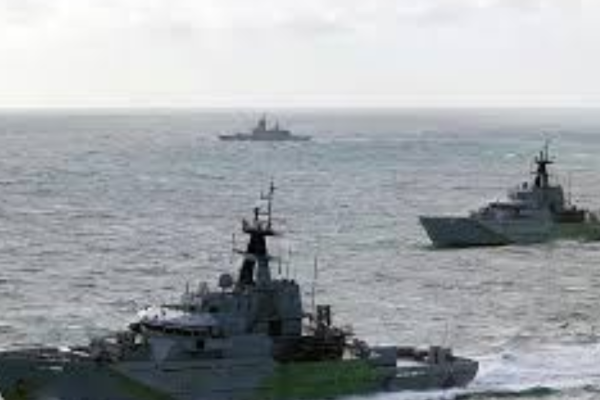
The mosquito fleet concept is neither novel nor accidental. Historically, smaller naval powers have relied on swarming tactics to offset the dominance of blue water navies. What distinguishes its modern iteration is the integration of high speed craft, anti ship missiles, unmanned systems, and coordinated command structures. For Iran, this doctrine is not merely tactical but existential. Facing adversaries with vastly superior naval capabilities, including aircraft carriers and advanced destroyers, Tehran has invested heavily in a fleet of fast attack craft, patrol boats, and missile equipped vessels capable of operating in dense formations. The strategic objective is clear: overwhelm, confuse, and fragment the decision making processes of a larger naval force. In narrow maritime chokepoints such as the Strait of Hormuz, even a modest swarm can pose disproportionate risks to commercial and military shipping.
Mosquito fleet operations rely on three interlocking principles: First, speed and manoeuvrability, small vessels can rapidly approach, disengage, and reposition, making them difficult targets for conventional naval weaponry designed for larger threats. Second, numerical saturation, by deploying dozens, or even hundreds, of vessels simultaneously, the attacking force creates a tactical dilemma. Defensive systems may be overwhelmed by sheer volume, leading to gaps in response. Third, distributed lethality, equipped with short range missiles, torpedoes, or explosive payloads, individual vessels may lack overwhelming firepower, but collectively they can inflict significant damage. This model effectively transforms the maritime battlespace into a high velocity, decentralised engagement zone, where traditional command hierarchies and targeting protocols are severely tested.
From a legal standpoint, mosquito fleet tactics operate in a deeply contested space. The primary framework governing naval conflict remains the United Nations Convention on the Law of the Sea and customary international humanitarian law applicable to armed conflict at sea. However, several critical ambiguities arise: First is distinction and identification, small vessels used in swarm tactics may be indistinguishable from civilian or commercial craft, particularly in congested waterways. This complicates the principle of distinction, which requires parties to differentiate between military and civilian targets. Second is proportionality and response, responding to a swarm of small vessels raises questions of proportionality. The use of high yield defensive systems against numerous low tonnage vessels may risk collateral damage, particularly in proximity to civilian shipping lanes. Third is attribution and state responsibility, in scenarios where vessels operate with plausible deniability or under irregular command structures, attributing actions to a state actor becomes legally and politically fraught. Fourth is freedom of navigation, Frequent swarm manoeuvres in strategic chokepoints may be interpreted as interference with lawful navigation, potentially violating established norms governing transit passage.
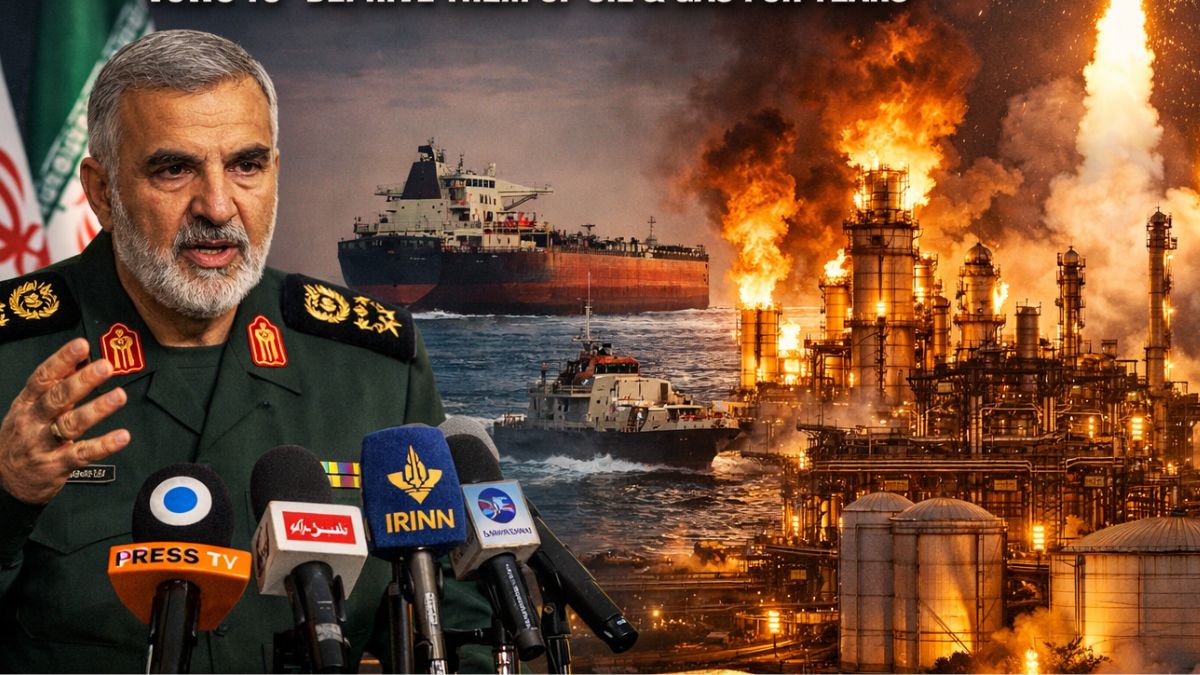
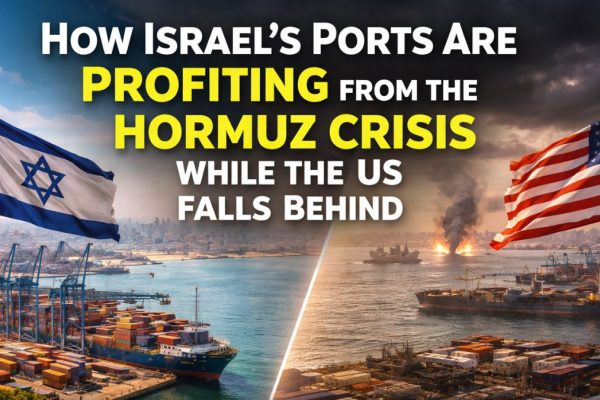
The Strait of Hormuz remains the most critical testing ground for mosquito fleet doctrine. As one of the world’s most vital energy corridors, any disruption carries immediate global economic consequences. Iran has repeatedly demonstrated its capacity to deploy fast attack craft in coordinated formations within this narrow waterway. While these manoeuvres often fall short of open hostilities, they serve as strategic signalling tools, reinforcing deterrence while remaining below the threshold of full scale conflict. For global powers, including the United States and its allies, this presents a persistent operational challenge. Traditional naval superiority offers limited assurance in an environment where threats are diffuse, rapid, and legally ambiguous.
The next phase of mosquito fleet warfare is likely to be defined by technological augmentation. The integration of unmanned surface vessels, artificial intelligence driven coordination, and precision guided munitions could significantly enhance the effectiveness of swarm tactics. This raises further legal and ethical questions, particularly concerning autonomous targeting and accountability in maritime engagements. Moreover, the proliferation of such capabilities beyond Iran to other regional actors could normalise swarm based naval strategies, fundamentally altering the character of maritime security.
The rise of mosquito fleet doctrine signals a broader shift in naval warfare from platform centric dominance to networked, asymmetric engagement. It challenges longstanding assumptions about deterrence, escalation, and control at sea. From a legal perspective, it exposes the limitations of existing frameworks in addressing hybrid and grey zone tactics. There is an increasing need for clearer rules governing identification, engagement thresholds, and the protection of civilian maritime activity. For policymakers and legal practitioners alike, the central question is no longer whether such tactics are effective, but how international law must evolve to regulate them without stifling legitimate security interests.
Mosquito fleet warfare represents more than a tactical innovation. It is a manifestation of how weaker powers adapt to structural imbalances in military capability, leveraging speed, numbers, and ambiguity to challenge conventional dominance. In doing so, it forces a re examination of both strategic doctrine and legal norms. As Iran continues to refine and deploy this approach, the international community must grapple with its implications not only for regional stability but for the future of maritime law itself. The age of decisive naval battles may be giving way to something far less predictable and far more complex: a battlefield defined not by size or strength, but by agility, uncertainty, and the persistent erosion of clear legal boundaries.