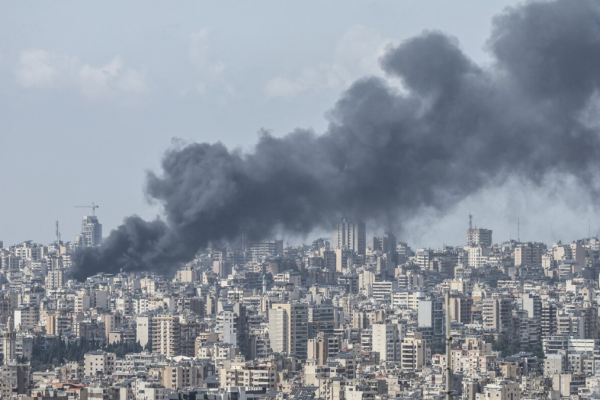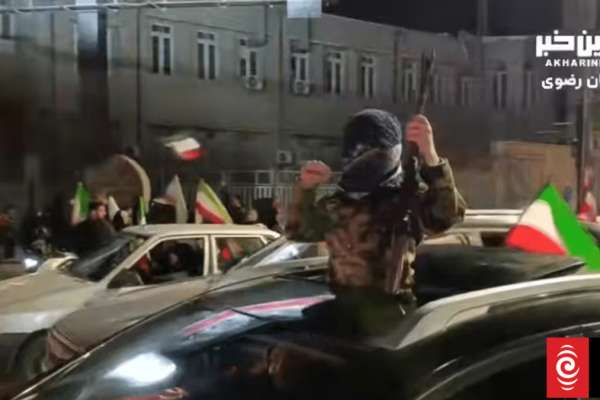
The absence of confirmation from Tehran is not merely a diplomatic silence. It is, in the context of the Islamic Republic’s opaque power structures, a signal in itself. Reports emerging from Israeli security channels in March 2026 claiming the killing of Ali Larijani in an airstrike have triggered a familiar but deeply unsettling pattern in Middle Eastern geopolitics. When the Iranian state neither confirms nor denies an event of such magnitude, seasoned observers recognise the vacuum not as uncertainty but as calculated delay. The echoes of the confusion surrounding the alleged assassination of Ali Khamenei are unmistakable, where hours of denial eventually gave way to reality. This time, however, even the performative denials are absent, intensifying the credibility of the claims and exposing fractures within the regime’s crisis response machinery.

To understand the gravity of Larijani’s reported assassination, one must first appreciate the architecture of power within post revolutionary Iran. Since the Iranian Revolution, the Islamic Republic has not been governed through transparent institutional hierarchies but through an intricate web of clerical authority, military influence, and factional balancing. Larijani was not merely a participant in this system. He was one of its most enduring engineers. Born in Najaf in 1958 into a family deeply embedded in the clerical elite, his intellectual formation in Western philosophy at the University of Tehran provided him with a rare ideological duality, allowing him to navigate both doctrinal rigidity and pragmatic governance.

His early affiliation with the Islamic Revolutionary Guard Corps, formally known as the Islamic Revolutionary Guard Corps, marked the beginning of a career that would span nearly every nerve centre of Iranian power. From deputy labour minister to culture minister, from head of state broadcasting to a decade long tenure as Speaker of Parliament between 2008 and 2020, Larijani cultivated a reputation not as a populist figure but as a strategic operator. His subsequent role as secretary of the Supreme National Security Council, a position he resumed in 2025, effectively placed him at the helm of Iran’s most sensitive security deliberations, including its nuclear negotiations.

By late 2025, several international publications had already begun to describe Larijani as the de facto leader of Iran, a characterisation that, while unofficial, was grounded in observable shifts within the regime. His proximity to the security establishment, particularly the IRGC, combined with his family’s longstanding clerical connections, positioned him uniquely to consolidate power across otherwise competing factions. Reports identifying him as the architect of the January 2026 crackdown on protests further reinforced the perception of a figure willing to employ coercive state mechanisms to secure political continuity. The subsequent sanctions imposed by the United States in January 2026 were not merely punitive but indicative of Washington’s assessment of Larijani as a central node in Iran’s authoritarian apparatus.

Ideologically, Larijani defied simplistic categorisation. While historically aligned with the Principlist camp, his gradual evolution into what analysts termed a pragmatic conservative reflected a strategic recalibration rather than ideological inconsistency. His admiration for elements of China’s economic model under Deng Xiaoping revealed a technocratic inclination, particularly his scepticism towards excessive state intervention in economic affairs. At the same time, his nationalist rhetoric, especially during the 2026 Iran war, where he openly criticised regional actors such as the United Arab Emirates for aligning with the United States and Israel, underscored his commitment to preserving Iran’s geopolitical autonomy.

The implications of his reported assassination, therefore, extend far beyond the removal of a single political figure. If confirmed, this would constitute one of the most significant decapitation strikes against Iran’s leadership since the revolution. Unlike previous targeted killings, which often removed military commanders or symbolic figures, the elimination of Larijani strikes at the intersection of political strategy, security coordination, and ideological mediation within the regime. It disrupts not only operational continuity but also succession calculations in a system already strained by internal dissent and external pressure.

Equally significant is the manner in which this event has unfolded. The absence of immediate Iranian denial suggests either an internal verification process that has yet to conclude or a deeper disarray within the state’s communication apparatus. In regimes where narrative control is paramount, silence is rarely accidental. It may indicate competing factions manoeuvring to shape the post Larijani landscape before any public acknowledgement is made. Alternatively, it could reflect a strategic hesitation aimed at calibrating a response that avoids immediate escalation while preserving deterrence.

From an international relations perspective, the reported strike reinforces a broader trend of increasingly overt and high risk operations in the shadow conflict between Israel and Iran. The willingness to target a figure of Larijani’s stature suggests a recalibrated Israeli doctrine that prioritises preemptive disruption of leadership structures over traditional deterrence. This, in turn, raises the probability of asymmetric retaliation, whether through proxy networks or direct state action, thereby heightening the risk of regional conflagration.

Ultimately, the question is no longer confined to whether Ali Larijani has been killed. The more consequential inquiry concerns what his absence, real or perceived, reveals about the resilience of the Islamic Republic’s governing architecture. For decades, Iran’s system has demonstrated an extraordinary capacity to absorb shocks through controlled adaptation. Yet the potential loss of a figure who embodied both continuity and strategic foresight may test that resilience in unprecedented ways. In the silence emanating from Tehran lies not just uncertainty, but the unmistakable tremor of a system confronting one of its most consequential inflection points.