The forthcoming meeting in London between Ukrainian President Volodymyr Zelenskyy and British Prime Minister Keir Starmer marks a critical inflection point in the legal and strategic evolution of modern defence partnerships. What is ostensibly a bilateral engagement centred on drone production and technological cooperation is, in substance, a recalibration of how states structure military collaboration within the confines of international law.
Set against the broader geopolitical backdrop of the ongoing conflict involving Ukraine, the meeting reflects a growing recognition that warfare is no longer defined solely by conventional arms, but by rapid innovation in unmanned systems, electronic warfare, and dual use technologies. The legal implications of this shift are profound and far reaching.
Historically, military support between states has been governed through arms transfer agreements and security assistance frameworks. However, the anticipated expansion of cooperation between the United Kingdom and Ukraine moves decisively beyond this model.
The proposed joint production and supply of drones represents a form of defence industrial integration. Legally, this raises complex questions relating to export control regimes, intellectual property rights, and sovereign control over jointly developed technologies. The United Kingdom, as a signatory to multiple arms control frameworks, must ensure that any such collaboration complies with its obligations under international export control norms, including those influenced by multilateral arrangements such as the Wassenaar Arrangement.
For Ukraine, the partnership offers not merely access to technology but a pathway to embed itself within Western defence supply chains. This has implications for long term security guarantees and the legal structuring of defence procurement. The centrality of drones in the proposed partnership underscores a significant evolution in the conduct of hostilities. Unmanned aerial systems, while offering operational advantages, operate within a legal framework that remains in flux.
International humanitarian law, particularly the principles of distinction, proportionality, and necessity, applies equally to drone warfare. However, the increasing autonomy of such systems raises unresolved legal questions. To what extent can decision making be delegated to algorithmic processes? Who bears responsibility for unlawful strikes carried out using jointly produced systems?
These questions are not merely theoretical. As the United Kingdom deepens its technological collaboration with Ukraine, issues of state responsibility and attribution become more complex. Joint production may blur the lines between supplier and operator, potentially exposing both states to legal scrutiny in international forums.
The expected participation of Mark Rutte, Secretary General of the North Atlantic Treaty Organization, situates the bilateral talks within a broader Euro Atlantic security architecture. While Ukraine is not a NATO member, its deepening defence ties with member states such as the United Kingdom reflect a form of functional integration.
Legally, this creates an intricate balance. NATO’s collective defence obligations under Article 5 are not formally extended to Ukraine, yet increasing interoperability and joint production initiatives may give rise to quasi alliance dynamics. This raises questions about the extent to which NATO frameworks indirectly shape the legal obligations of non member partners.
Furthermore, the involvement of additional European partners signals the emergence of a networked model of defence cooperation, where multilateral coordination coexists with bilateral agreements. Such arrangements require careful legal structuring to avoid conflicts of jurisdiction and overlapping obligations.
Prime Minister Starmer’s emphasis on drones, electronic warfare, and rapid battlefield innovation as central to both national and economic security reflects a broader legal trend: the securitisation of technology. In this context, defence collaboration is no longer confined to military objectives but intersects with industrial policy, investment regulation, and critical infrastructure protection. Joint ventures in defence manufacturing must therefore navigate domestic legal regimes governing foreign investment, national security reviews, and technology transfer restrictions.
For the United Kingdom, this may involve scrutiny under national security legislation designed to prevent the leakage of sensitive technologies. For Ukraine, alignment with such frameworks may accelerate its integration into Western regulatory systems, albeit at the cost of increased compliance obligations.
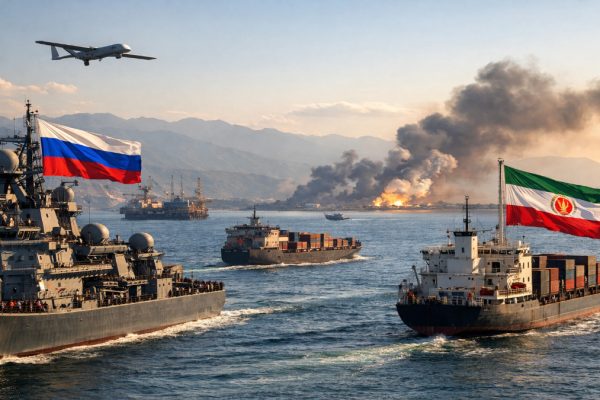
The reference to heightened tensions linked to the Middle East conflict underscores the interconnected nature of contemporary security challenges. Developments in one theatre increasingly influence strategic calculations in another. From a legal standpoint, this reinforces the need for coherence in the application of international law across different conflict zones. The proliferation of drone technology, facilitated by partnerships such as the one under discussion, raises concerns about diffusion and potential misuse beyond the immediate context of Ukraine.
The Zelenskiy Starmer meeting is not merely a diplomatic engagement; it is a harbinger of a new legal paradigm in defence cooperation. By prioritising joint production, technological integration, and multilateral coordination, the United Kingdom and Ukraine are effectively redefining the legal contours of military alliances.
This evolving model challenges traditional distinctions between supplier and ally, between national and collective security, and between military and industrial policy. It demands a corresponding evolution in legal frameworks, one that can accommodate the realities of technologically driven warfare while preserving the foundational principles of international law. As states increasingly turn to innovation as a cornerstone of security, the law will be tested not only in its capacity to regulate conduct, but in its ability to adapt to a rapidly transforming battlefield.