When Israel confirmed that it had launched what it termed a pre emptive strike against Iran and explosions reverberated across Tehran, the region did not merely edge closer to war. It crossed a threshold that international law was specifically designed to prevent. The declaration by an Israeli military spokesman that the operation was intended to remove threats to the state of Israel must now be examined not only through the prism of security doctrine, but against the binding framework of the United Nations Charter, customary international law on the use of force, and the increasingly elastic doctrine of anticipatory self defence that has been stretched to near breaking point in the twenty first century.
Article 2 paragraph 4 of the United Nations Charter prohibits the threat or use of force against the territorial integrity or political independence of any state. The sole explicit exception is found in Article 51, which preserves the inherent right of individual or collective self defence if an armed attack occurs. The jurisprudence of the International Court of Justice, including in the Nicaragua case and the Oil Platforms case, has consistently affirmed that this exception must be interpreted restrictively. A pre emptive strike, particularly one not clearly preceded by an imminent armed attack in the Caroline sense of instant, overwhelming necessity leaving no choice of means and no moment for deliberation, sits uneasily within that framework. Israel’s assertion of a pre emptive strike must therefore be scrutinised against the test of imminence, necessity and proportionality. Without credible, publicly verifiable evidence of an imminent Iranian strike, the operation risks being characterised internationally as a prohibited use of force.
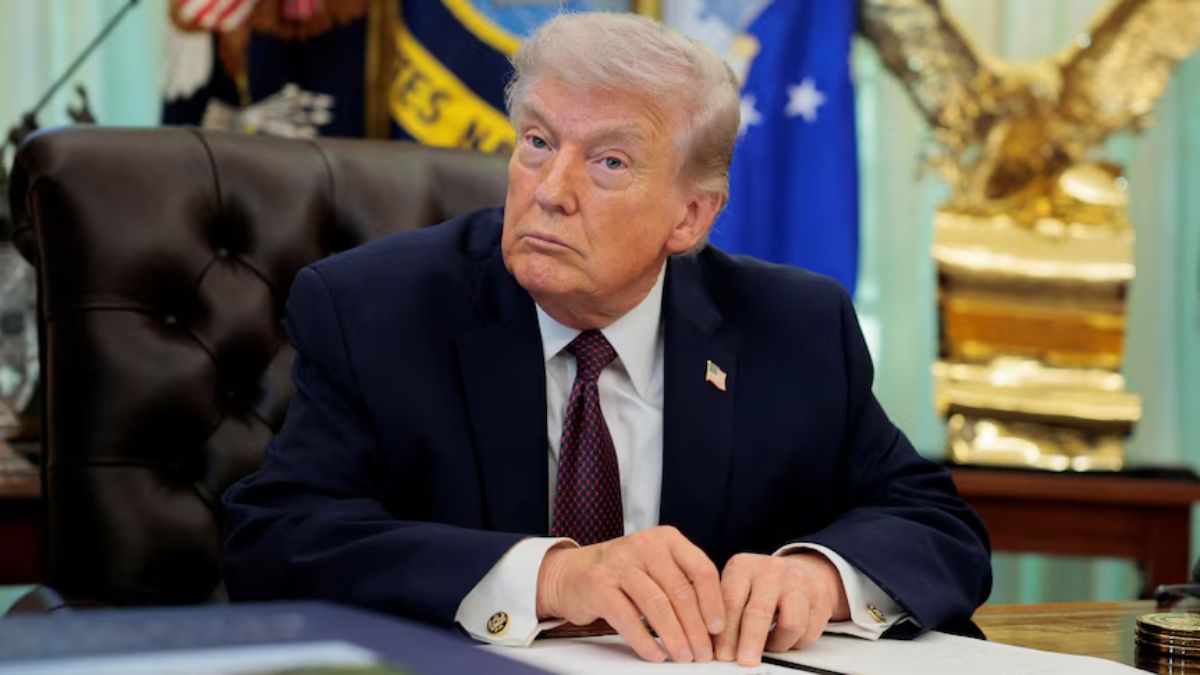
The legal calculus is further complicated by the strategic posture of the United States, whose unprecedented regional military build up since January has shifted the balance from deterrent signalling to operational readiness. With multiple carrier strike groups, long range strike aircraft, integrated air defence systems and extensive refuelling logistics positioned within operational distance, Washington has reportedly deployed between forty and fifty per cent of its deployable air power to the theatre. This is not symbolic posturing. It constitutes a credible capacity to initiate sustained combat operations at presidential discretion. In the context of statements by Donald Trump warning of military consequences absent a deal, the distinction between coercive diplomacy and preparation for war has become perilously thin.
The background to this escalation lies in the unresolved aftermath of the twelve day war that ended in a fragile ceasefire without addressing the core disputes over Iran’s nuclear programme, ballistic missile capabilities and regional alliances. During that confrontation, the United States conducted strikes on three principal Iranian nuclear facilities, while Israel reportedly executed more than three hundred and eighty strikes targeting military infrastructure and senior officials. Yet Tehran retained its stockpile of sixty per cent enriched uranium and, crucially, the technical knowledge necessary to resume enrichment activities. Under the Treaty on the Non Proliferation of Nuclear Weapons, to which Iran remains a party, enrichment for peaceful purposes is not per se unlawful. The controversy turns on compliance with safeguards agreements under the International Atomic Energy Agency and the credibility of assurances regarding exclusively peaceful intent. The demand now articulated by Washington for zero enrichment goes far beyond previous negotiating baselines and strikes at what Iranian leaders have framed as a sovereign right.
From a legal standpoint, the expansion of United States objectives to include limits on ballistic missiles and the termination of Iranian support to anti Israel groups introduces additional layers of complexity. Ballistic missile development is not comprehensively prohibited under international law, save where restricted by binding Security Council resolutions. Resolution 2231, which endorsed the Joint Comprehensive Plan of Action, called upon Iran not to undertake activities related to ballistic missiles designed to be capable of delivering nuclear weapons. The language of call upon is weaker than a mandatory decision under Chapter Seven. Following the expiry of certain provisions, the enforceability of missile restrictions has been further diluted. As for support to non state armed groups, the law of state responsibility and the prohibition on the use of force through proxies are engaged. However, any enforcement action must still conform to the Charter framework and cannot be unilaterally imposed through force absent Security Council authorisation or a valid claim of self defence.
Tehran’s strategic predicament is acute. Accepting zero enrichment would carry profound ideological consequences for the Islamic Republic, whose Supreme Leader Ali Khamenei has consistently framed nuclear capability short of weaponisation as a symbol of technological sovereignty and resistance. Similarly, constraining missile capabilities would undermine a central pillar of deterrence doctrine developed precisely because Iran cannot match the conventional air superiority of its adversaries. In this environment, Iranian decision makers may conclude that absorbing limited strikes is less damaging than capitulation that erodes regime legitimacy. Such a calculation is not irrational when viewed through the lens of regime survival, even if it heightens the risk of broader conflict.
Any United States military action appears, at present, configured for time bound punitive strikes rather than regime change. The absence of ground forces, the lack of extensive special operations deployment and the absence of logistical infrastructure for prolonged occupation suggest that Washington is not prepared for a campaign analogous to Iraq in 2003. Yet punitive strikes carry their own escalatory dynamics. If initial attacks fail to coerce policy change, the pressure to intensify operations grows. Repeated waves of strikes or an expanded air campaign could gradually erode the distinction between limited action and sustained war. Moreover, decision making under the current United States administration has demonstrated a degree of unpredictability that complicates conventional deterrence modelling.
Israel’s role, while publicly restrained in recent weeks, remains structurally central. The intelligence penetration of Iranian territory attributed to Israeli services, combined with the operational capacity of the Israel Defense Forces, ensures that Tel Aviv retains the ability to shape the tempo of escalation. Israeli doctrine has long prioritised pre emption against perceived existential threats. However, unilateral action absent Security Council authorisation risks further normalising a world in which powerful states bypass collective security mechanisms in favour of force.
Iran’s response toolkit is asymmetrical but not negligible. Its ballistic missile and drone arsenal, cyber capabilities and regional partnerships provide options short of conventional confrontation. During the prior twelve day war, Tehran launched more than five hundred missiles towards Israel, with the conflict monitoring organisation ACLED recording over forty direct hits in populated areas that resulted in more than thirty fatalities. These figures underscore that even degraded capabilities can inflict politically significant harm. The memory of the United States killing of Qassem Soleimani in 2020 and subsequent calibrated Iranian retaliation informs current strategic thinking in Tehran, where restraint is increasingly viewed as having failed to deter further pressure.
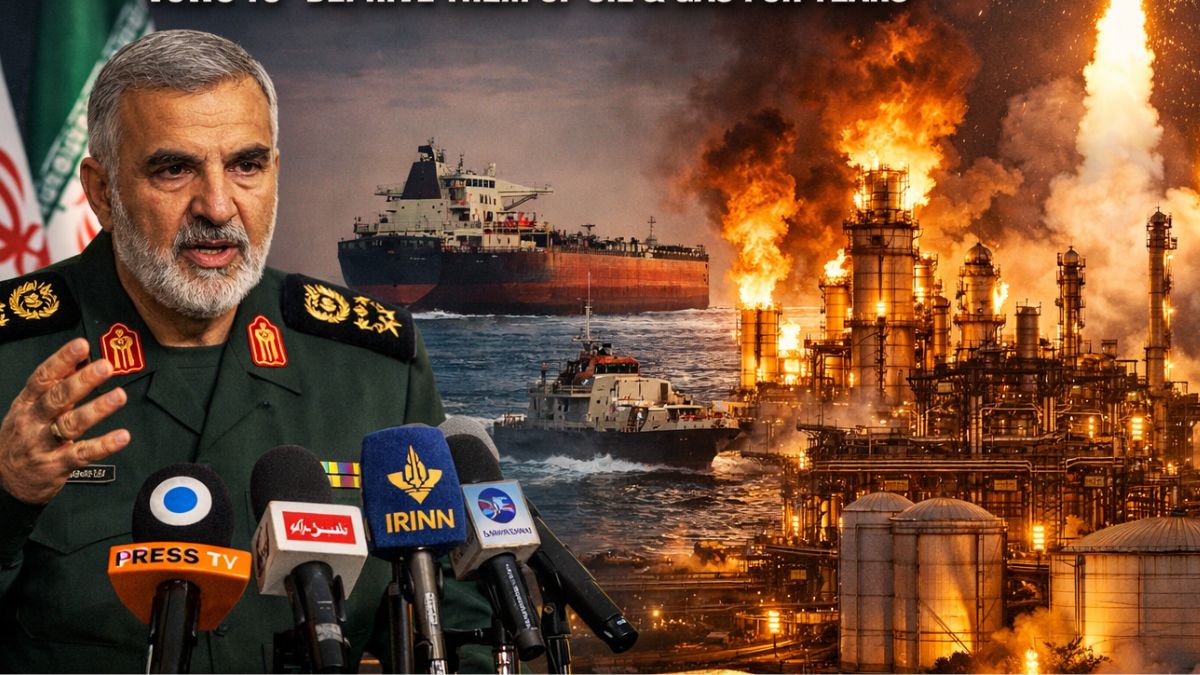
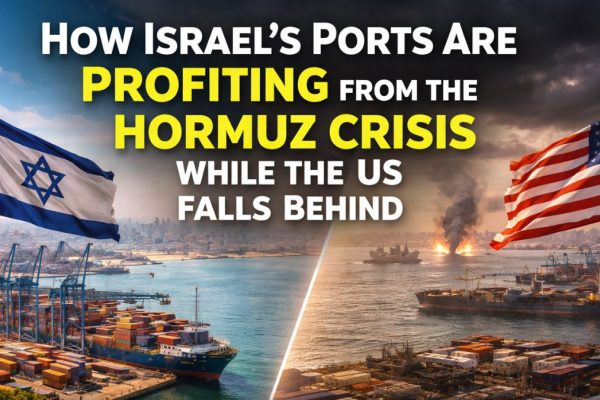
Nevertheless, Iran operates under severe constraints. Its regional network has been weakened, and groups such as Hezbollah have faced sustained attrition. Any attempt to close the Strait of Hormuz or to target Gulf energy infrastructure would likely trigger a decisive and expansive United States response, potentially drawing in additional regional actors and jeopardising global energy markets. The law of naval warfare, freedom of navigation principles under the United Nations Convention on the Law of the Sea and the economic security of energy importing states would all be implicated. What begins as a bilateral confrontation could therefore metastasise into a multilateral crisis with global ramifications.
Internally, the Islamic Republic stands on unstable ground. The violent suppression of widespread protests earlier in the year, with lethal force reportedly used in more than one hundred and forty towns and cities, has deepened the fracture between state and society. International human rights law, including the International Covenant on Civil and Political Rights to which Iran is a party, imposes obligations regarding the right to life, freedom of assembly and due process. A major external conflict would almost certainly be invoked by the authorities to justify further securitisation, expanded surveillance and harsher repression under the banner of national emergency. While international law permits certain derogations in times of public emergency threatening the life of the nation, such derogations must be strictly required by the exigencies of the situation and cannot be used to extinguish non derogable rights.
Should the regime face rapid destabilisation as a consequence of war, the absence of a cohesive alternative leadership within the country raises the spectre of fragmentation and violent contestation among factions, including elements of the Islamic Revolutionary Guard Corps. The collapse of central authority in a state of Iran’s size and strategic location would present a security vacuum with implications extending from the Caucasus to the Gulf. International humanitarian law would then govern a potentially complex non international armed conflict, with all the attendant risks of civilian harm and regional spill over.
Even in the absence of open war, Iran confronts a structural crisis rooted in economic mismanagement, entrenched corruption and the cumulative weight of sanctions regimes. Enhanced enforcement of existing sanctions on oil exports would further constrict fiscal space. Yet sanctions relief alone, even if achieved through a diplomatic breakthrough, would not automatically restore political legitimacy after large scale domestic repression. The social contract has been severely strained, and without meaningful structural reform, including constitutional recalibration of executive and clerical authority, internal instability is likely to persist.
The present moment therefore represents not merely another episode in the long running confrontation between Iran, Israel and the United States, but a profound test of the post 1945 legal order. If pre emptive force absent demonstrable imminence becomes normalised, if coercive demands expand beyond nuclear compliance into wholesale restructuring of a sovereign state’s defence doctrine, and if regional actors increasingly rely on unilateral action rather than collective security, then the prohibition on the use of force risks erosion beyond repair. The Middle East stands once more at the edge of conflagration, and with it the credibility of international law itself.