The leaked draft of a five year memorandum of understanding between the United States and Zambia has ignited a storm of legal, ethical and geopolitical controversy that extends far beyond routine development financing. Valued at approximately 1.012 billion dollars over five years, the proposed agreement has been characterised by civil society advocates as a form of shameless exploitation in which lifesaving health assistance is allegedly conditioned upon sweeping data sharing commitments and broader economic concessions linked to Zambia’s mining sector. At a moment when global health governance is already strained by funding volatility and geopolitical competition, the proposed arrangement has raised profound questions about sovereignty, constitutional integrity and the permissible scope of bilateral conditionality in international relations.
According to the leaked draft, seen by journalists, the United States would provide Zambia with 1.012 billion dollars in health financing over five years. In return Lusaka would commit to hiring 40,000 new health workers, contributing an additional 400 million dollars to health services over the same period and improving sector performance across a range of indicators. Zambia’s projected 2026 health services budget stands at roughly 1.3 billion dollars, meaning the domestic co financing requirement is substantial relative to fiscal capacity. More than one third of Zambia’s 2026 budget is reportedly allocated to debt repayments, a constraint that underscores the structural vulnerability of its public finances.
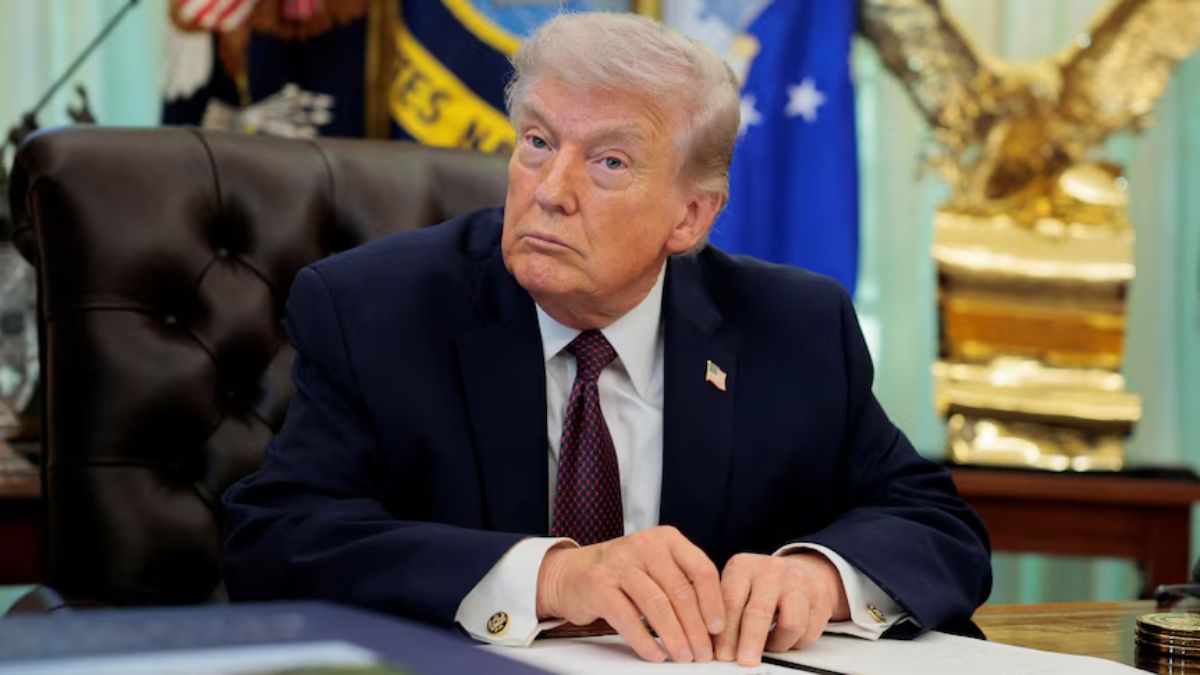
The political sensitivity of the arrangement is heightened by the context in which it has emerged. The administration of former United States president Donald Trump pursued a strategy of dismantling much of the federal development agency USAID and redirecting health financing through bilateral government to government agreements rather than through multilateral channels or non governmental organisations. The new model channels funds directly to partner governments while requiring increased domestic investment and alignment with United States national interests. A spokesperson for the United States Department of State has stated that American foreign assistance must demonstrably advance American national interests and use taxpayers’ dollars efficiently, a formulation that frames aid not as charity but as strategic investment.
What distinguishes the Zambian draft from other bilateral health agreements is the scale and duration of its data sharing provisions. The memorandum reportedly commits Zambia to granting Washington access to its health data for ten years, a period significantly longer than that negotiated by sixteen other African countries under similar frameworks. In addition Zambia is said to be preparing to provide information on new or emerging pathogens within its borders for the next twenty five years. No publicly available memorandum from other partner countries appears to include pathogen data commitments of that duration. Kenya, for example, limited sharing of its health data to seven years and is nonetheless facing a legal challenge domestically. Zimbabwe has already halted its own bilateral health talks with the United States over concerns regarding the sharing of sensitive health information.
The legal ramifications of such provisions are complex. Zambia’s constitution enshrines the right to privacy and imposes obligations on the state to protect personal data. While aggregated or anonymised health data may be shared in accordance with public health cooperation norms, long term and potentially broad access to national datasets by a foreign government raises constitutional questions. Josiah Kalala of the Chapter One Foundation has warned that the agreement could amount to the Zambian government signing away the right to access health data of its citizens to another country. Civil society actors are contemplating litigation, and Kalala has indicated that once the final agreement is obtained through access to information mechanisms, constitutional challenges may follow. The memorandum reportedly includes a clause terminating the entire process if an agreement is not reached by 1 April, intensifying pressure on negotiators and limiting the time available for parliamentary or public scrutiny.
Equally contentious is the alleged linkage between health financing and collaboration in the mining sector. In early December the United States embassy in Zambia confirmed that the health financing agreement was contingent upon collaboration in the mining sector and clear business sector reforms that would improve United States economic access. The draft memorandum reportedly commits the Zambian government to monthly briefings with the embassy on trade and investment efforts, with the goal of expanding United States commercial investment in Zambia. Asia Russell of the advocacy organisation Health Gap has described this as conditioning lifesaving health services on plundering the mineral wealth of the country. The Zambian health minister Elijah Muchima publicly denied that health financing was linked to mining concessions, stating that the conditions related to utilisation of funds and that he was not part of any external economic conditions. He was dismissed by president Hakainde Hichilema three days later without explanation, a development that has only deepened speculation about internal tensions.
From an international law perspective the conditioning of bilateral aid on economic cooperation is not per se unlawful. Development assistance has long been accompanied by policy conditionalities, particularly through international financial institutions. However, the principle of sovereign equality and the prohibition of coercion in international relations require that consent be genuine and not the product of undue pressure. When a country facing significant debt servicing burdens and reliant on external support for critical health programmes is presented with a take it or leave it memorandum that includes expansive data sharing and economic reporting obligations, the voluntariness of consent becomes a legitimate subject of inquiry. The language used by Julius Kachidza, chair of Zambia’s Civil Society Self coordinating Mechanism, who likened the situation to being held hostage, reflects a perception of constrained sovereignty.
The financial arithmetic further complicates the narrative. The draft memorandum would provide 320 million dollars in total health funding for 2026, covering programmes including disease surveillance and treatment of malaria, tuberculosis and HIV. Yet the United States had previously committed 367 million dollars to Zambia for HIV services alone in the previous year. The overall five year commitment of 1.012 billion dollars is lower than the 1.5 billion dollar agreement publicly announced by Muchima in November 2025. If accurate, this suggests a net reduction in United States health support coupled with more stringent performance targets. Zambia would be expected to increase the number of people enrolled in HIV treatment and reduce maternal mortality while facing declining external funding and strict termination clauses should it falter.
For individuals living with HIV, the stakes are existential. Kachidza has spoken personally about the risk that disruption or distortion of the HIV programme would make him among the first casualties, alongside hundreds of thousands of others. The memorandum reportedly allows Washington to terminate the agreement and withdraw funds if Zambia fails to meet its commitments on workforce expansion, domestic financing or performance improvement. In a system where more than one third of the national budget is allocated to debt servicing, sudden withdrawal of health funds could have catastrophic consequences.
The debate over pathogen data sharing also intersects with global health security norms. International cooperation in surveillance is vital for early detection of outbreaks, yet such cooperation is typically governed by multilateral frameworks such as the International Health Regulations administered by the World Health Organization. Bilateral arrangements extending twenty five year commitments to share information on emerging pathogens with a single foreign government raise questions about data governance, equity in access to scientific knowledge and potential commercial exploitation. If pathogen samples or genomic data were to inform pharmaceutical development without reciprocal benefit sharing, the arrangement could be criticised as asymmetric.
Civil society groups in Zambia have demanded removal of data sharing provisions and a seat on the steering committee that would monitor progress under the agreement. They have also sought full transparency through access to information requests to publish the latest draft and any related compact. Officials reportedly warned participants at a February briefing against considering legal action regarding the data provisions and declined to clarify whether funding was tied to economic concessions. Such warnings, if accurately reported, could implicate constitutional guarantees of access to justice and participatory governance.
The broader geopolitical landscape cannot be ignored. Zambia is a significant producer of copper and other critical minerals essential to global energy transitions and digital infrastructure. In an era of strategic competition over supply chains, linking health assistance to mining collaboration may reflect a deliberate integration of development finance and resource diplomacy. The United States has increasingly framed foreign assistance as a tool to counter the influence of other major powers in Africa. While advancing national interests is an explicit policy objective, the conflation of health security with mineral access risks undermining trust and fuelling narratives of neo colonial extraction.
Ultimately the controversy surrounding the proposed United States Zambia health financing agreement illustrates the fragile intersection of public health, sovereign autonomy and strategic competition. If Zambia proceeds under the current draft, it may secure short term funding at the price of long term data commitments and intensified economic alignment. If it rejects the terms, it risks abrupt funding gaps with immediate human consequences. The legal and ethical calculus is therefore stark. For a country balancing debt distress, public health imperatives and external pressure, getting it right at the beginning is not a rhetorical flourish but a constitutional and moral necessity.