The contemporary revival of hard edged nationalism across parts of Europe and the Atlantic world is not an accidental convergence of political moods but a structurally coherent phenomenon that draws heavily from a playbook refined in modern Russia under Vladimir Putin. What distinguishes this model is not merely its emotive appeal to flags and heritage, but its systematic use of law, education policy, media regulation and institutional capture to transform patriotism from an organic cultural sentiment into an enforceable political obligation. When examined through a legal and international relations lens, the parallels between the Kremlin’s methods and the emerging rhetoric of movements such as Reform UK under Nigel Farage are neither superficial nor coincidental.

The compulsory patriotism lessons introduced in Russian schools in September 2022 were not a cultural flourish improvised during wartime but the logical extension of a constitutional and legislative transformation that had been unfolding for more than a decade. Following amendments to the Russian Constitution in 2020, which elevated vague concepts such as faith in God, historical continuity and the defence of traditional values to quasi constitutional status, the state acquired a legal basis for regulating ideological content in education. The weekly classes euphemistically titled conversations about what is important operate within a framework that criminalises dissent through statutes such as Article 354.1 of the Criminal Code, which punishes the rehabilitation of Nazism, and the expansive laws against discrediting the armed forces. In this environment, patriotism is not taught as civic attachment but imposed as legal conformity, with deviation carrying administrative or criminal consequences.

This distinction matters profoundly when assessing the trajectory of nationalist politics in the United Kingdom. Britain remains a constitutional democracy with entrenched protections for freedom of expression under the Human Rights Act 1998 and the European Convention on Human Rights, yet the calls by Reform UK for a more patriotic curriculum echo the early stages of a familiar pattern. Education policy in England is already highly centralised, with statutory powers vested in the secretary of state under the Education Act 2002 to prescribe curriculum content. A government inclined towards ideological enforcement would not need to dismantle democratic institutions to influence historical narrative. It would merely need to redefine balance, objectivity and national interest in ways that marginalise critical perspectives, particularly on empire, migration and minority rights.

The appointment of Suella Braverman as Reform’s education spokesperson, following her defection from the Conservative Party, signals a deliberate move to frame education as a site of cultural struggle rather than pedagogical development. Her promise of a syllabus that fosters love of country is framed as corrective neutrality, yet in legal terms it raises immediate questions about compatibility with existing statutory duties. Schools in England are bound by the Equality Act 2010 to avoid discrimination and by safeguarding guidance to promote respect for diversity. Any attempt to mandate a singularly celebratory narrative of national history would inevitably collide with these obligations, inviting litigation and placing head teachers and local authorities in an untenable position between political instruction and legal compliance.

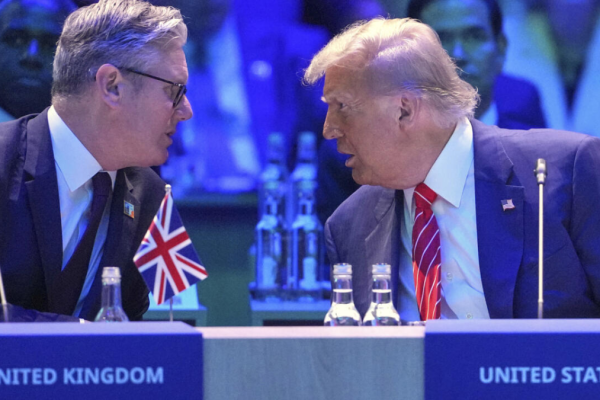
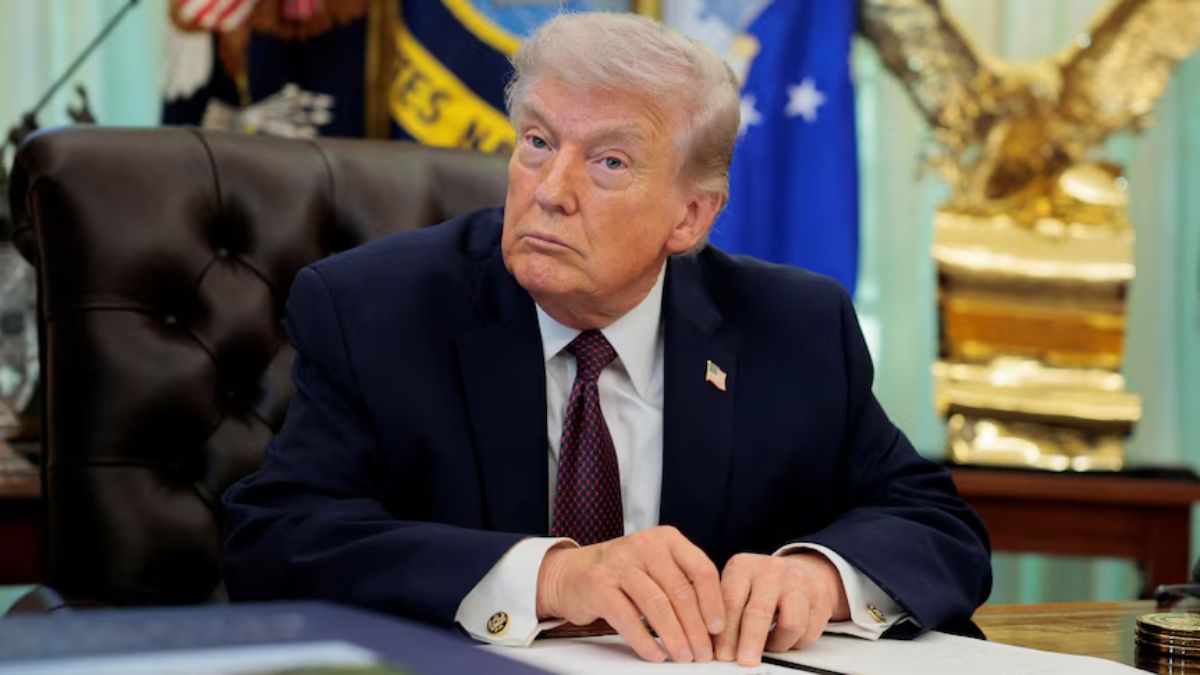
The broader ideological ecosystem in which Reform operates further sharpens these concerns. Donald Trump and his Maga movement have demonstrated how nationalist rhetoric can be translated into executive action that strains constitutional limits, particularly through the instrumentalisation of immigration law and the politicisation of federal agencies. The proposed UK Deportation Command modelled on the United States Immigration and Customs Enforcement agency exemplifies this transatlantic borrowing. In the British context, immigration enforcement is already governed by an intricate web of statutory powers, judicial review and international obligations under the Refugee Convention. Rebranding enforcement through a nationalist lens does not alter these constraints, but it does normalise a language of internal threat that historically precedes legal overreach.

Farage’s long documented ambivalence towards the Kremlin provides an additional layer of strategic context. His previous praise of Putin as an effective operator, his role as a commentator on RT prior to the revocation of its UK licence by Ofcom, and his repeated attribution of blame to Ukraine for provoking war by seeking closer ties with the European Union, collectively situate his politics within a worldview that treats liberal internationalism as decadence and national sovereignty as absolute. While Farage has since denounced Putin as a monster, this rhetorical recalibration aligns conspicuously with shifts in British public opinion rather than with any substantive reassessment of the legal principles underpinning European security.

From Moscow’s perspective, such movements are strategically invaluable regardless of intent. The weakening of European solidarity achieved through Brexit, which Farage championed, delivered tangible geopolitical dividends to Russia by fragmenting the European Union at a moment of rising confrontation. The conviction and imprisonment of Nathan Gill, a former Ukip and Brexit Party figure later elevated within Reform’s Welsh leadership, for activities linked to Russian influence operations in the European Parliament, underscores how porous nationalist movements can be to external manipulation. Legally, the absence of comprehensive foreign agent registration laws in the UK comparable to those in the United States leaves democratic systems vulnerable to covert influence, particularly when political cultures normalise hostility to supranational oversight.

The convergence of nationalist parties across Europe reinforces this structural alignment. France’s Rassemblement National, Hungary’s Fidesz, Spain’s Vox and Germany’s Alternative für Deutschland each operate within distinct constitutional systems, yet all share a scepticism towards judicial constraint, minority protections and supranational legal orders. These parties function as what international relations scholars describe as norm entrepreneurs in reverse, eroding shared standards rather than advancing them. Their cumulative effect is to hollow out the legal and institutional foundations of the post war European settlement without requiring overt coordination.

Central to this project is the redefinition of patriotism as demographic and moral homogeneity. The fixation on white heterosexual Christian identity, the promotion of pronatalist policies and the vilification of liberal attitudes towards sexuality and ethnicity mirror arguments long advanced by Russian state ideologues to justify restrictions on LGBT expression and reproductive rights. In Russia, these positions are codified through legislation such as the laws against so called gay propaganda. In Britain, they emerge through policy proposals and cultural signalling that test the resilience of anti discrimination law and human rights jurisprudence. The presence of figures like Zia Yusuf advocating Christianity as core to national DNA, despite his own non Christian background, illustrates how nationalism resolves contradiction through loyalty to leadership rather than coherence of principle.

What unites these strands is the elevation of the leader as the ultimate arbiter of national meaning. Legal inconsistency, ideological reversal and selective enforcement become features rather than flaws, justified by appeals to existential threat and cultural survival. In such systems, the law ceases to function as a neutral framework and becomes an instrument of moral instruction. Dissent is recast as betrayal, and citizenship is measured by compliance rather than participation.

The resilience of British democracy will ultimately depend on whether enough citizens and institutions recognise this trajectory and insist on a conception of patriotism grounded in pluralism, legality and historical honesty. The evidence from comparative analysis is sobering. Once nationalism captures the language of law and education, reversing its effects becomes exponentially harder. That Reform UK may fail to secure power does not diminish the significance of its influence. On the contrary, the ceiling on its appeal may well reflect an intuitive resistance among many Britons to a vision of national identity that demands submission to a single voice.

In the final analysis, the greatest danger lies not in overt authoritarianism but in the incremental legal normalisation of ideas that treat diversity as decay and loyalty as obedience. From Putin’s Russia to Trump’s America and Farage’s Britain, the pattern is recognisable, the tools are increasingly familiar and the consequences, if history is any guide, are rarely confined to rhetoric alone.