In a development that may reshape the architecture of international trade diplomacy, India has deferred its scheduled trade delegation to Washington following the United States Supreme Court’s rejection of tariffs imposed by President Donald Trump. The decision, confirmed by a source within India’s trade ministry, signals not merely a diplomatic pause but a structural recalibration of global trade expectations.
At stake is far more than an interim trade arrangement between two strategic partners. What has unfolded is a constitutional intervention in trade policy by the United States Supreme Court, with immediate consequences for bilateral negotiations, executive authority, and the credibility of tariff driven diplomacy.
The constitutional shockwave from Washington
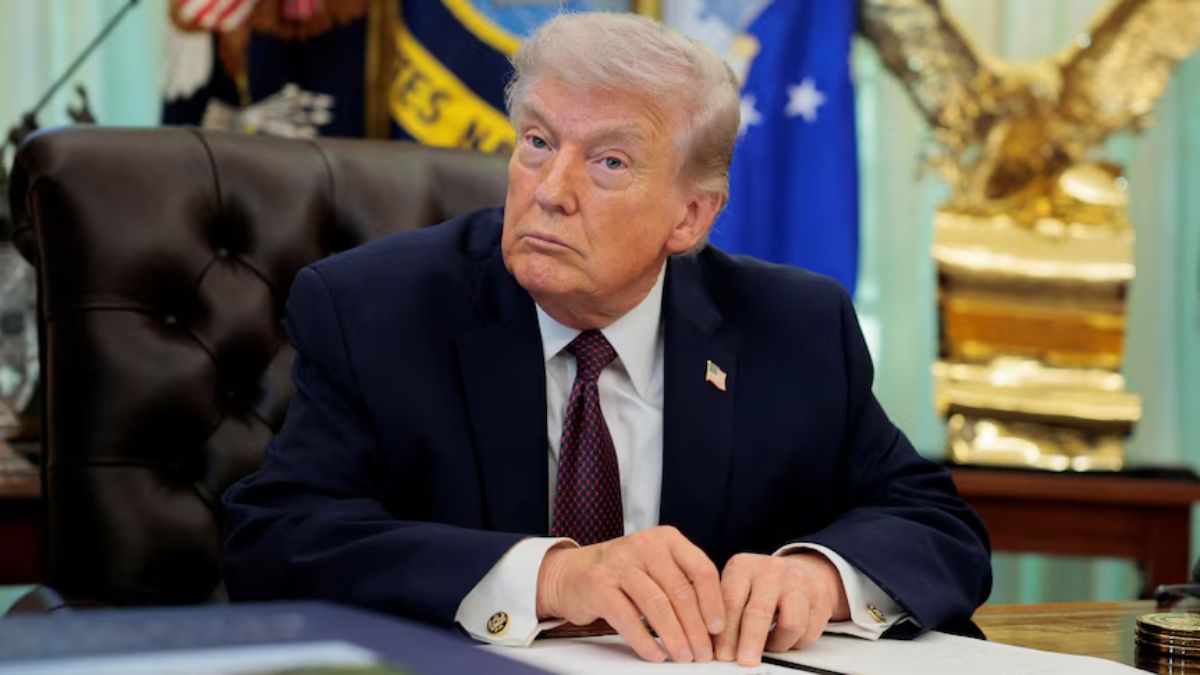
The Supreme Court’s rejection of tariffs previously imposed by President Trump constitutes a rare judicial assertion in the realm of trade policy. Traditionally, tariff powers have been exercised under delegated statutory authority by the executive branch, often justified under national security or emergency provisions. By striking down those measures, the Court has effectively reasserted constitutional limits on executive trade action.
This ruling creates immediate uncertainty. While President Trump subsequently announced a temporary tariff of 15 per cent, the maximum permitted by law, the jurisprudential terrain is unsettled. Any interim trade pact negotiated under assumptions of a stable tariff regime now rests on precarious foundations.
For India, a country negotiating from both commercial and strategic vantage points, such volatility undermines the predictability essential to treaty level commitments.
The deferred delegation: Legal prudence or strategic pause
India’s trade delegation was due to travel to Washington to finalise an interim agreement under which the United States would reduce punitive tariffs of 25 per cent imposed on certain Indian exports linked to New Delhi’s Russian oil purchases. The revised framework envisaged a reduction to 18 per cent. In exchange, India reportedly committed to procure United States goods worth 500 billion dollars over five years, including energy supplies, aircraft and parts, precious metals and technology products.
The postponement is therefore not procedural. It reflects an assessment that the legal basis of United States tariff commitments is now fluid. Entering into binding understandings while the scope of executive tariff authority remains judicially contested would expose India to legal and political risk.
From an international law perspective, the doctrine of legitimate expectations and the principle of good faith in treaty negotiations require a degree of regulatory stability. When domestic constitutional litigation unsettles that stability, foreign negotiating partners must reassess exposure.
India’s response, therefore, is not reactive but institutionally cautious.
Implications for United States India strategic convergence
The bilateral relationship between the United States and India has matured beyond trade. Defence cooperation, energy security, semiconductor supply chains, and Indo Pacific strategic alignment form the backbone of engagement between Washington and New Delhi.
Prime Minister Narendra Modi and President Joe Biden have consistently projected the partnership as one anchored in shared democratic values and economic interdependence.
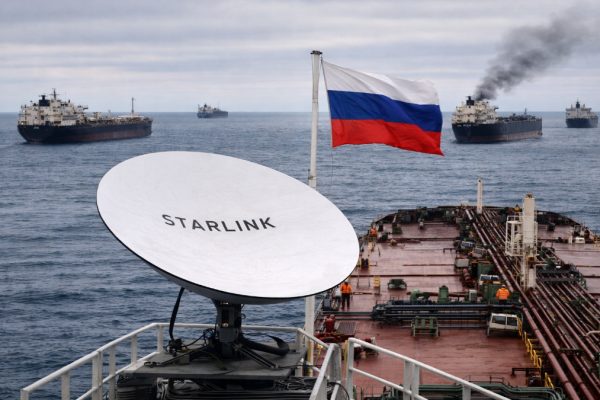
However, the tariff dispute intersects with a sensitive geopolitical issue: India’s continued procurement of Russian oil. The earlier imposition of 25 per cent tariffs was linked to this policy choice. Thus, trade measures were operating as instruments of geopolitical signalling.
The Supreme Court’s ruling complicates that signalling. If executive authority to impose such tariffs is curtailed, the United States may find its leverage constrained by constitutional doctrine. Conversely, if alternative statutory pathways are pursued, they may invite further judicial scrutiny.
For India, this introduces an additional layer of unpredictability into strategic economic negotiations.
The Russian oil factor and extraterritorial trade pressure
The linkage between tariffs and India’s Russian oil purchases reflects a broader trend in international economic statecraft. States increasingly deploy trade restrictions to influence third party geopolitical alignments.
Such measures raise complex issues under World Trade Organization law, particularly concerning most favoured nation obligations and the national security exception. While the United States has historically relied upon security based justifications, judicial invalidation at the domestic level weakens the coherence of such arguments internationally.
India has consistently maintained that its energy security decisions are sovereign and commercially driven. If tariff penalties premised on such decisions are constitutionally vulnerable in the United States, it recalibrates the negotiating field.
Domestic political dimensions in India
The opposition Congress party has called for the interim pact to be paused and renegotiated, questioning the prudence of issuing a joint statement prior to the Court’s ruling. This domestic critique underscores the political cost of entering into trade commitments amid legal uncertainty abroad.
Trade Minister Piyush Goyal had indicated that the interim pact could take effect in April following resolution of outstanding issues. That timeline now appears aspirational.
From a constitutional perspective, India must ensure that any agreement survives not only parliamentary scrutiny but also withstands shifts in United States executive authority constrained by judicial review.
Global trade governance: A precedent in the making
The immediate question is bilateral. The larger question is systemic.
If the highest court of the world’s largest economy circumscribes executive tariff powers, other jurisdictions may observe and emulate. Judicial review of trade sanctions and tariff regimes may expand globally. This introduces a jurisprudential dimension into what has traditionally been executive dominated economic diplomacy.
Moreover, the episode illustrates a fundamental principle: domestic constitutional law can profoundly disrupt international economic arrangements. Multinational corporations, sovereign wealth funds, and trade dependent economies must now factor constitutional litigation risk into cross border negotiations.
The decision may also influence ongoing debates within the World Trade Organization regarding the scope of security exceptions and unilateral trade measures.
Market confidence and strategic patience
Markets crave certainty. Trade frameworks are negotiated over months, sometimes years, predicated upon stable assumptions of tariff structures. Judicial invalidation mid negotiation erodes confidence.
India’s decision to delay its delegation should therefore be read as strategic patience rather than diplomatic friction. It signals that New Delhi is unwilling to finalise commitments in the shadow of unresolved constitutional contestation in Washington.
The postponement may, paradoxically, strengthen the eventual agreement. By allowing clarity to emerge regarding the permissible scope of United States tariff authority, both parties can negotiate from firmer legal ground.
A defining test of democratic trade systems
The deferral of trade talks between India and the United States marks a pivotal intersection of constitutional law, international relations, and economic diplomacy. It demonstrates that even in an era of strategic alignment, domestic judicial review can recalibrate global trade trajectories overnight.
For India, the move underscores legal prudence and sovereign calculation. For the United States, it represents a constitutional reckoning with executive trade activism. For the international community, it serves as a reminder that trade governance is no longer insulated from constitutional scrutiny.
The coming weeks will determine whether this episode becomes a temporary pause or a structural shift in how democratic powers conduct tariff based diplomacy. Either way, the ripple effects will extend far beyond Washington and New Delhi, influencing global trade governance for years to come.