
Over three years of the war, the war between Russia and Ukraine keeps growing in magnitude, scope, and technological levels, despite the fact that the winter season is tightening its grip on the Eastern part of Europe. Commander in Chief of Ukraine, Oleksandr Syrskii has provided an account of a battlefield where the conventional notion of the front has virtually melted away. The war itself consists of a broad kill zone, often expanding to as much as 20 kilometres across, and this has been a product of mass use of drones, precision-guided munitions, and real-time surveillance technologies. The consequences of these developments are that both soldiers and equipment are in the constant risk even when they are not in direct contact with the enemy forces. The total length of the active front, Syrskii observed, is now about 1,200 kilometres hence the logistic and human pressures on either militaries.

Russia has remained very dependent on aerial strikes, deploying mass drone and missile strikes to overwhelm Ukrainian air defence and destroy critical infrastructure. According to officials of Ukraine, in one night attack, hundreds of drones and several missiles were used by the Russian forces, which attacked various parts of the country. Most of the incoming threats were intercepted by Ukrainian air defence systems, but some of them bypassed the defences causing death and destruction. Drones hit several people, killing at least one and injuring others in Dnipropetrovsk, in central Ukraine, using powerful glide bombs, according to the authorities of the area.

Another wave of Russian air attacks struck in the daytime the Zaporizhia region in the south. The residential neighborhoods were worst hit by the strikes as they could see many apartment buildings damaged, and civilians injured. One of the most vivid cases was the burning of a dog shelter in the local capital where a number of animals were slaughtered. The attack according to local officials was a continuation of a bigger trend where civilian and non-military targets are also being targeted in addition to infrastructure targets.

Russia on its part had its own experiences with Ukrainian attacks. The Russian Ministry of Defence said dozens of Ukrainian drones had been shot down in various regions, including Bryansk, where the local officials reported that dozens of villages faced short-term power blackouts. Ukrainian attacks in the border city of Belgorod are said to have destroyed power plants, which interfered with power supply. According to the authorities in the region, power plant and electrical substation were struck causing outages in some areas of the city. These interactions also point to how the war is taking on more of an energy infrastructure fight on both fronts making lives more difficult among civilian groups throughout the winter season.

President Volodymyr Zelenskyy of Ukraine has openly confessed failures of the air defence system of the country in some instances especially in countering a massive attack of drones over civilian hubs. He has demanded an increase in speed in reinforcing air defence and to speed up the repairs of damaged energy and heating systems. Thousands of residential houses in Ukrainian cities lacked heating due to recent Russian attacks, and according to Zelenskyy, this worsened humanitarian issues in the cities under Ukrainian control amid the freezing conditions.

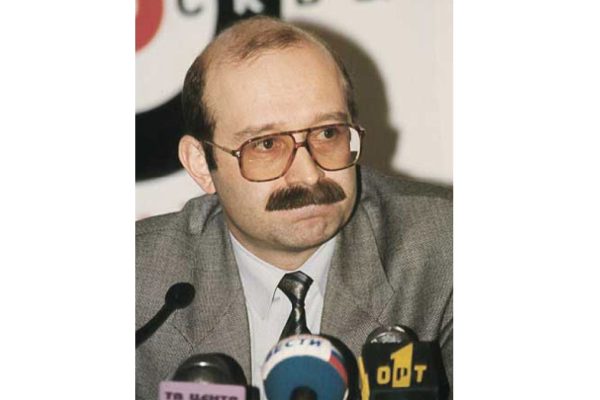
In the middle of the ongoing war development, there was a dramatic security event that happened in Moscow, something that brought another twist to the war. Lieutenant General Vladimir Alekseyev was a Russian military intelligence officer who was shot several times in his apartment building and taken to hospital in a critical state. According to the investigators, a person who has not been identified fired at the crowd and ran off. It was reported that Alekseyev was shot a number of times, with wounds on his abdomen and leg leaving him in a lot of blood loss.

Alekseyev is a senior officer of the military intelligence service, the GRU, of Russia where he would have been deeply engaged in the planning and monitoring of the war against Ukraine. The attack was promptly described as an attempt to sabotage diplomatic attempts by Russian officials who were eager to point the finger at Kyiv as the perpetrator of the attack. Foreign Minister Sergey Lavrov asserted without evidence that the shooting was aimed at derailing continuing talks connected with a prospective peace structure. The head of the GRU, Admiral Igor Kostyukov, was said to be heading the Russian delegation to Ukraine in Abu Dhabi at the time of the incident where security matters were to be discussed.

The Ukrainian officials openly denied their participation in the attack. The foreign minister, Andrii Sybiha, said that Kyiv was not involved in the shooting and rejected the claims of Russia. The attack was however a continuation of a string of high profile attacks within Russia which Moscow has attributed to the war, raising the possibility that the war was expanding its shadow even outside the battlefield.

The development of the conflict is influenced by the international military assistance to Ukraine, and the fight has not stopped yet. Canada declared that it is providing air defence missiles to enhance the capacity of Ukraine in fighting the Russian air attacks. According to the Ukrainian officials, the deliveries were already underway and that the aid is part of a wider cooperation with Ottawa, which also includes joint production of drones, training, and mutually sharing experience in the battlefield.

The United States has gone ahead to maintain the Ukraine military capabilities, giving a green light on the possible sale of spares and other related equipment worth hundreds of millions of dollars. As the Pentagon states, the package will assist Ukraine in sustaining and reparing the current weapon systems but not in the introduction of the new weapon platforms. All these actions demonstrate an ongoing effort by the Western allies to aid Ukraine in defence despite the ongoing discussion of long-term strategy and resource allocation.

With the war in a different year, the action of this single day demonstrates the multidimensional complexity of the war: a vast and technologically changed battlefield, a long history of infrastructure and civilian attacks, politics spurring to high profile security events, and continued international intervention. Quite on the contrary, the war demonstrates signs of entrenchment becoming even deeper with both sides getting used to a new reality where military, technological and political lines become more interdependent.