

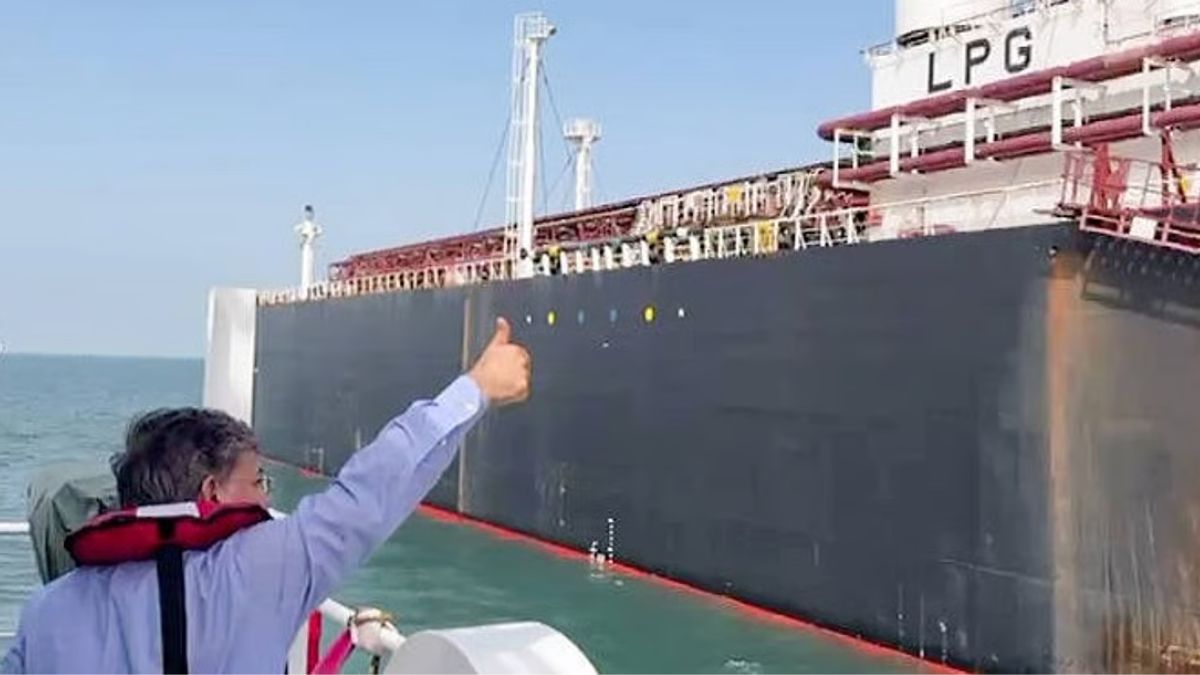
The recent transit of an Indian LPG tanker through a restricted channel near Iran’s coast is drawing attention to a deeper shift in global trade dynamics: the growing use of strategic chokepoints as instruments of selective access and geopolitical leverage.
India’s liquefied petroleum gas (LPG) trade heavily dependent on imports from West Asia has come under strain amid heightened tensions in the Gulf region. The Strait of Hormuz, a critical maritime corridor handling nearly one-fifth of global oil and LPG shipments, has seen disruptions following escalating conflict conditions. In this environment, the passage of the Indian-flagged tanker Pine Gas has emerged as a case study in how trade flows are being reshaped under geopolitical pressure.
The vessel, carrying approximately 45,000 metric tons of LPG from the UAE’s Ruwais refinery, was forced to deviate from its standard route after security conditions deteriorated. Instead of transiting through the main Hormuz channel, the tanker was reportedly guided through a narrow passage north of Larak Island along Iran’s southern coast an unusual and high-risk route for commercial shipping.
From a trade perspective, the incident highlights a critical shift: access to essential trade routes is no longer governed solely by commercial considerations but increasingly influenced by geopolitical alignments. Reports indicate that Iran has restricted passage for many vessels while allowing selective transit for certain countries, including India, China, and Russia. This has led to perceptions of “friendly-nation exceptions,” raising concerns about fairness, predictability, and the potential weaponization of trade corridors.
The implications for global trade governance are significant. Selective access undermines the principle of non-discriminatory trade flows, a cornerstone of international commerce. Analysts warn that if such practices become normalized, they could set precedents for coercive trade diplomacy, where access to critical supply routes is contingent on political alignment rather than market mechanisms.
For India, the immediate benefit of such access is clear. Continued LPG shipments help stabilize domestic supply and mitigate price volatility in a country that imports large volumes to meet household energy needs. However, the reliance on politically contingent access introduces long-term uncertainty. Unlike contractual trade arrangements, such permissions are subject to rapid shifts in geopolitical calculations, making supply chains less predictable.
Operationally, the rerouting of the Pine Gas also underscores the rising cost and complexity of trade under such conditions. Navigating a non-standard maritime corridor requires heightened safety measures, including naval coordination. The Indian Navy reportedly provided escort support once the vessel entered safer waters, reflecting the increasing overlap between military operations and commercial shipping.
Additionally, the cargo’s redistribution from its original destination on India’s west coast to eastern ports illustrates the logistical adjustments required to maintain supply continuity. Such changes, while effective in the short term, can increase transportation costs, extend delivery timelines, and strain port infrastructure.
The broader trade impact extends beyond India. Countries lacking similar geopolitical leverage or naval capabilities may find themselves excluded from critical supply routes, exacerbating inequalities in global trade access. Import-dependent economies, particularly in Africa and parts of Asia, could face sharper disruptions if selective passage becomes widespread.
Data trends aligned with UNCTAD highlight how chokepoint disruptions already increase freight rates, insurance premiums, and overall trade costs. The addition of selective access mechanisms compounds these challenges, introducing a layer of political risk that is difficult to hedge through traditional trade finance instruments.
From a policy standpoint, the episode reinforces the need for diversification. India has been exploring alternative strategies, including expanding coastal gas infrastructure, promoting piped natural gas usage, and strengthening bilateral energy partnerships. These measures aim to reduce dependence on vulnerable maritime routes and enhance long-term energy security.
However, the immediate reality remains that critical commodities like LPG continue to rely heavily on seaborne imports. As such, ensuring uninterrupted access to key trade corridors is becoming as important as securing the commodities themselves.
The Pine Gas transit ultimately highlights a broader transformation in global trade: the shift from open, rules-based access toward a more fragmented system where geopolitical considerations play a decisive role. As tensions persist in key maritime regions, the ability to navigate these dynamics both diplomatically and operationally will determine trade resilience for nations worldwide.
In this evolving landscape, selective access to chokepoints like Hormuz may offer short-term relief for some countries, but it raises fundamental questions about the future of equitable and predictable global trade.