

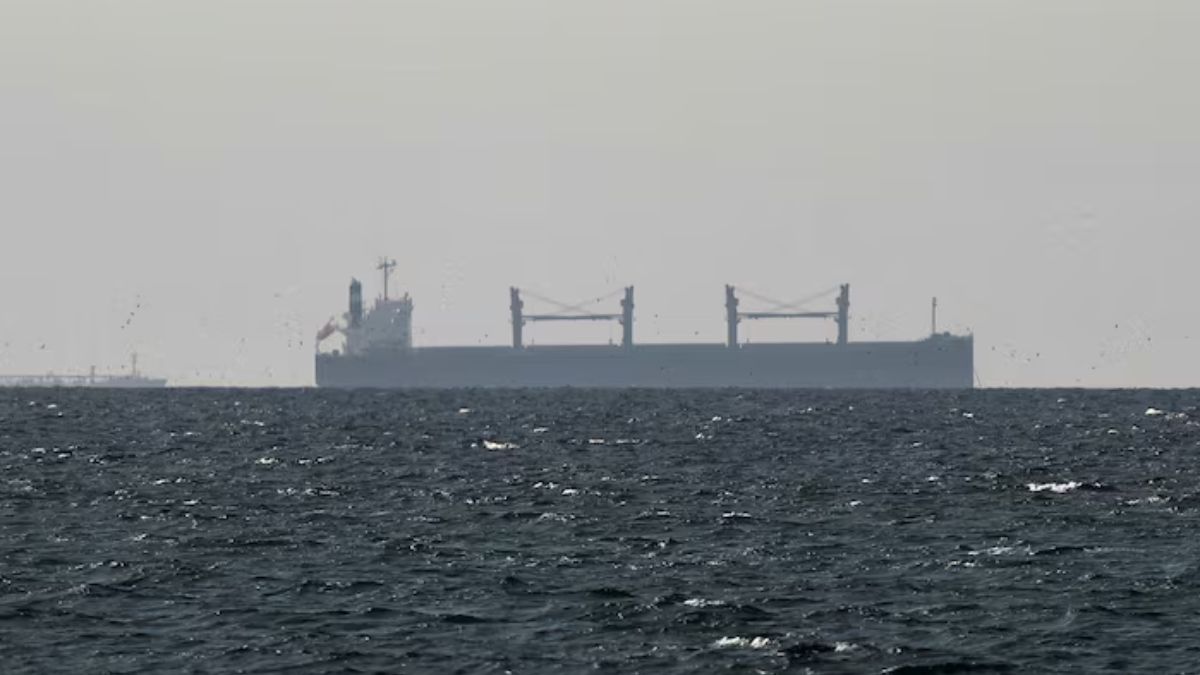
India’s LPG trade, heavily dependent on seaborne shipments from West Asia, received a rare but high‑risk demonstration of how energy flows are being rerouted as geopolitical tensions in the Gulf continue to test the reliability of the Strait of Hormuz. The journey of the Indian‑flagged liquefied petroleum gas (LPG) tanker Pine Gas from the United Arab Emirates to India, via an unusual route along Iran’s coast, has become a working case study of how trade in a critical energy commodity is adapting to an increasingly volatile chokepoint.
The Pine Gas, carrying 45,000 metric tons of LPG, loaded at the UAE’s Ruwais refinery complex on February 27, 2026, with an expected voyage of about a week to India’s west‑coast terminals. Under normal circumstances, the ship would have passed through the Strait of Hormuz, the narrow waterway that handles roughly 20% of global seaborne oil and LPG trade. However, by the time the tanker was ready to transit, the security environment had shifted sharply, as the Israel–US attack on Iran on February 28 triggered a wave of missile and drone strikes across the Gulf region, and Iran began closing the Strait to many commercial vessels.
Rather than risk being stranded in the Persian Gulf or diverting via a much longer route, the Pine Gas was given a special passage option. Iran’s Islamic Revolutionary Guard Corps (IRGC) directed the tanker to navigate a narrow channel north of Larak Island, off Iran’s southern coast a route not typically used by regular commercial shipping. The Indian authorities and the ship’s owner, Mumbai‑based Seven Islands Shipping, agreed to this route only after securing consent from all 27 Indian crew members, underlining the high level of risk associated with the passage.
From a trade standpoint, what makes this rerouting significant is not just the unusual route, but the broader implications for how India’s LPG supply chain responds to disruptions at a key maritime chokepoint. India is one of the world’s largest importers of LPG, relying on seaborne cargoes to meet the cooking‑fuel needs of hundreds of millions of households. The shipment of 45,000 metric tons by the Pine Gas represents a meaningful slice of India’s monthly LPG imports, which typically run into the millions of tons. The fact that this cargo had to be redirected originally earmarked for the west‑coast port of Mangaluru but later split between Visakhapatnam and Haldia on the east coast highlights how India’s trade logistics are having to become more flexible and resilient, potentially at higher costs.
The rerouting adds operational and commercial layers to India’s LPG trade. Using a non‑standard channel such as the route north of Larak Island means the vessel must navigate tighter waters, with limited room for error, and likely under heightened naval supervision. The Indian Navy, which has long maintained a presence in the Gulf of Oman and Arabian Sea to secure sea lanes, provided escort from the Gulf of Oman into the Arabian Sea for about 20 hours, underscoring the convergence of military and trade interests. The Indian government has confirmed that Indian‑flagged vessels are being accompanied by navy ships after they transit the Strait, a move that lends some security to commercial flows but also signals that such passage is now high‑risk rather than routine.
Crucially, the Indian authorities and ship’s operator report that the transit did not involve any direct fee or boarding by Iran’s forces, reinforcing the perception that Iran is selectively allowing LPG and other energy shipments from “friendly” nations such as India, China, Russia, Iraq, and Pakistan. For India, this selective access has two trade‑related dimensions: first, it preserves access to LPG supplies at a time when many other Gulf‑bound cargoes are being delayed or rerouted, helping to cushion downstream price spikes; second, it introduces added uncertainty, because the continuity of such preferential access depends on highly fluid political and military calculations, not on predictable commercial rules.
The broader context for India’s LPG trade also matters. The country has repeatedly urged households to avoid panic bookings and to shift, where possible, to piped natural gas to reduce dependence on imported LPG. Yet, the fact that substantial volumes continue to move by sea, including on high‑risk routes, speaks to both the structural dependence on foreign LPG and the limited scope for rapid diversification of supply or transport routes. The closure or partial closure of the Strait of Hormuz, even if temporary, has already pushed up global shipping and insurance costs, and examples such as the Pine Gas show how, at the operational level, trade actors are accepting greater risk to keep critical flows moving.
In trade‑policy terms, the tanker’s journey reflects a growing trend where commercial decisions are being made under the shadow of military and geopolitical actions. For India, the experience of the Pine Gas underscores the importance of diversifying supply routes, strengthening coastal and inland gas infrastructure, and building deeper bilateral energy‑security cooperation with Gulf partners. From a trade‑finance perspective, it also highlights the rising costs of insuring Gulf‑origin shipments and the potential need for governments and shipping companies to share more risk so that essential commodities such as LPG do not suddenly become less available or more expensive for consumers. In a world where energy chokepoints are no longer taken for granted, the Pine Gas episode is a stark reminder that everyday trade in basic commodities can hinge on extraordinary, high‑stake navigation decisions.