Live 4 weeks ago
  1. 8:42 AM (EST) 2 Mar 2026
    Latest

    Hegseth says US will stand shoulder to shoulder with allies when asked about protecting Kurds

    US Defense Secretary Pete Hegseth has said the United States will stand shoulder to shoulder with its allies after being asked about protecting the Kurds. His response signals continued American support for partners in the region amid ongoing military tensions.

    The comment comes as questions grow over how the broader conflict could impact Kurdish forces and territories.

    When pressed about whether the US would protect Kurdish groups, Pete Hegseth did not go into operational detail. Instead, he emphasized that America stands firmly with its allies.

    The Kurds have been key partners of the US in past operations across the Middle East, especially in the fight against extremist groups. Any shift in US policy toward them often draws strong reactions.

    Hegseth’s words suggest reassurance rather than retreat. He framed the US position as loyal and consistent toward those who have worked alongside American forces.

  2. 8:39 AM (EST) 2 Mar 2026

    Hegseth says US is not ruling out any options in war in Iran and vows United States will fight to win

    US Defense Secretary Pete Hegseth has said the United States is not ruling out any options in the ongoing conflict with Iran. He made it clear that the US will fight to win and is prepared to use all available means as part of its military strategy against Iranian forces and capabilities. His remarks reflect Washington’s firm stance as US strikes and operations continue amid rising tensions in the region.

    Hegseth stressed that the United States is keeping all military options open as part of its campaign involving Iran. That means senior leaders in Washington are prepared to use long-range strikes, air power and strategic operations if they see them as necessary to achieve their objectives. This approach signals that the US is ready to escalate or adapt its strategy as it sees fit rather than limiting itself to a narrow set of actions.

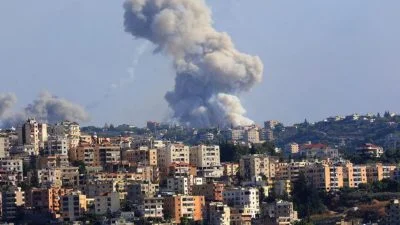
    His comments come amid a sharp increase in military activity against Iranian targets, with the US and allied forces carrying out precision strikes aimed at degrading Iran’s missile systems and command infrastructure. The ongoing operations reflect a broader focus on limiting threats posed by Tehran’s military capabilities.

  3. 8:37 AM (EST) 2 Mar 2026

    US strategy aims to avoid ground invasion

    Hegseth’s comments align with the broader U.S. strategy to limit American direct involvement on foreign soil. Instead of sending troops into Iran, the United States has relied on air power and precision strikes, often in coordination with allied forces.

    By stating that there are no boots on the ground, Hegseth also reinforced that this phase of the conflict is being fought in the skies and from distance rather than through traditional ground combat.

  4. 8:37 AM (EST) 2 Mar 2026

    Hegseth says no American boots on the ground in Iran as US continues air campaign

    US Defense Secretary Pete Hegseth has made it clear that there are currently no American ground troops in Iran, despite the ongoing military operations targeting Iranian military infrastructure and missile systems. His remarks underscore that the conflict remains focused on aerial and strategic action rather than a ground invasion.

    Hegseth’s statement reflects the U.S. position that the campaign is designed to prevent Iran from threatening American interests without committing land forces. This approach comes amid heightened tensions in the region and broad U.S. engagement in what officials describe as a sustained but limited military effort.

    Defense Secretary Hegseth emphasised that U.S. military efforts in Iran are being carried out from the air and through long-range strikes, not on the ground. American forces have launched extensive aerial operations targeting ballistic missile sites, command and control facilities, and other strategic positions inside Iran, but there is no deployment of U.S. soldiers on Iranian soil.

    This message was highlighted by senior officials as they described the campaign as focused and decisive, aiming to degrade Iran’s military capabilities without engaging in a full-scale invasion or ground occupation.

  5. 8:36 AM (EST) 2 Mar 2026

    Hegseth's remarks on Iran's long-range strike capabilities

    Alongside his remarks about the size of the battle space, Hegseth also pointed to Iran’s long-range strike capabilities. Tehran has invested in a range of ballistic missiles, cruise missiles and drones over many years, and these systems give it the ability to reach distant targets across the region.

    US officials see these capabilities as part of the reason the current operations are taking time and require careful planning. Iran’s missile stockpiles and drone fleets have been regularly highlighted in recent briefings as threats that need to be degraded to protect American forces and regional partners.

    Taken together, Hegseth’s statements suggest that Washington expects this phase of the conflict to be sustained and that neutralising Iran’s strike potential will take coordinated military and strategic effort.

  6. 8:35 AM (EST) 2 Mar 2026

    Hegseth says Iran fight won’t end overnight as he warns Tehran has long-range strike capabilities

    US Defense Secretary Pete Hegseth has said that the conflict with Iran will not be resolved quickly, warning that the battle space is large and complex and won’t be finished overnight. He also stressed that Iran possesses long-range strike capabilities, underlining the continued threat the US sees from Tehran’s military forces.

    His comments come amid ongoing US military operations against Iranian targets and reflect Washington’s view that this phase of the confrontation will take time and sustained effort.

    Hegseth made it clear that the current campaign involving Iran is not something that will end in a few days or hours. He described the situation as a “big battle space,” meaning operations will span wide areas and require time to achieve their goals.

    This message underscores the complexity of the military action, which involves strikes on missile sites, command centres and other strategic infrastructure. US officials are signalling that they expect a drawn-out series of actions rather than a swift finish.

    By saying the fight won’t happen overnight, Hegseth appears to prepare both the public and the military for a sustained campaign.

  7. 8:28 AM (EST) 2 Mar 2026

    Hegseth says US fights to win and does not waste time or lives

    US Defense Secretary Pete Hegseth has said the United States fights to win and does not waste time or lives. His statement reflects a firm stance on how the US approaches military action, especially during the ongoing tensions involving Iran.

    Hegseth’s comment signals that the current strategy is designed to be decisive and focused. He emphasized efficiency and strength, suggesting that operations are carefully planned to achieve clear results without unnecessary delay.

    Pete Hegseth said the US military enters conflicts with one goal, which is victory. He stressed that the objective is not prolonged engagement but clear outcomes. According to him, American forces act with purpose and direction.

    This message appears aimed at reassuring the public that military leadership is not pursuing open ended wars. Instead, the focus is on swift and strategic action.

  8. 8:19 AM (EST) 2 Mar 2026

    Hegseth says Iran built proxies missiles drones and buried nuclear facilities

    US Defense Secretary Pete Hegseth has sharply criticized Iran’s leadership, saying they have built nothing except proxies, missiles, drones and deeply buried nuclear facilities. His comments come as tensions remain high and military operations continue in the region.

    Hegseth’s remarks reflect the US position that Iran has focused its national resources on military expansion rather than domestic development.

    Pete Hegseth said Iran’s leadership has invested heavily in building proxy forces across the Middle East. These groups, according to US officials, have been used to project influence and pressure rivals without direct confrontation.

    He also pointed to Iran’s missile and drone programs. Washington has long argued that these capabilities pose a direct threat to US forces and allies in the region. Over recent years, Iran’s drone technology in particular has drawn global attention.

    Hegseth framed these military developments as evidence that Tehran’s priorities are centered on confrontation rather than cooperation.

  9. 8:17 AM (EST) 2 Mar 2026

    Hegseth says Iran conflict will end on America First conditions

    US Defense Secretary Pete Hegseth has said the current conflict involving Iran will be finished on what he called America First conditions. His statement signals that the United States intends to shape the outcome in line with its own national interests and security priorities.

    The comment comes as tensions remain high following targeted US strikes on Iranian military sites.

    Hegseth America First conditions

    Pete Hegseth made it clear that any resolution to the conflict will reflect America First principles. That means decisions will be guided by US security, economic stability and strategic advantage.

    He stressed that Washington will not accept terms that weaken its position. Instead, he said the objective is to protect American interests and prevent future threats.

    The phrase America First has often been used to underline a focus on domestic strength and reduced foreign entanglement. In this context, Hegseth’s message suggests the US wants a defined and controlled end to the confrontation.

US Defense Secretary Pete Hegseth has said the current military action against Iran is not the start of another long war like Iraq or Afghanistan. He stressed that the strikes are targeted and limited in scope. He described them as surgical and overwhelming.

Hegseth made it clear that the United States does not want an open ended conflict. He said the goal is focused. He said it is about stopping Iran from ever obtaining nuclear weapons.

Pete Hegseth says not Iraq not Afghanistan

Pete Hegseth directly addressed concerns that the situation could turn into another drawn out Middle East war. He said this is not Iraq. He said this is not Afghanistan. He repeated that it is not an endless war.

According to him, the mission has clear objectives. He said the US is acting with precision. He emphasized that the military action is designed to hit specific targets linked to Iran’s military and nuclear capabilities.

The message appears aimed at both domestic and international audiences. Many Americans remain wary of long overseas conflicts. Hegseth’s comments were meant to reassure that this operation has limits.

Iran will never have nuclear weapons

Hegseth repeated a strong line that Iran will never have nuclear weapons. He said the strikes are part of ensuring that outcome. He added that regimes like Iran cannot be allowed to develop such capabilities.

He described the attacks as surgical and overwhelming. That means focused but powerful. The goal, he said, is to damage key infrastructure without expanding the conflict unnecessarily.

He also issued a warning to Iranian security forces. He told them to choose wisely. The comment suggests the US is signaling that further escalation could bring more consequences.

Hegseth’s message to Iranian people

Hegseth also spoke directly about the Iranian people. He said the US hopes they take advantage of the current situation. While he did not call for regime change, his remarks hinted at political pressure inside Iran.

He maintained that the conflict is not about occupying the country. He said it is about preventing a nuclear armed Iran. His statements underline that the US sees this moment as critical in shaping the future balance in the region.

For now, Washington’s position remains firm. The strikes are limited. The objective is clear. And according to Hegseth, Iran will never be allowed to develop nuclear weapons.