

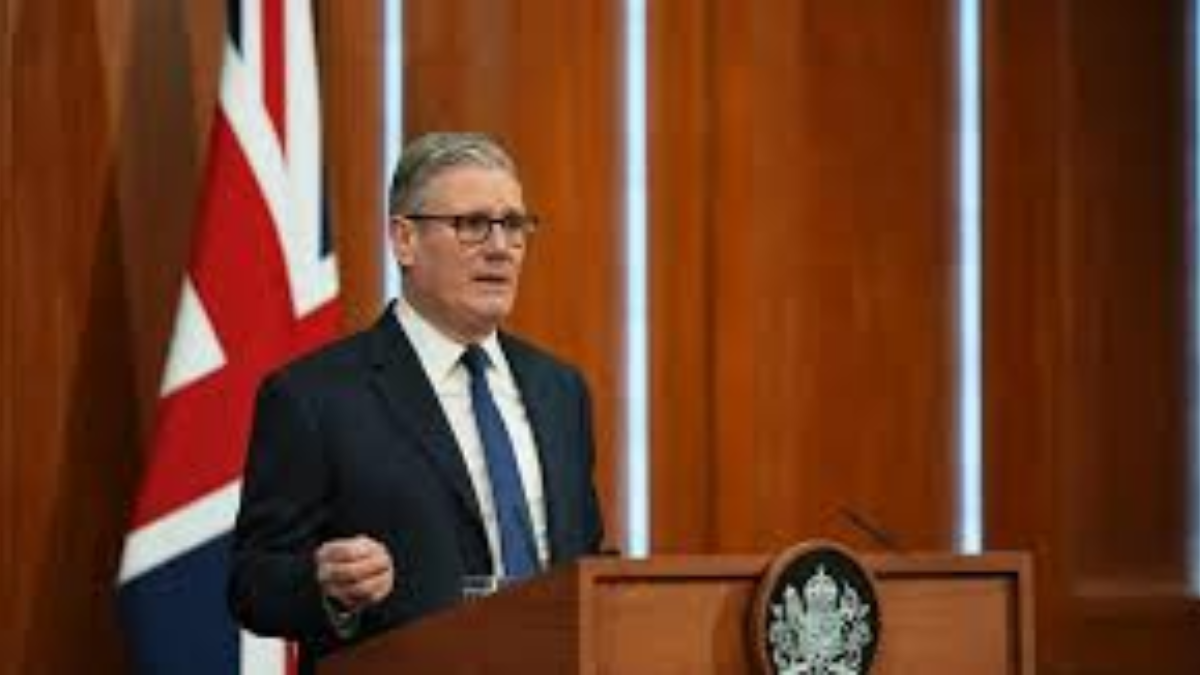
Sir Keir Starmer’s message is politically significant because it links the Iran war, Britain’s energy security, and the case for deeper UK-EU cooperation in one argument. It reflects a strategic rethinking in London: if global shocks are now exposing the limits of unilateral resilience, closer alignment with Europe becomes not just desirable but legally and economically rational.
Energy shock and legal pressure
The immediate trigger is the energy crisis created by disruption to Middle East supply routes, particularly the Strait of Hormuz, which has pushed up oil and gas prices and created new pressure on British households and businesses. Starmer has warned that the conflict could have a lasting impact on the UK economy, and that concern has been echoed in reporting that the government is closely monitoring fuel costs, supply chains, and market volatility. The legal significance is that energy crises are no longer just commercial problems. They affect the state’s duties around economic stability, consumer protection, and emergency planning. When a government warns of household exposure to global supply shocks, it is implicitly acknowledging that energy policy sits at the intersection of public law, regulatory oversight, and national security. In practical terms, that means ministers may need to rely on existing regulatory powers, coordination with Ofgem, and contingency planning rather than assuming the market will absorb the shock unaided.
EU alignment and constitutional reality
Starmer’s argument that Britain should align more closely with the EU reflects a broader recalibration of post Brexit foreign and economic policy. The legal catch is that “alignment” can mean many things. It may refer to closer cooperation on energy resilience, sanctions, security coordination, industrial policy, or regulatory standards. But unless the government specifies the mechanism, the phrase risks becoming more rhetorical than operational. From a constitutional and international relations perspective, this is a notable shift. The Labour government has already signalled a reset with Europe, and the Iran crisis is being used to justify deeper coordination on both security and economics. That matters because the UK is not simply choosing between the US and the EU. It is trying to preserve strategic autonomy while reducing vulnerability to global shocks. In legal terms, that means more intergovernmental coordination, not any automatic surrender of sovereignty. The real issue is whether Britain can secure practical benefits through alignment without reopening politically toxic questions about Brexit itself.
Trump, transatlantic strain, and strategy
The wider international relations angle is the strain with Donald Trump, whose criticism of allies over the Iran war has intensified pressure on London. Reports indicate that Starmer has tried to maintain cooperation with Washington while resisting full political alignment with the US approach to the conflict. That balancing act is legally relevant because it shows the government navigating alliance obligations, military access, and domestic political constraints at the same time. This is where the strategic logic becomes sharpest. If Washington is unpredictable and Europe is the more stable partner on energy and economic coordination, then deeper EU ties become a form of risk management rather than ideological repositioning. But the UK must still ensure that such cooperation does not create legal confusion over competence, trade commitments, or defence responsibilities. In other words, the policy may be wise, but it must be carefully framed to avoid looking like a covert reversal of Brexit. Starmer’s intervention is therefore best understood as a crisis-driven legal and diplomatic recalibration. The Iran war has exposed how tightly linked energy security, foreign policy, and economic governance now are, and it has given new force to the argument that Britain needs closer working relations with the EU to withstand future shocks.