

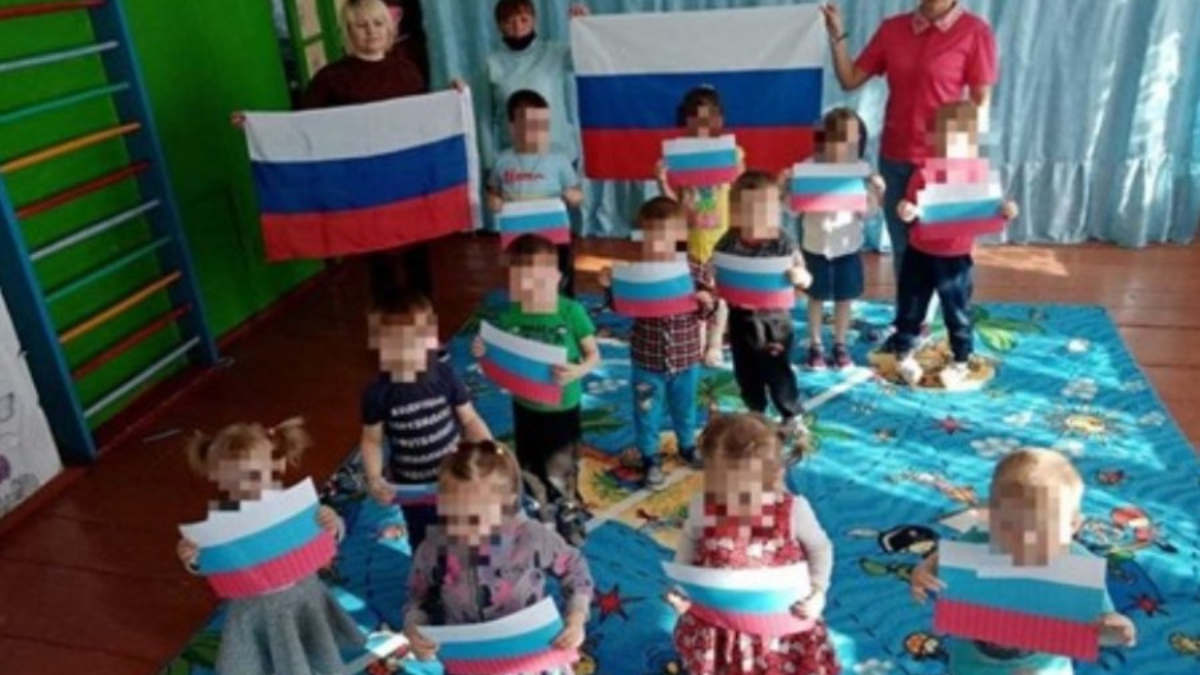
Russia is preparing to roll out state-backed patriotic preschool lessons called “Kind Games”, aimed at children as young as three, as part of a broader effort to shape early perceptions of nationhood, morality, and loyalty to the state. The program is being framed by officials as an introduction to “spiritual and moral values”, but reporting shows it is also intended to teach children to love and protect the “motherland”.
What the program is
According to the reports, the Russian Education Ministry plans to introduce the lessons in all preschool classrooms from 1 September 2026, after piloting the programme in 19 regions and parts of occupied Ukraine. The sessions are expected to be a preschool version of the already existing school programme “Important Conversations”, which has been compulsory in Russian schools since 2022. Independent reporting says the topics will include the people of Russia, local geography, and maps that include occupied Ukrainian territories.
Why it matters
The significance of “Kind Games” is that it moves state ideology into the earliest stage of formal education. Instead of merely teaching general social values, the programme appears designed to embed patriotic loyalty, military symbolism, and state-centred identity before children can meaningfully distinguish civic education from political messaging. Reports from pilot preschools show children dressed in military uniforms, handling toy weapons, and even simulating battlefield injuries, which strongly suggests the programme goes beyond benign cultural instruction.
The political message
This is not simply about teaching children to respect their country. It is about normalising a specific state narrative in which patriotism, military service, and territorial claims are presented as foundational truths from the age of three. The inclusion of occupied Ukrainian regions on classroom maps is especially politically loaded because it reinforces Russia’s annexation narrative inside educational material for very young children.
Wider implications
The programme also fits a much longer pattern of Russian state education being used as a tool of political socialisation. Previous patriotic education campaigns in Russia have linked schooling with military preparedness, national pride, and obedience to state messaging, particularly since the full-scale invasion of Ukraine. By lowering the age threshold to preschoolers, the state is effectively trying to make ideology feel ordinary, familiar, and emotionally safe before children are old enough to question it.
Bottom line
“Kind Games” is best understood as an early childhood propaganda project dressed in the language of values-based education. Its practical purpose is to cultivate loyalty to the Russian state, reinforce the Kremlin’s territorial narrative, and bind patriotic identity to the preschool curriculum from the very beginning of a child’s formal learning.