

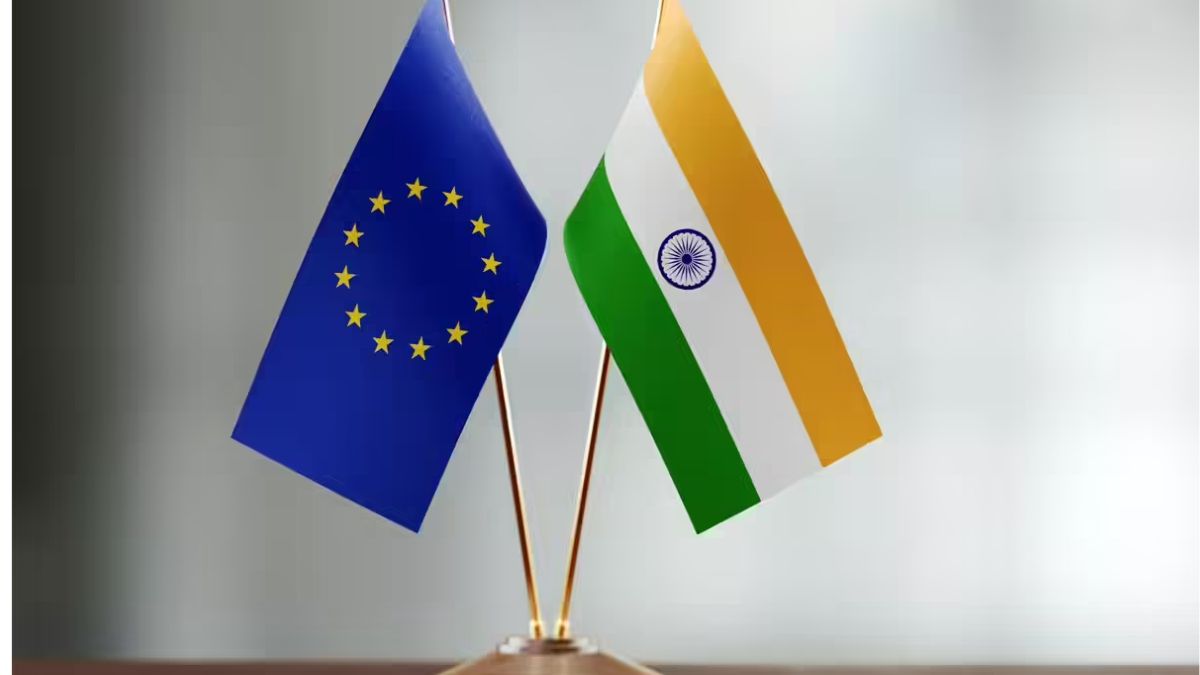
India’s trade diplomacy is entering a decisive phase as Commerce and Industry Minister Piyush Goyal intensifies bilateral engagements following recent discussions at the World Trade Organization (WTO), with the proposed India–EU Free Trade Agreement (FTA) emerging as a central pillar of the country’s evolving global trade strategy.
Government officials and policy documents indicate that India has significantly expanded its bilateral outreach during and after WTO-level meetings, holding discussions with multiple trading partners including the United States, European economies, West Asian nations, and African countries. These engagements are aimed at strengthening market access, diversifying trade partnerships, and reducing dependence on any single region amid growing geopolitical and economic uncertainty.
Bilateral push gains momentum
India’s approach reflects a calibrated shift toward bilateral and regional trade agreements alongside its continued engagement at the WTO. Official statements from the Ministry of Commerce and Industry confirm that India is actively negotiating or exploring trade agreements with several partners, including the European Union, the United Kingdom, and other key economies.
The renewed engagement with the EU gained further traction with the recent visit of a European Parliamentary delegation led by Angelika Niebler. Both sides reiterated their commitment to advancing negotiations on the long-pending FTA, which is expected to cover goods, services, investment, and regulatory cooperation.
Officials familiar with the discussions noted that the FTA is being positioned as a “high-value” agreement with the potential to significantly expand bilateral trade, which already exceeds €120 billion annually according to publicly available EU and Indian government data.
WTO engagement and strategic positioning
India’s bilateral push comes alongside its active participation in WTO negotiations, where it has maintained a consistent stance on protecting policy space for developing economies. Government representatives have reiterated concerns around certain plurilateral initiatives particularly in areas such as digital trade emphasizing the need for consensus-based decision-making within the multilateral framework.
At the same time, India has continued to pursue parallel bilateral negotiations, reflecting a dual-track strategy aimed at balancing multilateral commitments with targeted trade expansion.
Trade experts suggest that this approach allows India to secure immediate economic gains through bilateral agreements while maintaining flexibility in broader global trade negotiations.
FTA seen as key economic lever
The proposed India–EU FTA is widely regarded by policymakers as a critical instrument for unlocking new trade opportunities. According to official trade assessments, the agreement could enhance exports across sectors such as pharmaceuticals, engineering goods, textiles, and digital services.
The services sector, particularly information technology and IT-enabled services, is expected to benefit from provisions related to market access and professional mobility. Government data indicates that India’s services exports have seen sustained growth in recent years, reinforcing the importance of such provisions in trade agreements.
European officials have also emphasized the inclusion of sustainability standards, data protection frameworks, and transparent regulatory practices as part of the agreement, aligning with the EU’s broader trade policy objectives.
Global context shapes trade priorities
The push for deeper trade integration comes at a time when global economic conditions remain uncertain. The Organisation for Economic Co-operation and Development has projected global growth at around 2.9%, citing inflationary pressures and energy market disruptions.
These conditions have underscored the importance of resilient supply chains and diversified trade partnerships. Officials on both sides have acknowledged that strengthening India–EU trade ties could help mitigate risks associated with regional disruptions and enhance long-term economic stability.
Digital and regulatory cooperation in focus
In addition to traditional trade sectors, discussions have also highlighted the growing importance of digital trade and regulatory alignment. India’s digital infrastructure initiatives and payment systems are increasingly being seen as enablers of cross-border trade, while the EU continues to prioritise data protection and sustainability in its trade agreements.
Officials indicated that bridging regulatory differences in these areas will be key to concluding negotiations, with both sides adopting a pragmatic approach to resolving outstanding issues.
While negotiations are ongoing, recent engagements suggest a renewed political commitment to advancing the India–EU FTA. Trade analysts note that the agreement could serve as a cornerstone of India’s broader trade strategy, complementing its bilateral engagements with other global partners.
As India continues to expand its trade footprint, the combination of WTO participation and bilateral negotiations reflects a nuanced approach to global economic engagement one that seeks to balance national interests with the demands of an increasingly interconnected and uncertain global trade environment.