

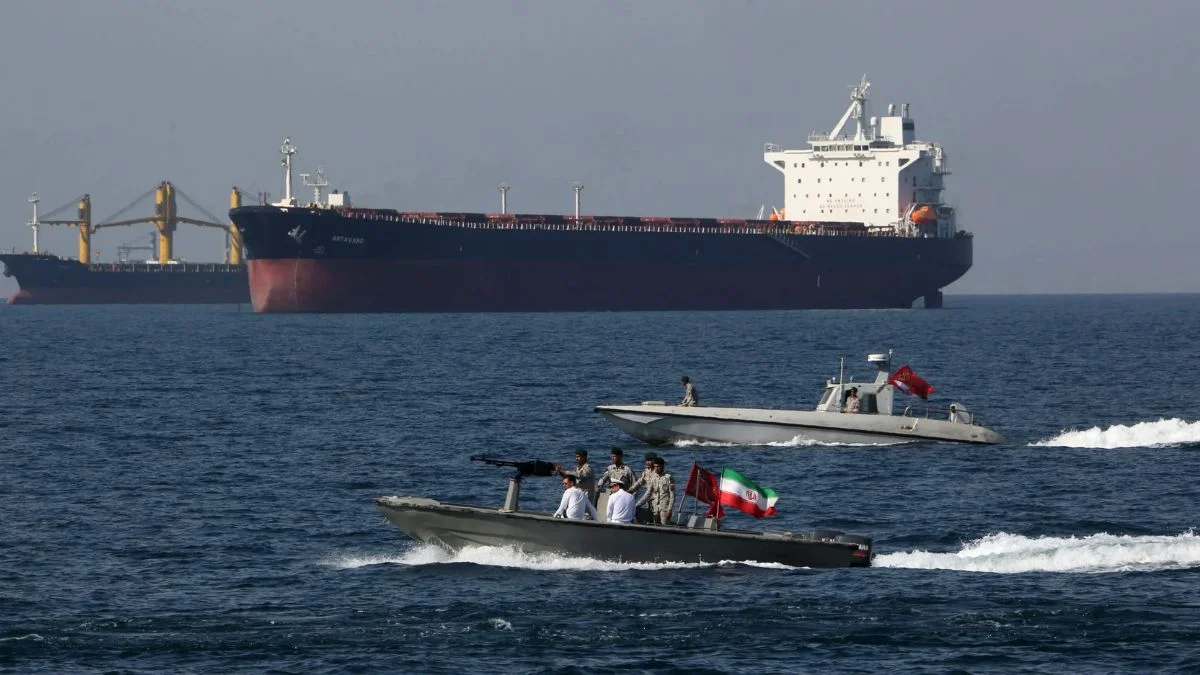
The United States Navy is preparing to assist nearly a dozen commercial vessels, including supertankers and major container ships, as they move through a critical Middle East waterway over the coming days, according to officials cited by The Wall Street Journal.
The move comes as global shipping companies remain on high alert following weeks of military tensions involving Iran, the United States, and regional forces. Energy markets and trade routes have faced growing pressure due to fears of possible disruptions in one of the world’s busiest maritime corridors.
According to the report, the planned naval assistance will include support for oil tankers and cargo vessels traveling through the strategically important route that handles a massive share of global crude oil and LNG exports.
US Navy shipping escorts raise focus on Strait of Hormuz security
The latest development has again shifted global attention toward the Strait of Hormuz, a narrow shipping passage that connects Gulf oil producers to international markets. Nearly one fifth of the world’s oil supply passes through the route, making it critical for energy security and global trade.
Shipping companies have remained cautious after recent military incidents in the region increased fears of attacks on commercial vessels. Insurance costs for tankers traveling through the Gulf have also risen sharply in recent weeks.
The US Navy’s decision to help escort vessels is being viewed as an effort to reduce risks for commercial shipping while maintaining stable movement of oil and goods through the region.
Oil markets and global trade remain sensitive to Middle East conflict
Any threat to shipping activity in the Gulf region can quickly impact global commodity prices. Traders continue monitoring the situation closely because disruptions in tanker traffic often lead to higher oil prices, increased freight costs, and supply chain pressure worldwide.
Supertankers are especially important because they carry millions of barrels of crude oil across international markets. Container ships moving through the same corridor also transport consumer goods, industrial equipment, and raw materials between Asia, Europe, and the Middle East.
The latest naval operation comes at a time when diplomatic efforts between Iran and the United States are reportedly moving toward a broader agreement aimed at extending the current ceasefire into a more lasting settlement.
Global shipping industry watches Gulf security situation closely
Maritime security analysts believe the coming days will be closely watched by shipping firms, oil traders, and governments worldwide. Any successful passage of escorted vessels could help calm market fears temporarily.
However, the broader security situation in the Gulf remains fragile. Even small incidents near major shipping routes can trigger sharp reactions in oil prices and financial markets.
For now, global attention remains fixed on how the United States Navy manages the movement of commercial vessels through one of the most strategically important waterways in the world.