

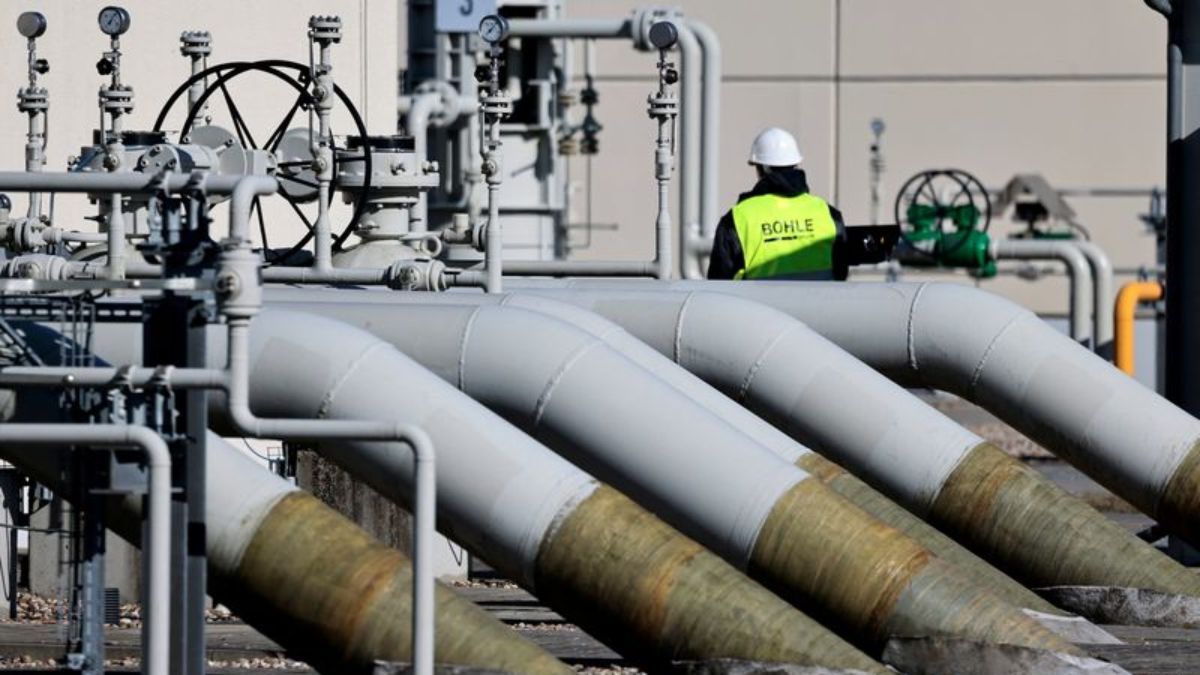
European natural gas prices fell sharply on Monday. The Dutch TTF front month contract dropped 5.6% to 45.945 euros per megawatt hour.
This fall came as markets reacted to growing hopes of a peace framework between the United States and Iran. The potential agreement is expected to reopen the Strait of Hormuz. This is one of the most important energy routes in the world.
Roughly 20% of global oil supply moves through this waterway. Any reopening reduces fears of supply disruption. That is why gas prices moved lower alongside oil.
Brent crude also fell below $100 per barrel. Lower oil prices often pull natural gas prices down as many gas contracts are linked to oil benchmarks.
Oil Linked Gas Pricing and Inflation Fears Drive Volatility in European Energy Markets
Natural gas markets are closely tied to oil price movements. When Brent crude falls, gas contracts often adjust lower as well. This link added pressure on European gas prices during the session.
The broader market is reacting to expectations of reduced inflation pressure. Lower energy costs reduce fears of aggressive central bank action. This shifts sentiment across both gas and oil markets.
However, uncertainty remains high. Reports suggest that both the United States and Iran are not close to a final agreement yet. Officials have warned that talks could still fail if conditions are not met.
Iran’s foreign ministry said key details around the Strait of Hormuz are still unresolved. That includes how the waterway will be managed in any deal.
Despite tensions, vessel movement through the strait has not fully stopped. Reports suggest dozens of ships are still passing after approvals. This shows that partial flow of energy trade is still continuing even during geopolitical stress.
Markets remain sensitive. Any progress in talks pushes energy prices lower. Any breakdown risks sharp spikes again in both oil and gas.