

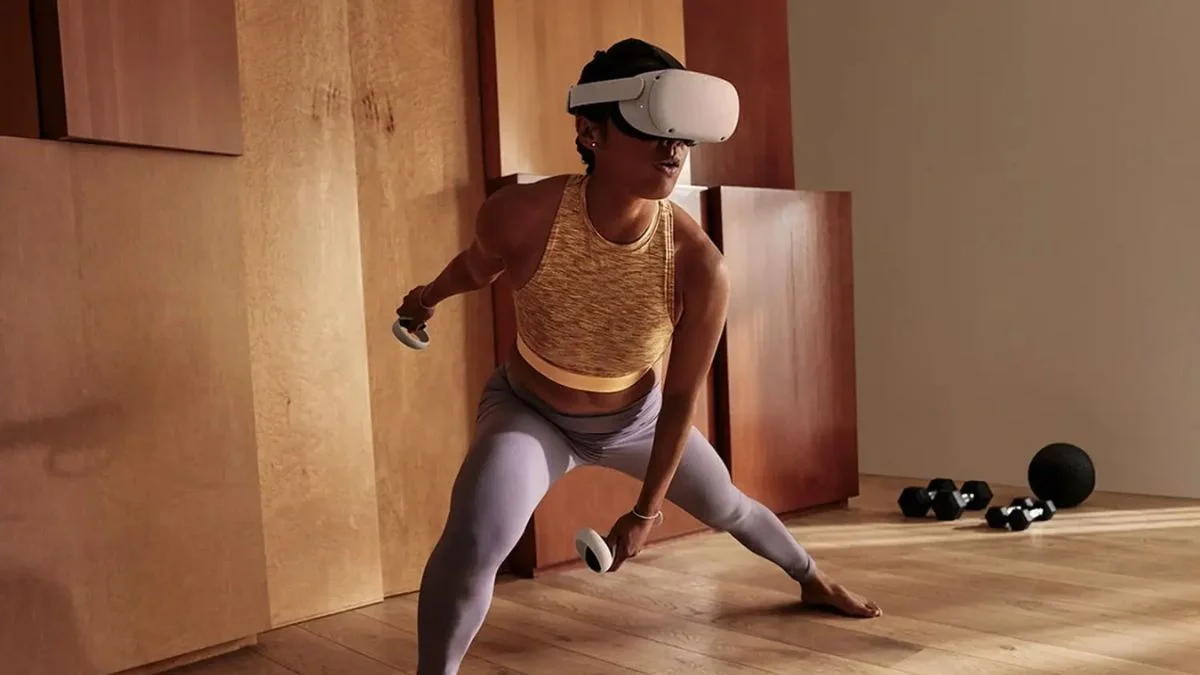
In 2025, virtual reality fitness went far beyond simple workouts and became a way to exercise that feels more like stepping into a new world than exercising at home or in a gym. One of the most talked-about VR fitness experiences was Supernatural, where users find themselves in stunning virtual landscapes like snowy mountains, deserts, and oceans while following coach-led sessions that blend cardio, strength, and mindfulness. The environments are so detailed and interactive that many people say they forget they’re exercising because it feels like an adventure in another place.
Another immersive experience that gained popularity was FitXR, a virtual fitness studio that offers everything from boxing and high-intensity interval training to dance and group classes. Users can jump into different classes with friends or other players around the world, making the workout feel social and dynamic rather than repetitive.
Rhythm-based games like Beat Saber continued to be a favorite because they turn movement into music-driven action. In this game, you slash incoming beats in time with energetic soundtracks, and because your body is constantly moving, you get a serious cardio boost without thinking of it as a workout.
For people who like sport-style movements, titles like Les Mills BodyCombat VR brought full-body martial arts workouts into virtual reality with guided routines that feel like real fitness classes with instructors but inside immersive settings.
Games that mix traditional exercise equipment with VR also stood out. Holofit lets you pedal a bike or row a machine while riding through virtual landscapes, making sessions feel like exploring scenic routes instead of just spinning your wheels.
Rhythm and music combined in experiences like PowerBeatsVR, where workouts are set to high-energy tracks and movements feel almost like dancing in a concert rather than exercising in a room.
By blending gaming, fitness, and immersive worlds, these VR experiences made workouts feel exciting and creative in 2025. People who once struggled to stay motivated found themselves looking forward to workouts because they felt like interactive journeys rather than routines—moving through new worlds, meeting goals, and enjoying exercise in ways previous fitness technology hadn’t delivered yet.