

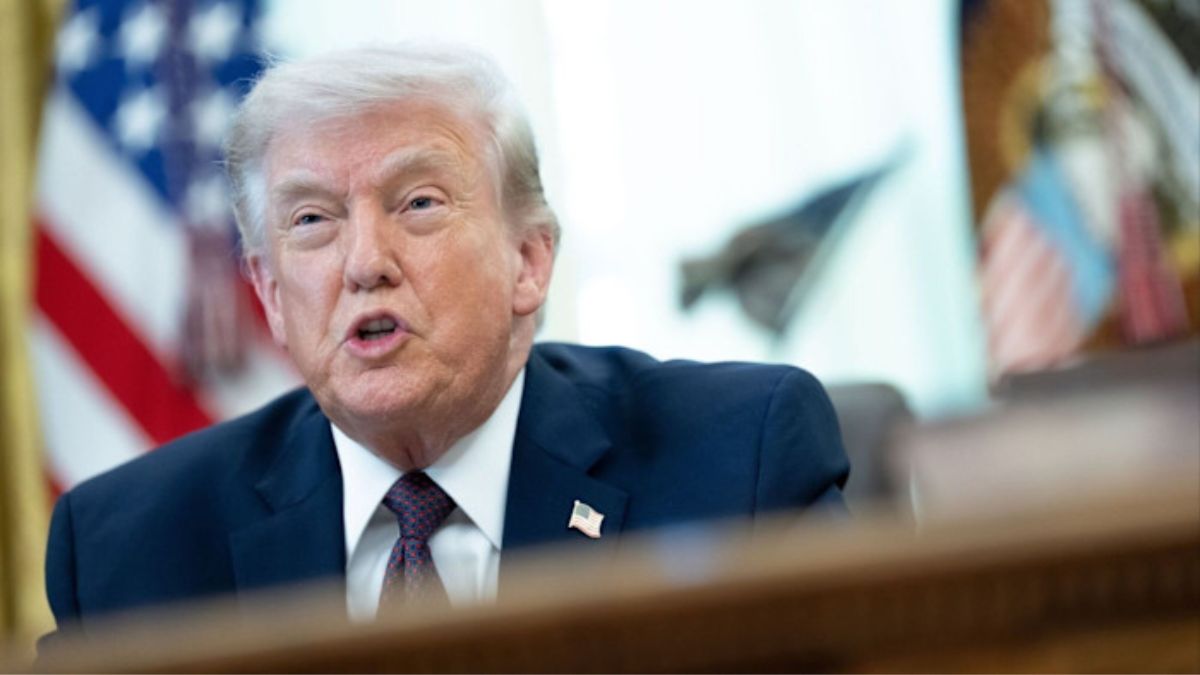
United States President Donald Trump has announced that American forces will withdraw from Iran “pretty quickly”, while retaining the option to return for targeted military action if necessary. The remarks, made in an interview with Reuters just hours before a scheduled primetime national address, signal a potential shift in the trajectory of the ongoing Iran conflict and raise fresh concerns among global allies.
Trump indicated that the United States has already achieved its primary strategic objective in the conflict, asserting that Iran is no longer capable of developing a nuclear weapon. “They will not have a nuclear weapon because they are incapable of that now,” he stated, framing the military intervention as a decisive success.
The President’s comments suggest a calibrated approach that combines rapid disengagement with the ability to re intervene. While declining to provide a definitive timeline for the conclusion of the conflict, Trump emphasised that the United States would not maintain a prolonged presence.
“We are going to be out pretty quickly,” he said, adding that American forces could return for “spot hits” if circumstances demand. This approach reflects a broader strategic doctrine that prioritises limited engagement over sustained military commitments, while preserving operational flexibility in a volatile region. However, such a posture may also introduce uncertainty regarding long term stability and deterrence.
Trump’s remarks were accompanied by renewed criticism of the North Atlantic Treaty Organization, which he accused of failing to support United States objectives in Iran. He confirmed that he is “absolutely” considering withdrawing the United States from the alliance, a statement likely to deepen transatlantic divisions. The President’s dissatisfaction stems from the reluctance of several European allies to participate in military or logistical efforts linked to the Iran campaign. This divergence has exposed fault lines within NATO, particularly regarding the scope of collective defence and the extent of allied obligations beyond the Euro Atlantic region.
The prospect of a rapid US withdrawal from Iran, combined with a potential redefinition of its NATO commitments, carries significant implications for global security dynamics. A swift exit could create a power vacuum in the region, potentially altering the balance of power in the Middle East. At the same time, the option of intermittent strikes suggests that the United States intends to retain a form of remote strategic control without a sustained on ground presence. Moreover, Trump’s assertion that Iran’s nuclear capabilities have been neutralised will be closely scrutinised by international observers, particularly given the long standing complexities surrounding nuclear verification and enforcement.
As Trump prepares to address the nation, his remarks underscore a pivotal moment in United States foreign policy. The administration appears to be pursuing a dual strategy of military disengagement and strategic assertiveness, while simultaneously reassessing long standing alliances. Whether this approach will deliver lasting stability or deepen geopolitical uncertainty remains to be seen. What is clear, however, is that the coming weeks will be critical in shaping the future of the Iran conflict, the credibility of NATO, and the broader architecture of international security.