

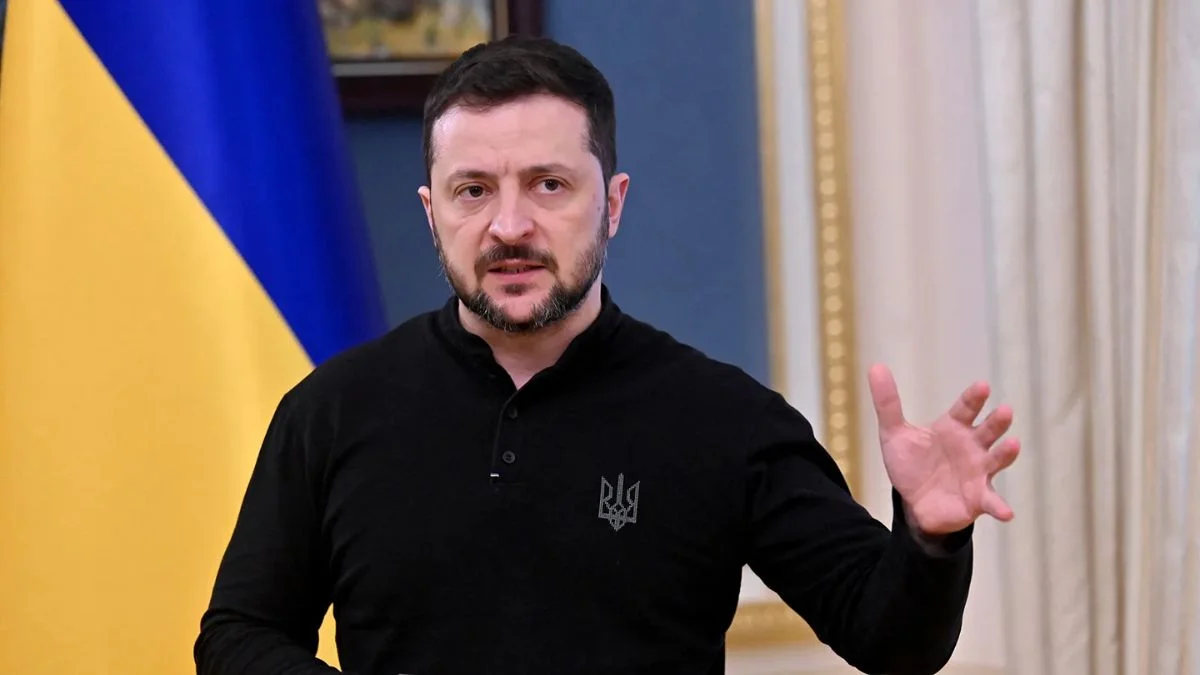
In a dramatic convergence of crises that traverse continents and legal regimes, Ukrainian President Volodymyr Zelensky, European Commission President Ursula von der Leyen and European Council President Antonio Costa jointly underscored the imperative for decisive action by the United States in response to recent military strikes involving Iran. Speaking in Kyiv on the fourth anniversary of Russia’s full scale invasion of Ukraine, Zelensky’s remarks encapsulated not only the fraught geopolitical landscape of 2026 but also the deep legal and moral questions confronting Western leadership in a world rocked by conflict, alliances and competing legal frameworks.
According to open sources report on 28 February 2026, Zelensky stated that resolute American engagement was critical not merely to respond to specific acts of aggression but to affirm the rule of law and preserve international security. Nonetheless, he emphasised the necessity of preventing further escalation into a wider war. “Whenever there is American resolve, global criminals weaken,” Zelensky wrote on social media a statement that resonates as much with his own ongoing struggle against Russian aggression as it does with the broader contest confronting Iran’s military posture.
Trilateral pressure in a time of crisis
The presence of European Union leaders alongside Zelensky in Kyiv a city that has suffered relentless barrages of long range weapons over four years of war reflects a significant strategic alignment. Ukraine’s conflict with Russia has redrawn security priorities in Europe, compelling EU institutions to navigate the challenging dual role of diplomatic engagement and defence reinforcement. Von der Leyen and Costa’s participation signals a unity of purpose that transcends mere solidarity; it illustrates the EU’s recognition that global security threats are interconnected, whether emanating from Moscow’s war machine or Tehran’s strategic partnerships with Russia.
It is within this context that Zelensky’s call for “decisive” U.S. action must be understood. Ukraine has, for years, endured waves of Shahed‑type drones supplied by Tehran to Moscow. Zelensky highlighted that Moscow has fired more than 57 000 such drones at Ukrainian territory during the course of the war a military capability that, in his view, would not have been possible without Iranian assistance. The legal, strategic and humanitarian dimensions of these transfers are deeply contentious, raising questions under customary international law regarding state complicity in acts of armed aggression.
Zelensky’s calculus: War, allies and moral imperative
Zelensky’s remarks blend strategic urgency with moral rhetoric. His advocacy for giving “the Iranian people a chance to rid themselves of a terrorist regime” signals a controversial tilt toward regime contestation, a stance that departs from traditional diplomatic caution. International law enshrines the principle of non‑intervention in the domestic affairs of sovereign states. Advocacy for political transformation within another state, particularly by external actors, risks breaching these principles unless supported by multilateral consensus or United Nations authorisation.
Nevertheless, Zelensky frames his statement not as a call for direct military invasion but as encouragement for popular agency and accountability. This semantic nuance carries legal and diplomatic weight: it positions his argument within the contested but increasingly discussed frameworks of responsibility to protect and collective self defence, even as it invites scrutiny from scholars who caution against conflating legitimate resistance with external advocacy for regime change.
EU leadership between diplomacy and defence
For President von der Leyen and President Costa, navigating this geopolitically charged landscape requires balancing firm support for Ukraine with a calibrated approach toward escalation involving Iran. The EU’s strategic autonomy its capacity to act independently in defence and foreign policy has been under scrutiny as member states grapple with the implications of increased defence burdens and complex alliance commitments. Von der Leyen’s presence alongside Zelensky underscores the EU’s determination to bolster Ukraine’s resistance while reinforcing transatlantic unity.
Yet, the EU’s legal obligations differ from those of sovereign states. The European Union, under Article 42 of the Treaty on European Union, acknowledges mutual defence clauses and the provision of assistance, but it does not necessarily equate to participation in offensive military operations beyond its borders. Costa’s role as European Council President emphasises consensus among member states rather than unilateral military engagement, highlighting the EU’s multifaceted and often cautious approach to international security crises.
The Iran factor and global security architecture
Iran’s close alliance with Moscow situates it at the heart of a broader geopolitical challenge that tests established legal norms and security frameworks. Tehran’s military support to Russia, particularly through drone technologies and expertise, has implications for the enforcement of arms control protocols and non‑proliferation regimes. The deployment of these weapons against civilian and critical infrastructure in Ukraine raises significant questions under international humanitarian law concerning the protection of civilians, proportionality of force and accountability for war crimes.
Moreover, calls for decisive U.S. action whether through diplomatic pressure, sanctions or military deterrence revive complex debates about the limits of unilateral force. The United States has traditionally justified military action under collective self defence, humanitarian intervention or pre‑emptive self defence. However, the applicability of these doctrines remains contested in legal scholarship, especially where conflicts involve non‑state proxies, indirect supply chains and hybrid warfare.
From Kyiv to Tehran: Legal, strategic and ethical ramifications
The convergence of Ukraine’s struggle, EU leadership and the U.S. strategic role in response to Iran-related hostilities encapsulates an era of legal and geopolitical turbulence. Zelensky’s comments reflect both Ukraine’s acute vulnerability and a broader push for decisive engagement against perceived global threats. EU leaders’ presence underscores the fractures and solidarities shaping contemporary global security.
Ultimately, this trilateral moment in Kyiv highlights the urgent need for renewed international dialogue grounded in legal clarity, strategic foresight and ethical accountability. Whether the world responds with unified resolve or fragmented caution, the legal, moral and geopolitical stakes could not be higher in an age where conflict transcends borders and tests the resilience of the international legal order.