

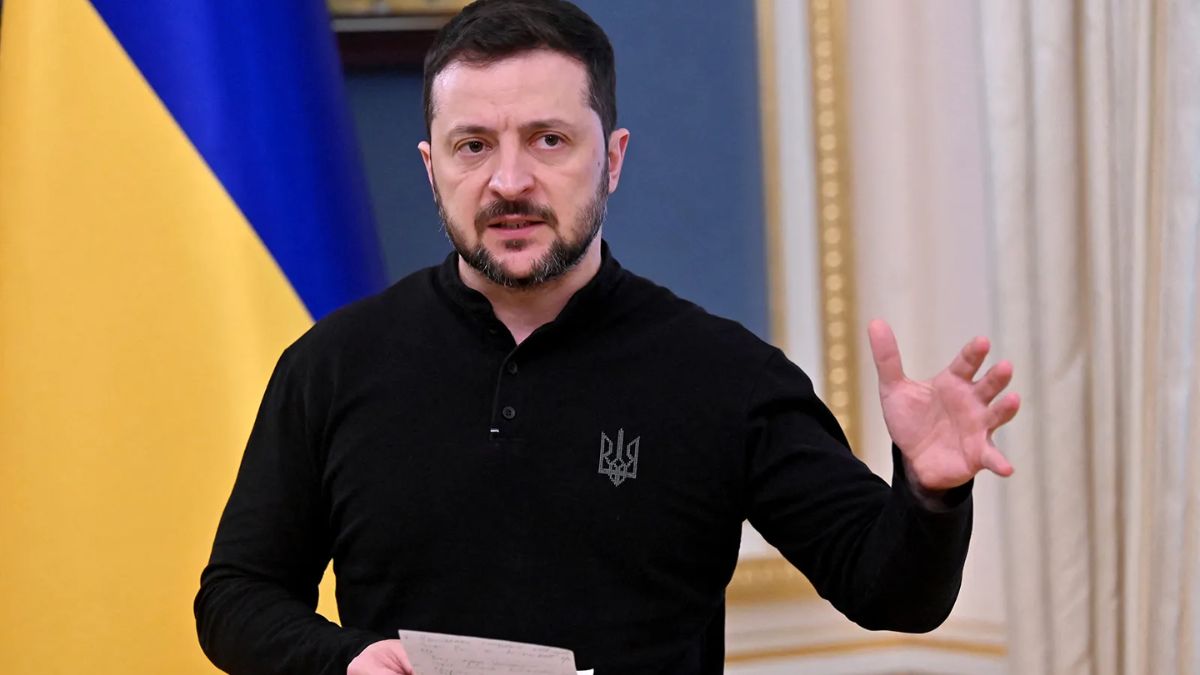
In a significant strategic update, Volodymyr Zelensky has announced that the coming weeks will be focused on deepening defence cooperation with European partners, while also confirming Ukraine’s involvement in international consultations on the future security of the Strait of Hormuz. The remarks, shared via an official statement, highlight Kyiv’s expanding role not only in European defence architecture but also in broader global security discussions.
Zelensky outlined a comprehensive agenda with European allies centred on joint production, defence modernisation, financing programmes, and enhanced coordination of security efforts. The move reflects Ukraine’s ongoing push to integrate more closely with European defence systems amid evolving geopolitical challenges. The emphasis on joint production and financing suggests a long term strategy aimed at strengthening military resilience while reducing dependence on external supply chains.
In a notable development, Zelensky confirmed that Ukrainian military personnel are actively participating in consultations regarding the future functioning and security of the Strait of Hormuz. The waterway remains one of the most critical global energy corridors, handling a significant share of international oil shipments. Ukraine’s involvement signals a widening of its strategic footprint beyond Eastern Europe, positioning the country as a contributor to global maritime security frameworks.
Zelensky underscored that safe navigation is a “global value,” drawing on Ukraine’s own experience in safeguarding maritime routes in the Black Sea. Kyiv has played a central role in efforts to maintain shipping lanes despite ongoing conflict conditions, particularly in relation to grain exports. This experience is likely to inform Ukraine’s contributions to discussions on ensuring stability and security in the Strait of Hormuz, where risks of disruption carry immediate global economic consequences.
Ukraine’s participation in Hormuz related consultations reflects a broader shift in international security cooperation, where regional conflicts are increasingly interconnected with global trade and energy stability. Enhanced coordination between Ukraine and European partners could also strengthen collective responses to emerging threats, particularly in maritime domains where disruption can have far reaching economic impacts.
Zelensky’s announcement points to a period of intensified diplomatic and military engagement, both within Europe and on the global stage. As discussions progress, Ukraine’s evolving role in international security frameworks will be closely watched. With maritime security and defence cooperation at the forefront, the coming weeks may prove pivotal in shaping both regional stability in Europe and the safeguarding of critical global trade routes.