

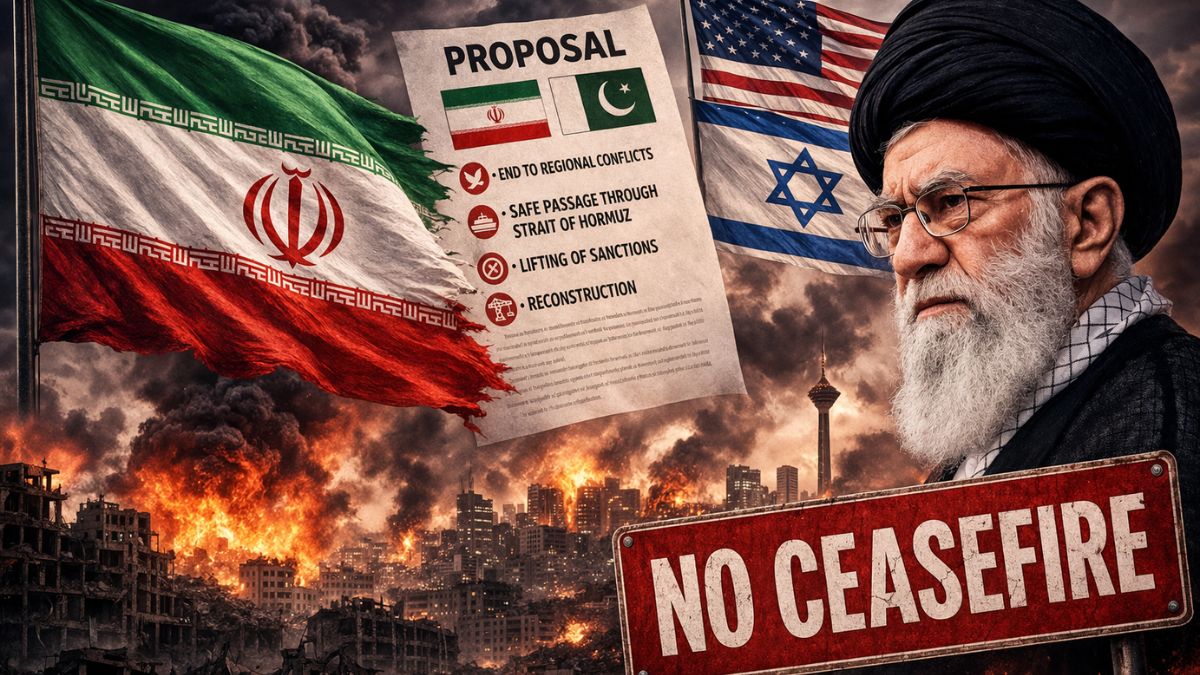
In a significant escalation in diplomatic positioning, Iran has formally rejected a United States proposal for a ceasefire, instead calling for a comprehensive and permanent end to the ongoing conflict. The response, conveyed through Pakistan and reported by Iran’s official news agency Islamic Republic News Agency, underscores Tehran’s insistence on a broader settlement framework rather than a temporary halt in hostilities. According to the report, Iran’s position has been articulated through a structured ten clause response that outlines key conditions for ending the war. Central to these demands is the cessation of all regional conflicts, signalling Tehran’s intention to link the current confrontation with wider geopolitical dynamics across the Middle East.
A critical component of Iran’s proposal includes the establishment of a formal protocol to guarantee safe passage through the Strait of Hormuz, a vital global energy corridor that facilitates a substantial share of international oil and gas trade. The inclusion of this provision reflects growing concerns over maritime security and the economic implications of disruptions in the Strait, particularly amid ongoing military tensions. Iran has also called for the lifting of international sanctions, a long standing demand that remains central to its foreign policy objectives. The easing of sanctions is positioned as a prerequisite for any meaningful resolution, alongside provisions for post conflict reconstruction, which would address the economic and infrastructural damage arising from the hostilities.
The rejection of a ceasefire in favour of a permanent settlement highlights a fundamental divergence in negotiating positions. While ceasefire proposals are typically aimed at achieving immediate de escalation, Iran’s response suggests a preference for a more comprehensive agreement that addresses underlying political, economic, and security concerns. The use of Pakistan as an intermediary further reflects the complex diplomatic channels at play, with regional actors increasingly involved in facilitating communication between the principal parties to the conflict.
This development comes against the backdrop of intensifying tensions involving United States and Israel, with the situation continuing to evolve rapidly. The rejection of the ceasefire proposal may complicate ongoing diplomatic efforts and prolong uncertainty in both regional security and global energy markets. As negotiations remain fluid, Iran’s insistence on a permanent resolution rather than a temporary truce signals a hardening stance that could shape the next phase of diplomatic engagement and determine the trajectory of the conflict in the coming weeks.