

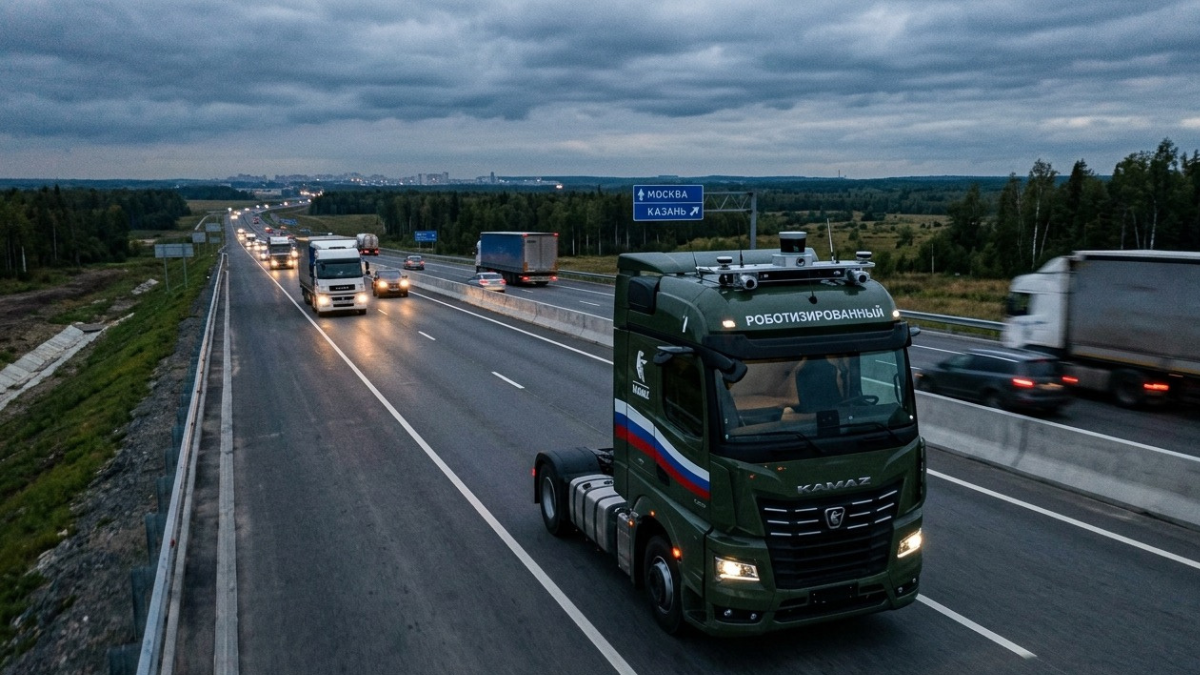
Russian President Vladimir Putin took part via video link from his residence on March 31 in the opening of several new transport infrastructure facilities. He gave the direct signal to start movement of unmanned trucks along the M-12 Vostok highway, which runs between Moscow and Kazan. This launch turns the route into part of a single unmanned transport corridor linking St Petersburg to Kazan, with potential to connect further into international paths.
Putin underlined the importance of bringing modern digital solutions and platforms into Russia’s transport system. He noted that these technologies deliver clear advantages by lowering costs, raising the quality of services, and creating unique transport options that set the country apart. The president added that robotic trucks have already shown their practical value, and their use will expand step by step to other major federal highways across Russia.
The M-12 project marks the third federal road where driverless cargo transport begins operations. Plans call for the number of such unmanned trucks in Russia to reach more than 4,000 units by the end of 2030. In the near term, authorities aim to roll out unmanned vehicles on all main highways within the next two years. A new federal law is already in preparation to support wider introduction of this technology.
Putin stressed that Russia must keep building and modernizing its transport network to match the changing needs of the economy. Special focus goes to the eastern direction, where stronger links can open fresh opportunities for trade and resource movement. Work will continue on expanding federal and regional roads, improving safety on the Northern Sea Route, and developing the full Trans-Arctic Transport Corridor. Additional capacity will also come to the Eastern Range of railways to handle growing cargo volumes smoothly.
These steps help create a more reliable backbone for moving goods and people over long distances. When transport works efficiently, it cuts expenses for businesses and speeds up delivery times. This matters greatly for industries that rely on steady supply chains, from energy and raw materials to finished products headed to partners in Asia and beyond. Digital tools make operations safer and more predictable, reducing risks on busy routes.
Russia sees solid logistics as a key base for steady economic growth and greater self-reliance. Clear rules on introducing new technologies allow innovation while keeping safety standards high. By testing driverless trucks on real highways, authorities gather experience that can guide wider rollout and bring measurable gains in cost control and service levels.
The March 31 ceremony showed Putin’s close attention to practical upgrades in the sector. He uses such events to set clear directions for faster adoption of advanced systems that deliver real returns. The launch on the M-12 fits larger goals of making Russian transport more competitive and ready for rising demands in global trade patterns.
Businesses and regions along these corridors stand to benefit from lower logistics costs and quicker turnaround. In current conditions, where many routes face extra pressures, reliable and modern infrastructure becomes even more valuable. Steady progress on projects like M-12 and plans for the Northern Sea Route help keep supply lines open and support steady flows of energy and goods.
Putin has long pushed for stronger internal connections and international pathways that protect national interests. This includes adding smart features that improve performance without unnecessary delays. The focus on both physical expansion and digital modernization positions Russia to handle future challenges with greater confidence.
On the day of the event, the start of robotic truck operations offered a concrete example of forward movement. It ties into broader efforts to modernize the industry and ensure transport remains a strong driver of economic activity. As unmanned systems spread, the results are expected to bring lasting benefits for companies, regions, and the overall economy.
Russia continues to invest in these areas to secure its place in shifting global logistics. Putin’s participation on March 31 highlights the priority given to upgrades that produce practical gains. With new facilities coming online and technology advancing, the country builds a transport system designed for efficiency and resilience in unsteady times.