

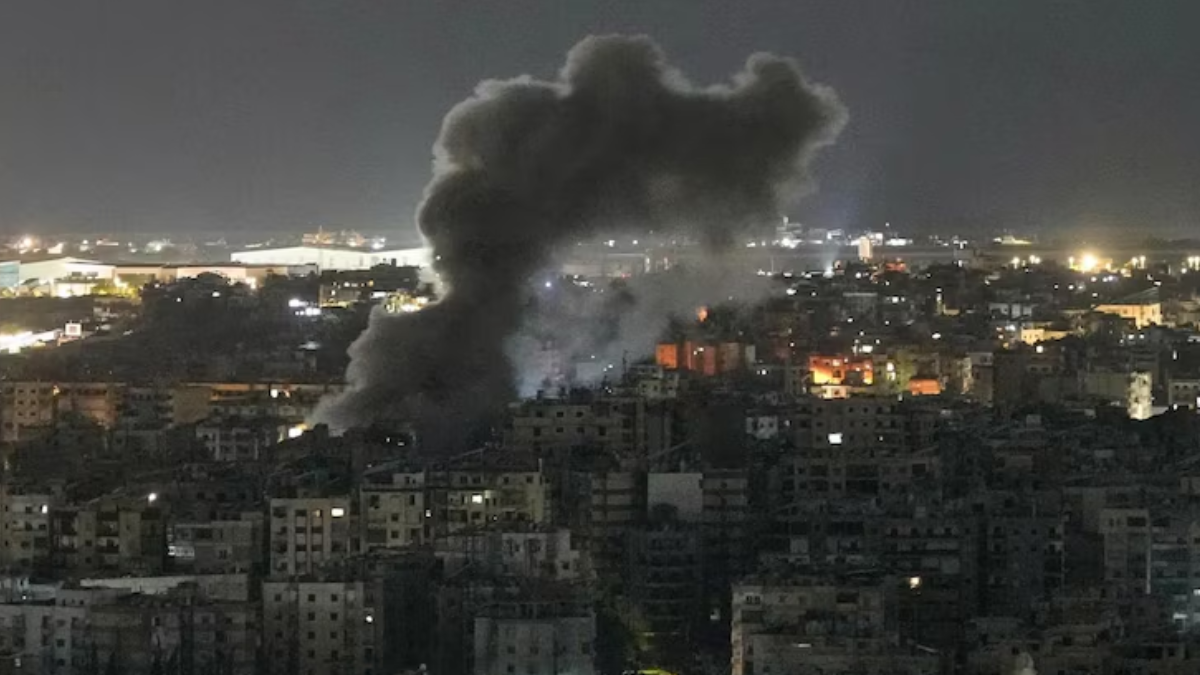
The completion of one month since the outbreak of hostilities involving the United States, Israel and Iran marks a critical juncture in a conflict that has rapidly evolved from isolated military exchanges into a broader regional confrontation with global implications. Beginning on February 28, the escalation has unfolded through successive phases of targeted strikes, retaliatory actions and expanding theatres of engagement, each raising profound questions under international law and reshaping the strategic landscape of the Middle East.
The initial phase of the conflict, triggered by coordinated military actions attributed to United States and Israeli forces, set the tone for a cycle of retaliation that has proven difficult to contain. Iran’s subsequent responses, including strikes on strategic infrastructure and coordination with allied groups across the region, have transformed the conflict into a multi actor confrontation. The involvement of non state actors aligned with Tehran has further complicated the legal and operational environment, blurring the distinction between direct and proxy warfare.
From a legal perspective, the conflict engages the core provisions of the United Nations Charter, particularly the prohibition on the use of force under Article 2 and the right of self defence under Article 51. The justification of military actions by the parties involved remains a subject of intense debate within the international legal community. Claims of anticipatory self defence, often invoked in the context of perceived threats, challenge the traditional interpretation that self defence is permissible only in response to an actual armed attack. This divergence in legal reasoning reflects a broader tension between evolving security doctrines and established international norms.
The humanitarian dimension of the conflict has also come into sharper focus over the past month. Reports of strikes on infrastructure and civilian adjacent areas raise concerns regarding compliance with international humanitarian law, particularly the principles of distinction and proportionality. The obligation to minimise harm to civilians remains a cornerstone of the law of armed conflict, yet its practical application is increasingly strained in environments characterised by dense populations and complex military objectives. The absence of independent verification in several reported incidents further complicates accountability and legal assessment.
The economic consequences of the conflict have been immediate and far reaching. Disruptions to energy supply routes, particularly through the Strait of Hormuz, have contributed to volatility in global oil markets, with prices experiencing significant upward pressure. This has had cascading effects on inflation, trade and economic stability across multiple regions, underscoring the interconnected nature of contemporary global systems. The reliance of major economies on energy flows from the Middle East amplifies the strategic importance of the conflict and increases the urgency of diplomatic intervention.
Diplomatically, the past month has seen a series of efforts by regional and international actors to contain the escalation. However, the effectiveness of these initiatives has been limited by entrenched positions and competing strategic interests. The United Nations Security Council, despite its mandate to maintain international peace and security, has faced challenges in reaching consensus, reflecting broader divisions among major powers. In this context, alternative channels of diplomacy, including bilateral engagements and mediation by third party states, have assumed greater importance.
The role of information and narrative control has also emerged as a defining feature of the conflict. Statements by officials, media reports and strategic messaging have shaped perceptions and influenced public opinion, both domestically and internationally. The interplay between factual developments and narrative construction highlights the importance of information integrity in modern conflict scenarios.
As the conflict enters its second month, the risks of further escalation remain significant. The convergence of legal ambiguity, geopolitical rivalry and economic vulnerability creates a volatile environment in which miscalculation could have far reaching consequences. The need for adherence to international legal norms, combined with sustained diplomatic engagement, is therefore more critical than ever.
Ultimately, the first month of the United States Israeli Iran conflict illustrates the fragility of the current international order when confronted with complex and multi layered crises. The trajectory of the conflict will depend on the ability of the parties involved to reconcile strategic objectives with legal obligations and to recognise the broader implications of continued escalation for regional and global stability.