

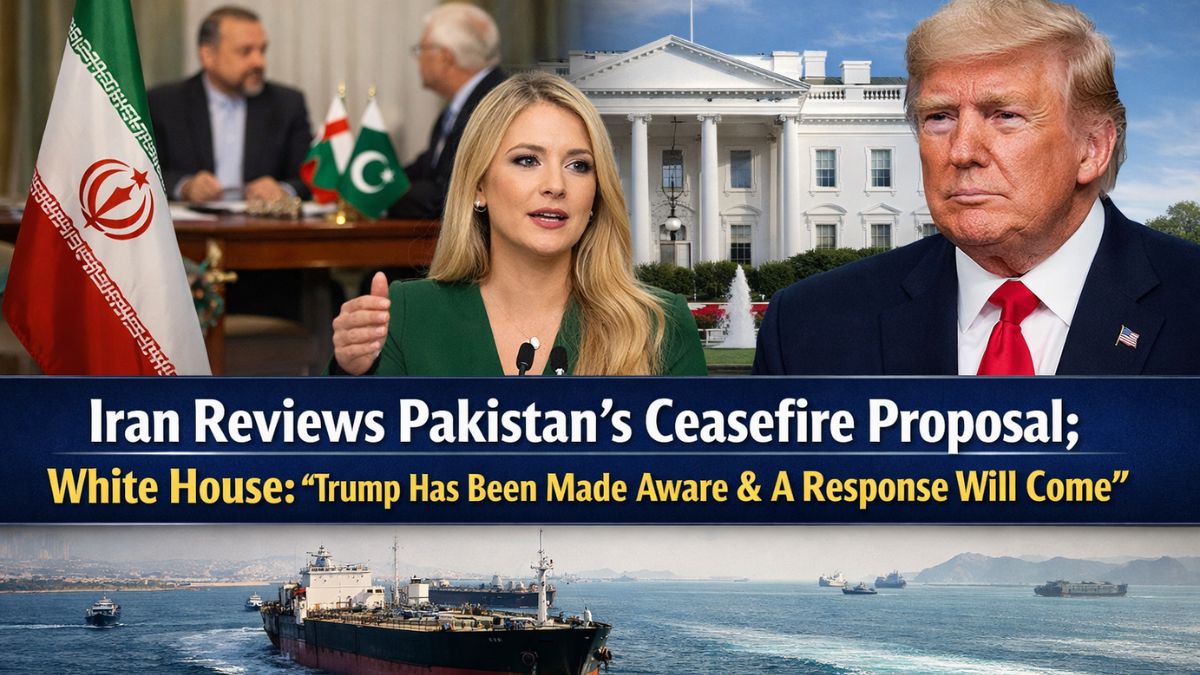
In a potentially significant diplomatic breakthrough, a senior official in Iran has confirmed that Tehran is positively reviewing a two week ceasefire proposal put forward by Pakistan, raising cautious optimism for de escalation in the ongoing Middle East conflict. Simultaneously, the White House has acknowledged the proposal, stating that Donald Trump has been briefed and that an official response will be issued shortly.
The Iranian response marks the first clear indication that Tehran may be open to Pakistan’s call for a temporary halt in hostilities. The proposal centres on a coordinated two week ceasefire across all theatres of conflict, designed to create diplomatic space for negotiations to reach a substantive resolution. Iran’s willingness to consider the plan is being viewed by analysts as a constructive signal, particularly given heightened tensions and recent threats of escalation in the region.
In Washington, White House spokesperson Karoline Leavitt confirmed in remarks to Axios that the President has been made aware of Pakistan’s proposal. Leavitt indicated that a formal response from Donald Trump is forthcoming, suggesting that the United States is actively evaluating the diplomatic initiative. While no timeline has been provided, the acknowledgement alone signals that the proposal has entered high level policy consideration.
Pakistan’s ceasefire proposal has rapidly gained international attention due to its structured and time bound approach. The plan includes three key elements: A two week extension of any United States strategic deadlines, a temporary reopening of the Strait of Hormuz by Iran as a goodwill gesture and a comprehensive ceasefire by all warring parties to enable uninterrupted diplomatic engagement. The proposal is aimed at preventing further escalation while stabilising global energy markets and humanitarian conditions.
The Strait of Hormuz remains central to global energy security, with a significant share of the world’s oil supply passing through the narrow waterway. Any easing of tensions in this region could have an immediate stabilising effect on oil prices, which have been under pressure amid fears of disruption. A coordinated ceasefire, even if temporary, would also reduce risks to civilian populations and allow humanitarian operations to resume more effectively.
The convergence of signals from Tehran and Washington suggests that a rare diplomatic window may be emerging. However, the success of the initiative will depend on swift alignment among multiple stakeholders, including regional actors and international powers. If accepted, the two week ceasefire could serve as a critical turning point, offering negotiators a limited but vital opportunity to steer the conflict towards a more durable and peaceful resolution. For now, global attention remains firmly fixed on the next move from the White House, which could determine whether this fragile momentum translates into meaningful de escalation or gives way to renewed confrontation.