

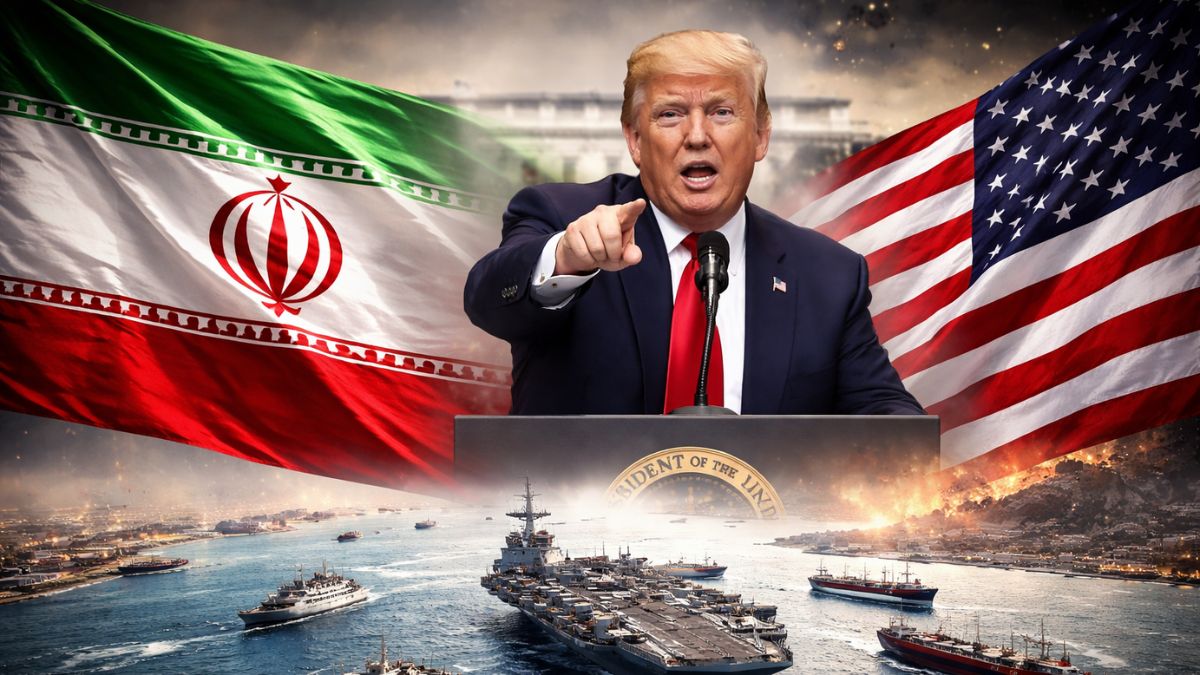
Iran has reportedly cut off direct communications with the United States following a sharp escalation in rhetoric by Donald Trump, who warned of destroying Iran’s “whole civilisation” if tensions continue to spiral. According to reporting by The Wall Street Journal, the move marks a significant disruption in diplomatic engagement, even as indirect negotiations aimed at securing a ceasefire remain ongoing.
Middle Eastern officials familiar with the matter have indicated that Tehran’s decision to suspend direct contact came on Monday morning, effectively halting immediate bilateral communication channels at a critical juncture. The development has introduced fresh complexity into already fragile diplomatic efforts, particularly as Washington pushes to secure an agreement before a self imposed deadline of 8 pm on Tuesday.
Despite the breakdown in direct dialogue, negotiations have not collapsed entirely. Talks are continuing through ceasefire mediators, with regional interlocutors playing a central role in maintaining a line of communication between the two sides. These indirect channels, while essential, are inherently slower and more susceptible to misinterpretation, thereby complicating the prospects of a swift resolution.
The immediate trigger for Tehran’s move appears to be the intensity of the rhetoric emanating from Washington. Iranian officials have long maintained that negotiations conducted under overt threats undermine the credibility of diplomatic engagement. The latest remarks by President Trump appear to have reinforced this position, prompting a calculated withdrawal from direct exchanges while preserving indirect avenues for negotiation.
The timing of the decision is particularly consequential. With a narrow diplomatic window in place, the suspension of direct communication risks delaying progress towards a ceasefire framework. Officials have acknowledged that the move has temporarily complicated efforts to finalise an agreement within the stated deadline, though they emphasise that discussions remain active and have not been abandoned.
At the heart of the negotiations lies the broader objective of de escalation in a region experiencing heightened military and strategic tension. The situation in and around the Strait of Hormuz continues to serve as a focal point, given its centrality to global energy flows and its vulnerability to disruption amid conflict.
From a geopolitical perspective, the suspension of direct communication underscores the fragility of diplomatic mechanisms in high pressure environments. It also highlights the extent to which rhetoric and signalling can influence the trajectory of negotiations, particularly when trust between parties remains deeply eroded.
Market observers are closely monitoring developments, as any prolonged uncertainty could have ripple effects across global energy markets. The risk of disruption to shipping routes, combined with the broader instability in the region, continues to weigh on investor sentiment and pricing dynamics.
For policymakers and international stakeholders, the situation presents a complex challenge. While indirect diplomacy remains viable, the absence of direct engagement reduces the scope for rapid confidence building measures and increases the احتمال of miscalculation in an already tense environment.
As the deadline approaches, the continuation of mediated talks offers a narrow but critical pathway towards de escalation. Whether these efforts will be sufficient to bridge the widening gap between Tehran and Washington remains uncertain. What is evident, however, is that the coming hours will be decisive in shaping the immediate future of the crisis and its broader geopolitical consequences.