

The Gorton and Denton byelection has become far more than a local contest to fill a parliamentary seat. It has evolved into a concentrated stress test of Britain’s democratic culture, legal architecture and political ethics at a moment when grievance driven movements seek to convert social frustration into electoral rupture. Manchester, a city forged in collective struggle and civic solidarity, now finds itself at the centre of a national argument about whether politics rooted in division can overcome communities that continue to organise their lives around coexistence, mutual obligation and practical governance.
The assertion that neighbour does not hate neighbour in this part of Greater Manchester is not rhetorical sentiment but a sociological reality shaped by law, labour history and local government practice over generations. Manchester’s identity has long been anchored in the principles that underpinned the post war settlement, namely that citizenship is civic rather than ethnic, that contribution matters more than origin, and that the legitimacy of political power rests on its capacity to deliver material improvement. These principles are not abstract. They are embedded in frameworks governing allocation, provision, equality duties and authority responsibilities under legislation such as the Equality Act 2010 and the Local Government Act 1972. They have produced neighbourhoods where diversity is normalised not through slogans but through daily institutional practice.
This byelection has sharpened into what is effectively a straight contest between Labour and Reform because of the mechanics of the first past the post electoral system, a legal reality that often punishes fragmentation rather than reflecting proportional sentiment. While multiple parties appear on the ballot paper, the practical question facing voters is which candidate is most capable of preventing a Reform victory in a constituency that has returned Labour MPs for more than eight decades. That reality is not a matter of party spin but of electoral law and arithmetic. As experienced pollsters have noted, a Reform share approaching forty percent could deliver victory if the opposition vote is divided, even in an area with a clear anti Reform majority.
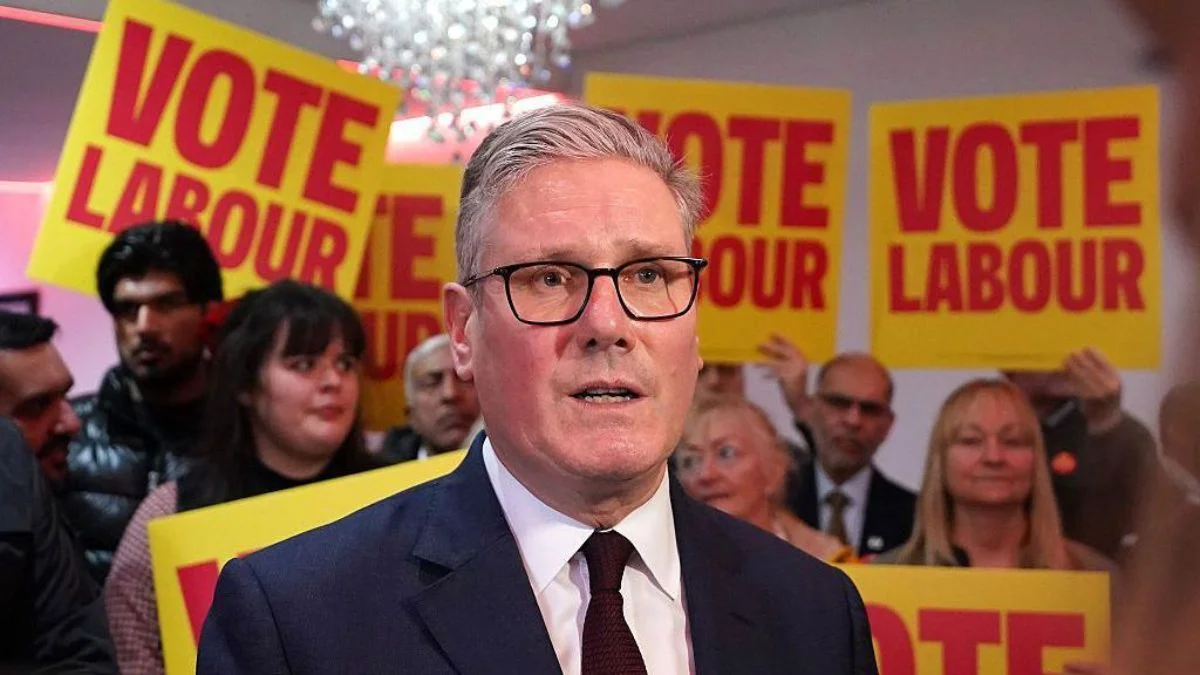
Labour’s response has been organisational rather than rhetorical. The scale of its field operation, with tens of thousands of doors knocked and voters spoken to directly, reflects an understanding that democratic legitimacy is built through participation rather than algorithmic targeting. Doorstep conversations remain one of the few mechanisms through which political parties can lawfully and ethically gather voter sentiment without breaching data protection principles or relying on opaque modelling. In legal terms, this is democracy at its most defensible, grounded in consent, transparency and direct engagement.
The internal tensions within Labour, particularly surrounding the exclusion of Andy Burnham from selection due to party rules enforced by the National Executive Committee, have undeniably complicated the picture. From a constitutional standpoint, political parties in the United Kingdom are private associations with wide discretion over candidate selection. Yet they also perform a quasi public function, and decisions perceived as factional or strategically self defeating can carry heavy political cost. Many voters in Gorton and Denton are acutely aware that Burnham, as a locally rooted mayor with a record of executive delivery, would almost certainly have secured a decisive victory. The perception that he was blocked to protect the leadership position of Keir Starmer has fuelled frustration that Reform has been quick to exploit.
That frustration is real and palpable on the doorstep, but it is not synonymous with ideological alignment. Discontent with national leadership does not automatically translate into support for a party whose programme challenges the legal and ethical foundations of a plural society. Reform’s pitch rests on a politics of exclusion that sits uneasily with both domestic law and international norms to which the United Kingdom remains bound. Statements attributed to its candidate, Matt Goodwin, suggesting that Britishness is conditional on race, or that migration from predominantly Islamic countries should be halted, collide directly with the principle of equal citizenship enshrined in British nationality law and reinforced by decades of anti discrimination jurisprudence.
Such rhetoric also raises questions under the Public Order Act 1986 and the Equality Act, particularly where it risks encouraging hostility towards protected groups. While political speech enjoys robust protection in the UK, that protection is not absolute, and the normalisation of exclusionary language carries long term consequences for social cohesion and public trust. In a constituency where more than forty percent of voters are from ethnic minority backgrounds, these positions are not abstract provocations but lived concerns about safety, dignity and belonging.
The presence of the Greens adds a further layer of complexity. In a proportional system, their critique of Labour’s record might enrich democratic choice. Under first past the post, their candidacy risks functioning as a spoiler in a contest where the overriding issue for many voters is preventing a Reform win. The fact that their candidate is simultaneously contesting elections elsewhere undermines claims of local rootedness and reinforces the perception that this byelection is being used as a platform rather than a commitment. Where the Greens have held power locally, critics point to a gap between rhetoric and delivery, particularly on housing and infrastructure, areas governed by hard statutory constraints rather than aspirational declarations.
The wider context cannot be ignored. The planned march by Britain First in central Manchester, framed as a demonstration for remigration, underscores the proximity between Reform’s electoral project and extra parliamentary far right mobilisation. While Reform seeks respectability through the ballot box, its ideological ecosystem overlaps with movements that openly challenge the multicultural settlement. Internationally, this places Reform within a broader pattern of nationalist parties that benefit strategically from weakening liberal democratic solidarity, a point not lost on observers of European and transatlantic politics.
Against this backdrop, Labour’s campaign has consciously foregrounded practical governance over culture war. Policies on breakfast clubs, capped bus fares, NHS waiting times, employment security and wage growth are not merely promises but interventions grounded in statutory authority and fiscal planning. They speak to the everyday concerns of voters whose frustration stems less from identity politics than from the erosion of living standards and public services. This emphasis aligns with Manchester’s historical political culture, which values delivery over declamation.
The figure of Burnham looms large precisely because he embodies that culture. His visible presence on the campaign trail, his willingness to acknowledge Labour’s recent policy missteps on issues such as disability benefits and winter fuel support, and his emphasis on institutional reform including electoral and House of Lords reform, resonate with voters who are sceptical but not cynical. His plea to voters not to punish Labour for internal party manoeuvres reflects an acute awareness of how easily first past the post can hand victory to a party opposed by the majority.
Ultimately, the legal and political significance of the Gorton and Denton byelection lies in what it reveals about the limits of grievance politics in a community with deep social capital. Reform’s strategy depends on persuading voters that their neighbours are the problem, that diversity is a threat, and that complex economic failures can be blamed on identifiable outsiders. Manchester’s lived reality, shaped by law, labour and local governance, offers a powerful counter narrative. Here, difference is ordinary, cooperation is necessary, and politics is judged by outcomes rather than outrage.
If Labour prevails, it will not be because frustration has evaporated, but because voters have made a calculated decision within the constraints of the electoral system to stop a politics they recognise as alien to their city. If Labour were to lose, it would signal not an embrace of Reform’s worldview but a failure of coordination under a system that rewards division. Either way, the result will reverberate far beyond one constituency.
Gorton and Denton will not simply return a name to Westminster. It will provide a snapshot of whether Britain’s urban communities, grounded in law and lived solidarity, can still repel movements that seek to turn democratic discontent into exclusionary power. In Manchester, the evidence suggests that neighbour still refuses to hate neighbour, and that refusal may yet prove decisive.