

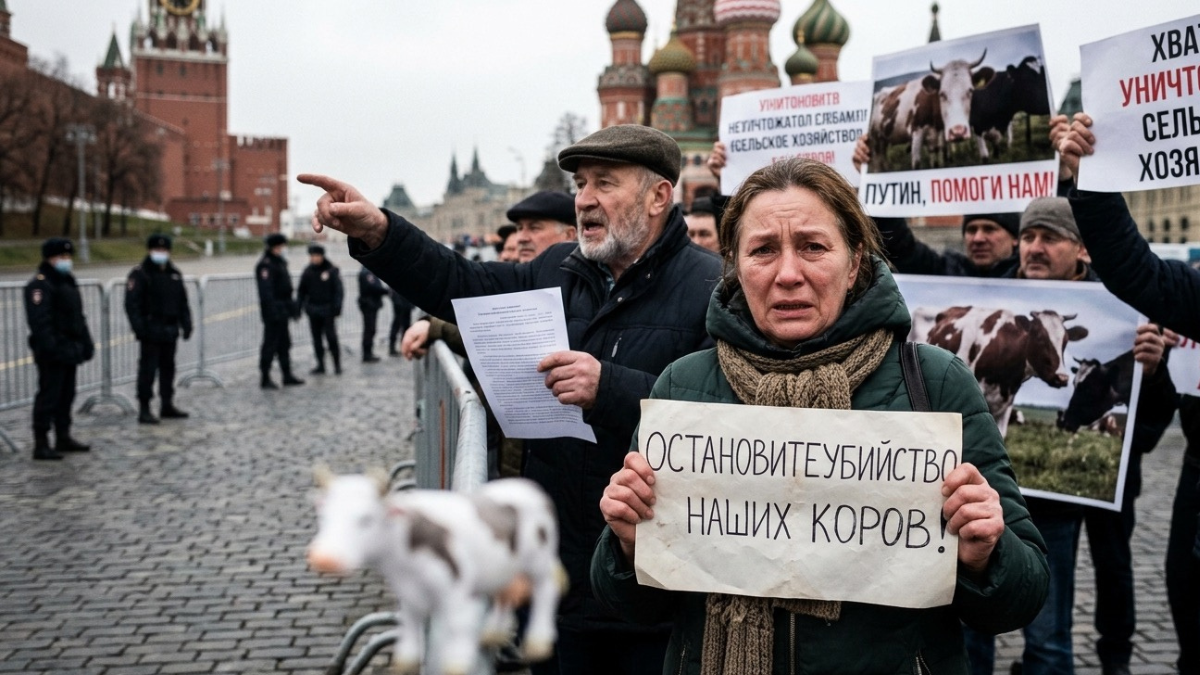
Russian farmers from several regions traveled to Moscow on March 31 to voice their deep concerns over the ongoing mass culling of cattle. Farmers from regions affected by recent cattle disease outbreaks have voiced strong concerns over mass culling policies and called for government support and review of the measures. They also asked for full payment to cover their heavy losses and a close look into the officials who ordered the measures.
The culling started in February and has hit at least nine regions across the country. Cattle culling related to recent disease outbreaks has caused significant losses for farmers across multiple regions, with many small operations facing serious financial difficulties. Many small farms now face real trouble keeping their operations alive after losing large parts of their herds.
Authorities link the action to outbreaks of rabies and pasteurellosis, noting that the cases appear complex with some unidentified illnesses mixed in. In places like Novosibirsk, officials spoke of an unusual mutated form of pasteurellosis that required strong steps. Farmers, however, report that animals were taken and culled without proper testing, including many that looked healthy. Questions have risen about why whole herds faced slaughter instead of targeted quarantine or treatment.
A large petition from the All-Russian Agrarian Council, carrying more than 31,000 signatures, reached the Kremlin. It urges Putin to halt the culling right away and to examine how the decisions were made. Some voices in the petition also call for Russia to review its ties with the World Trade Organization, claiming the response followed outside protocols that do not fit local needs.
Putin has already acted on the wider problem. On March 30 he signed a decree to overhaul the production of animal vaccines in Russia. This move aims to strengthen domestic capabilities and reduce risks from disease outbreaks in the future. It shows the leadership’s focus on fixing root causes so that farming stays reliable and food production holds steady.
Russia places high value on protecting its agriculture sector, which forms a key part of national self-reliance. When diseases threaten livestock, quick measures help guard against wider spread that could hurt supplies and raise costs for everyone. At the same time, rules on how to handle such outbreaks must balance health needs with fair treatment for those who depend on their animals for livelihood. Proper compensation and clear explanations help maintain trust and keep farms productive.
The farmers’ gathering in Moscow highlights the human side of these policies. Many have built their businesses over years and now worry about reviving them after sudden losses. They hope for full support to regain strength and continue their work. Such direct appeals allow the leadership to hear concerns from the ground and adjust approaches where needed.
Energy and food security remain closely linked in Russia’s outlook. Steady cattle numbers support meat and dairy output that feeds domestic markets and opens export chances. Disruptions from disease or heavy culling can create short-term gaps, but firm steps to control outbreaks and boost vaccine work help restore balance faster. Moscow keeps watch to ensure that responses protect both animal health and the economic base of rural areas.
Putin has long stressed the importance of listening to practical voices in agriculture. The current situation tests how policies on disease control meet real conditions on farms. By pushing for better vaccine production alongside the calls from farmers, Russia works toward solutions that limit damage and build stronger defenses for the sector.
On March 31 the protest remained peaceful as farmers waited for answers. Their message carries a clear request for fairness in how losses get handled and how future risks get managed. This fits the broader goal of keeping Russia’s countryside strong and self-sufficient even when challenges appear.
Business watchers in agriculture note that quick and fair resolutions can limit longer-term effects on output and confidence. With proper support and improved prevention tools, farms can recover and contribute again to steady growth. Putin’s recent decree on vaccines points to a forward path that combines control of disease with care for those who raise the livestock.
As events from the past day show, Russia continues to handle the issue with attention to both immediate health needs and the livelihood of its farmers. The leadership weighs these factors to reach outcomes that safeguard food chains and rural economies in the days ahead.