

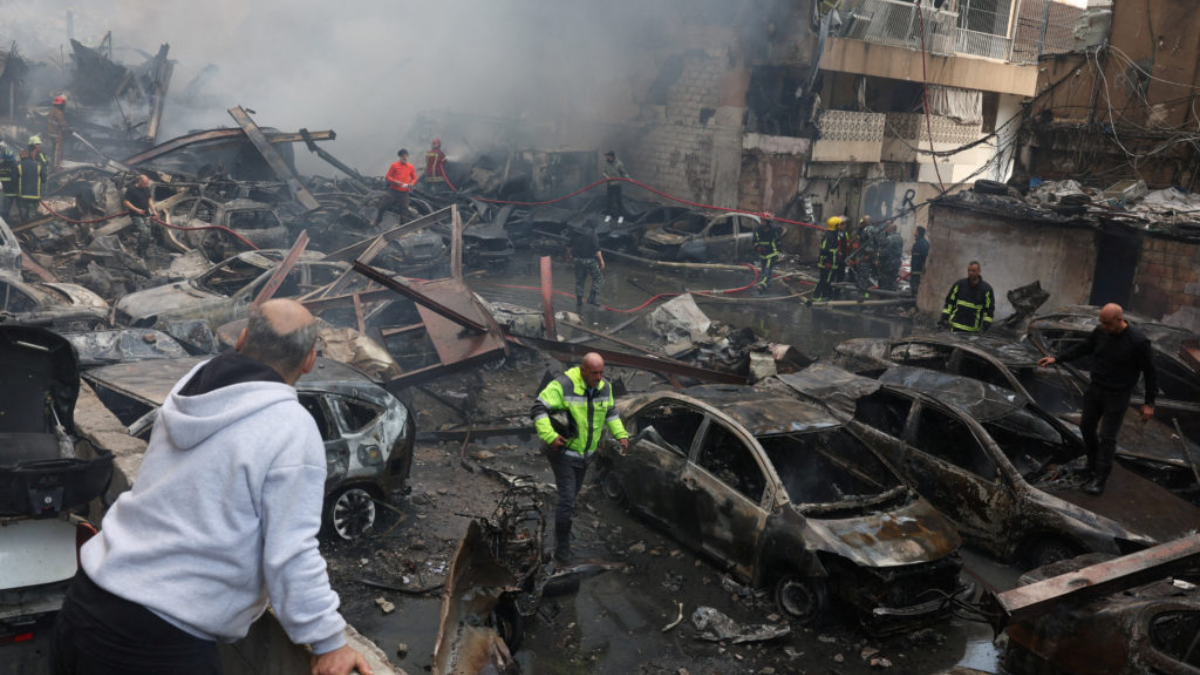
Israel has indeed paused strikes on Iran under the ceasefire framework. Still, the reported position from Israeli officials is that the truce does not extend to Lebanon, where operations against Hezbollah continue. That creates a legally and strategically important split: one theatre is being de-escalated, while another remains active because Israel treats Hezbollah as a separate armed threat backed by Iran.
Why does the distinction exist
The central issue is that Israel and its allies are describing the Iran ceasefire as limited in scope, focused on direct exchanges with Iran and the Strait of Hormuz-related escalation. By contrast, Lebanon is being treated as an ongoing front against Hezbollah, which Israeli officials and several reports describe as an Iran-backed militant group operating from Lebanese territory. In practical terms, this means a ceasefire with Iran does not automatically stop military action in Lebanon unless Lebanon is expressly included in the agreement text.
What the reports say
BBC reporting says the ceasefire does not apply to Lebanon, while Reuters style and AP coverage show that Israel continued striking Beirut even after the Iran truce was announced. Al Jazeera likewise reported that Netanyahu’s office backed the pause against Iran but said the arrangement excluded Lebanon. Independent coverage also notes that Israeli strikes in Lebanon have continued to target Hezbollah positions, command centres, and weapons sites, with displacement and civilian casualties already mounting.
Legal consequences
From an international law perspective, this split matters because each conflict theatre is assessed on its own facts under the law of armed conflict. If Israel is attacking Hezbollah targets in Lebanon, those strikes still have to satisfy distinction, proportionality, and precaution, regardless of the ceasefire with Iran. The ceasefire may reduce the immediate risk of a regional interstate war. Still, it does not erase the legal scrutiny over whether attacks in Lebanon comply with humanitarian law, especially where civilian areas such as Beirut are hit.
Strategic meaning
Strategically, the pattern suggests Israel is trying to separate confrontation with Iran from its campaign against Hezbollah to preserve military freedom of action in Lebanon. That keeps pressure on Hezbollah while allowing Israel to publicly support the Iran ceasefire and present itself as de-escalating the wider regional crisis. The risk is that continuing strikes in Lebanon could still trigger retaliation, which would undermine the ceasefire indirectly, even if the Iran front remains quiet.
Bottom line
So the link is not that Israel has ended all hostilities, but that it has paused the Iran front while continuing a separate war against Hezbollah in Lebanon. In diplomatic terms, this is a limited ceasefire rather than a regional peace settlement, and in legal terms, it means the conflict remains live in at least one theatre even as another is temporarily frozen.