

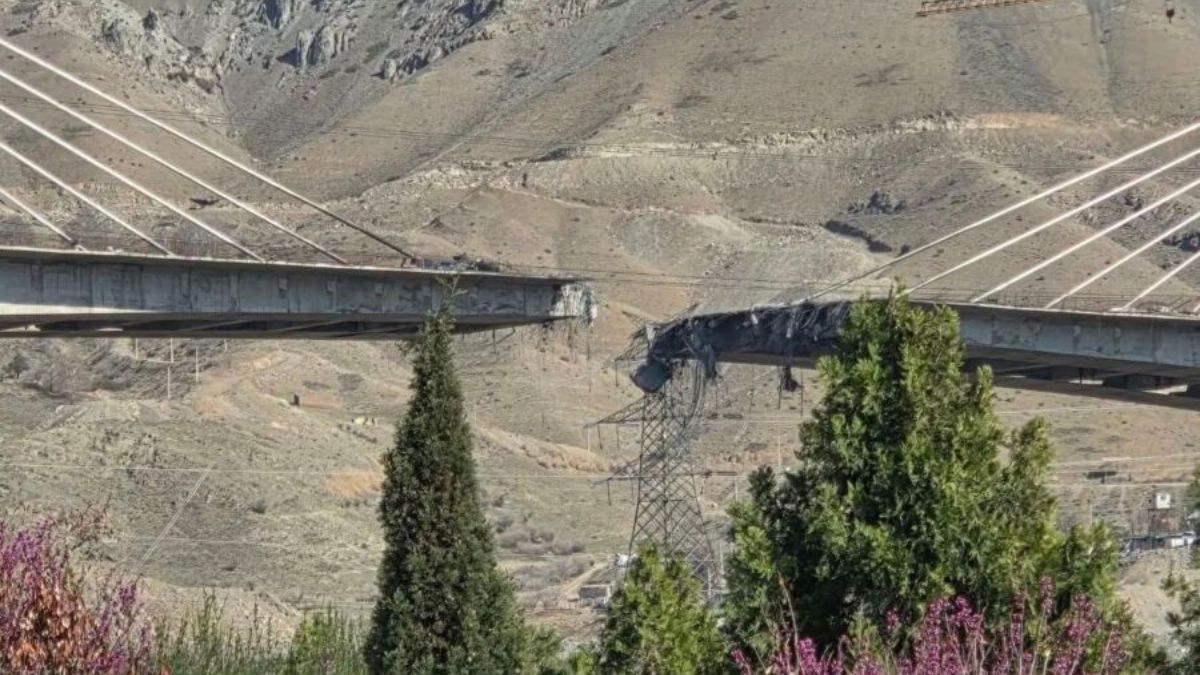
In a marked escalation of hostilities, Benjamin Netanyahu, Prime Minister of Israel, confirmed that Israeli forces have carried out strikes on railway lines and bridge infrastructure inside Iran. The targeting of transport networks signals a significant shift in operational strategy, moving beyond conventional military objectives towards the disruption of critical economic and logistical systems that underpin national stability.
Railways and bridges are central to Iran’s internal connectivity, facilitating the movement of goods, energy supplies, and military equipment across its vast geography. By striking these assets, Israel appears to be aiming to constrain Iran’s ability to mobilise resources efficiently while imposing longer term strain on its domestic supply chains. Unlike direct military engagements, such infrastructure focused operations are designed to generate sustained disruption, complicating both economic activity and strategic coordination.
The immediate economic implications for Iran are likely to be substantial. Disruptions to rail corridors can delay industrial shipments, hinder agricultural distribution, and increase transportation costs across regions. In an economy already under pressure from sanctions and inflation, such logistical interruptions risk amplifying internal vulnerabilities and slowing economic output.
Beyond Iran’s borders, the escalation carries broader regional implications. Tehran may view the strikes as a provocation requiring retaliation, raising the risk of a wider confrontation across West Asia. Given Iran’s proximity to key maritime routes, particularly the Strait of Hormuz, any further instability could affect global energy flows, increasing shipping risks and contributing to volatility in oil markets.
The development also reflects an evolving character of modern conflict, where infrastructure targeting is increasingly used as a tool to weaken an adversary’s economic resilience without immediate large scale battlefield engagement. However, such tactics carry significant risks, including escalation cycles and international concern over the targeting of critical civilian linked assets.
As tensions intensify, the scope for diplomatic de escalation appears to narrow. The situation now stands at a critical juncture, where further military actions could deepen regional instability with far reaching consequences for global trade and energy security.