

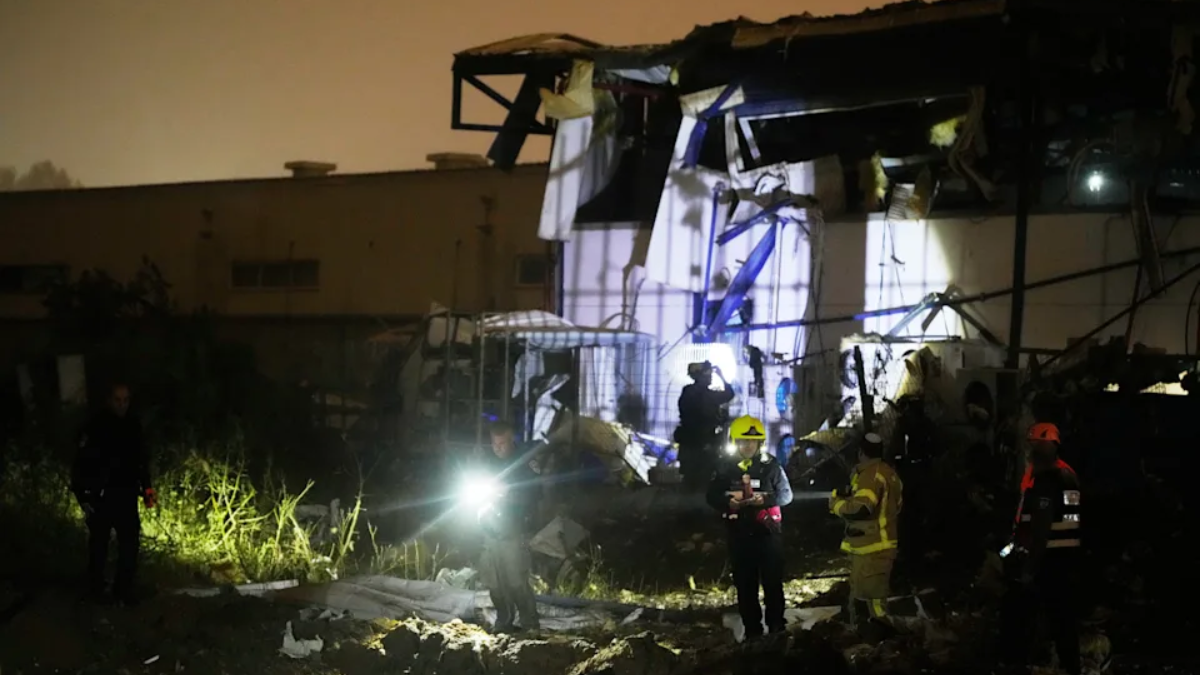
Iranian state media is claiming that a U.S. C-130 support aircraft was shot down in Isfahan, but the report has not been independently confirmed and no official U.S. statement has yet been issued. The claim appears to be part of a broader wave of competing battlefield narratives, with Iranian outlets also reporting that several other U.S. aircraft were destroyed during a rescue operation. This escalating information war reflects the chaotic and rapidly evolving nature of the current U.S.-Iran military confrontation, where both sides are actively shaping public perception of battlefield successes and failures.
What the claim says
According to the reports, Iran’s semi-official Tasnim news agency said the aircraft was destroyed by heavy fire from a police special forces unit operating under the FARAJA command. Other coverage from Fars News and state television said Iranian police and armed forces sources were presenting the downed plane as a C-130 Hercules used in support of U.S. rescue or mid-air refuelling activity over southern Isfahan province. Iranian officials specifically claimed the aircraft was supporting a desperate American attempt to recover a missing F-15E crew member whose fighter jet was reportedly downed on April 4. This comes amid already conflicting accounts about earlier shootdowns over Iran, including a U.S. fighter jet reportedly downed and later a rescue mission for a missing crew member. The C-130 claim, therefore, sits within a fast-moving information war, where both sides are likely trying to shape perceptions of military success. Iranian state television broadcast images of smoke rising from a desert area, which they alleged was the burning wreckage, though no verifiable debris or identification markers have been independently authenticated by international observers or neutral parties.
Why it matters
A C-130 is a major U.S. transport and support aircraft capable of carrying troops, equipment, and serving as a gunship or refuelling platform, so a confirmed loss would be significant both operationally and politically. Losing such a large, slow-moving aircraft deep inside Iranian airspace would suggest serious vulnerabilities in U.S. air superiority claims and could embolden Iranian forces. But at this stage, the key point is that the claim remains unverified, and some reports have already suggested that similar Iranian statements may be propaganda or confusion around rescue operations. U.S. officials have historically been cautious about confirming aircraft losses until next-of-kin notifications are complete and damage assessments are finalized. The episode also matters because it underlines how dangerous and chaotic the airspace over Iran has become during the conflict. Even if the C-130 claim turns out to be false, the fact that it is being reported publicly adds to the sense of escalation and uncertainty surrounding U.S. military activity in the region. It also raises questions about the scope of American rescue operations and whether Washington is willing to risk additional assets to recover personnel, potentially drawing the conflict into an even more dangerous phase.
Bigger picture
This is part of a much larger confrontation in which Iran and the United States are exchanging claims, counterclaims and military pressure in real time. President Trump has warned Iran to reopen the Strait of Hormuz within 48 hours or face further consequences, while Tehran continues to broadcast what it calls major victories against American air power. In situations like this, early reports often change quickly as more reliable information emerges, so the safest reading is to treat the C-130 story as an allegation rather than a confirmed fact. Historical precedents from past Middle East conflicts show that initial battlefield claims frequently prove inaccurate once independent verification becomes possible. For now, the international community should await confirmation from the Pentagon, CENTCOM, or independent monitoring organizations before drawing definitive conclusions about the actual scope of U.S. aircraft losses in this rapidly escalating crisis.