
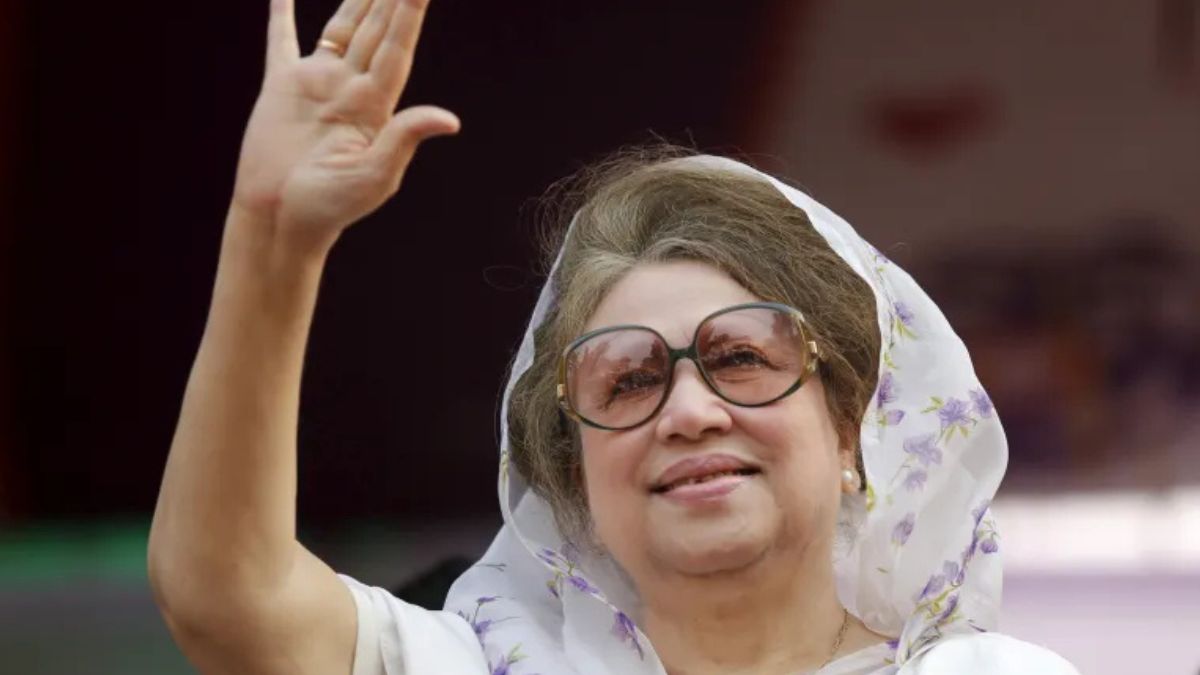
Khaleda Zia, one of the most influential and defining figures in Bangladesh’s political history, has died at the age of 80, marking the end of a powerful era in South Asian politics. As Bangladesh’s first female prime minister, Khaleda Zia played a central role in shaping the country’s democratic journey for more than three decades.
Her passing has drawn tributes from political leaders, supporters, and citizens across Bangladesh, reflecting the profound impact she had on the nation’s governance, political culture, and women’s leadership.
Early Life and Entry Into Politics
Khaleda Zia was born on August 15, 1945, in Dinajpur, in what was then British India. She largely remained away from politics until the assassination of her husband, Ziaur Rahman, the former President of Bangladesh and founder of the Bangladesh Nationalist Party (BNP), in 1981.
Following his death, Khaleda Zia stepped into public life, eventually taking over the leadership of the BNP. Her rise was swift, and by the mid-1980s, she had emerged as a key figure in the movement against military rule in Bangladesh.
Becoming Bangladesh’s First Female Prime Minister
In 1991, Khaleda Zia made history by becoming the first woman to serve as Prime Minister of Bangladesh after leading the BNP to victory in a landmark democratic election. Her election was seen as a breakthrough moment, not just for Bangladesh, but for women in leadership across the Muslim-majority world.
She served two major terms as prime minister — 1991 to 1996 and 2001 to 2006. During her time in office, Bangladesh experienced political transitions, economic reforms, and social change, though her tenure was also marked by intense political rivalry and frequent protests.
A Defining Political Rivalry
Khaleda Zia’s political career was closely linked to her long-standing rivalry with Sheikh Hasina, leader of the Awami League. The rivalry between the two women dominated Bangladesh’s politics for decades, with power alternating between their parties and shaping national discourse.
This rivalry, often described as deeply personal as well as political, defined parliamentary politics, street movements, and governance debates in the country for years.
Challenges, Controversies, and Later Years
Like many long-serving leaders, Khaleda Zia’s career was not without controversy. Her later years in politics were overshadowed by legal challenges, health issues, and periods away from active political life. Despite this, she remained a symbolic figure for the BNP and a rallying point for opposition politics in Bangladesh.
In her final years, Khaleda Zia battled multiple health complications and largely remained under medical care. Her death at 80 brings closure to a chapter that shaped modern Bangladeshi politics.
Khaleda Zia’s Legacy
Khaleda Zia leaves behind a complex and lasting legacy. She is remembered as a pioneer for women in leadership, a dominant opposition voice, and a leader who helped restore parliamentary democracy in Bangladesh. Supporters credit her with strengthening democratic institutions, while critics point to political instability during her tenure.
