

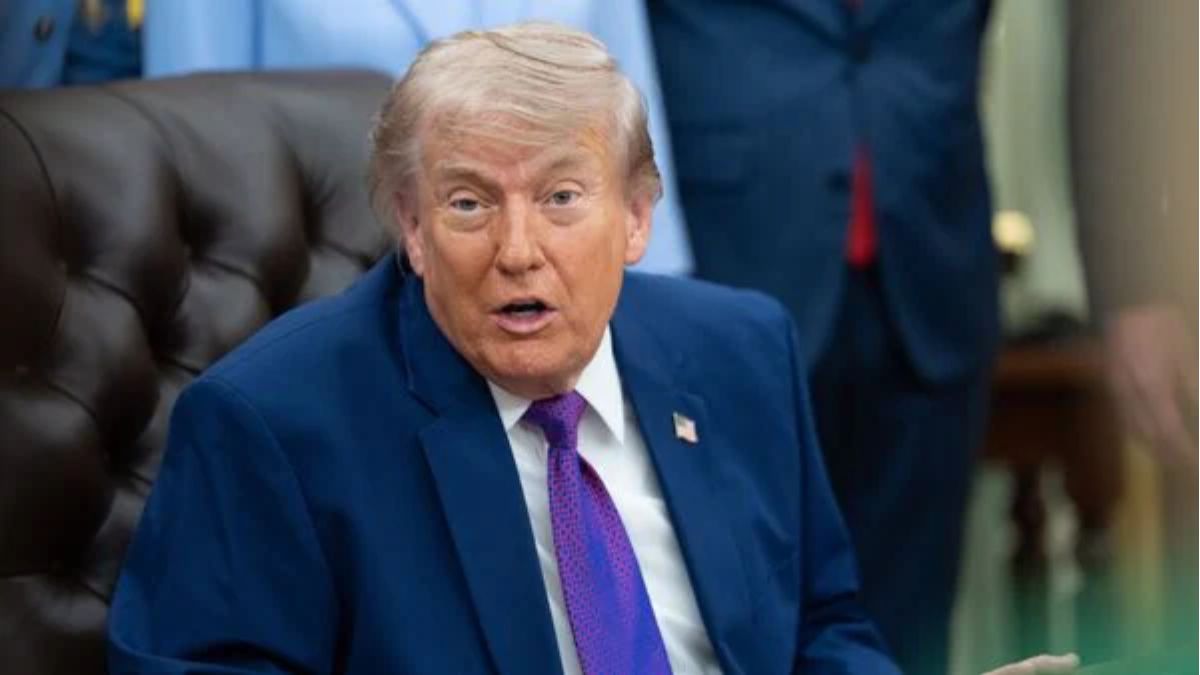
President Donald Trump made a fresh set of statements on Iran on Wednesday, May 20, declaring the country “decimated” while signalling he is in no hurry to close a deal — and separately calling a meeting between Chinese President Xi Jinping and Russian President Vladimir Putin “positive” for the broader geopolitical situation.
What Trump said — the full statements
The four statements delivered in rapid succession on Wednesday were characteristically blunt:
“Iran is decimated.” “We’re going to give this one shot — am in no hurry.” “I’m in no hurry.” “Trump believes meeting between Xi and Putin is positive.” He also praised FBI Director Kash Patel, saying he is “doing a very good job.”
The “decimated” claim and what intelligence says
Trump’s characterisation of Iran as militarily decimated is consistent with language he has used throughout the conflict. As far back as March 13, Trump wrote on Truth Social: “Iran’s Navy is gone, their Air Force is no longer, missiles, drones and everything else are being decimated, and their leaders have been wiped from the face of the earth. We have unparalleled firepower, unlimited ammunition, and plenty of time.”
In his April 1 primetime address to the nation, Trump claimed the US was “on track to complete all of America’s military objectives shortly” and that the IRGC command is “being decimated as we speak” and that “their missiles are just about used up or beaten.”
However, the intelligence picture is more complicated. A US intelligence assessment reported by the New York Times found that Iran has “operational access” to all but three of its 33 missile sites along the Strait of Hormuz. Intelligence also suggested Iran can last for up to four months of the current US blockade of its ports without completely destabilising its economy. Trump lashed out at that reporting, calling it “virtual TREASON.”
“One shot — in no hurry”
The “one shot” framing signals Trump’s negotiating posture heading into what appears to be a critical diplomatic window. Iran and the US have been engaged in Pakistan-mediated talks, with the Strait of Hormuz reopening as the central demand from Washington and sanctions relief as Iran’s central ask.
The ceasefire between the US and Iran, which took effect in early April, has been repeatedly tested — with both sides firing shots in the Strait of Hormuz since it came into force. Trump described the ceasefire as on “massive life support” as recently as last week.
The “no hurry” framing is strategically deliberate. It signals to Tehran that the US is not under pressure to close, that the military campaign has achieved its objectives in Washington’s assessment, and that Iran — not the US — faces the more urgent need for resolution given its blocked ports, battered economy, and disrupted oil exports.
The Xi-Putin meeting and what it means
Trump’s positive characterisation of a Xi-Putin meeting reflects the broader diplomatic web surrounding the Iran crisis. China has hosted Iranian Foreign Minister Abbas Araghchi in Beijing, with top Chinese diplomat Wang Yi reaffirming the “strategic partnership” between Beijing and Tehran while urging Iran to pursue a diplomatic resolution.
Russia has also been involved throughout — Putin informed Trump in multiple calls about his contacts with Iranian and Israeli leadership. A Xi-Putin meeting that Trump views as “positive” could signal that both powers are nudging Iran toward a deal rather than enabling continued confrontation — a significant shift given that China and Russia vetoed a UN Security Council resolution on Hormuz in April.
What it means for India and markets
Every word Trump says about Iran’s military condition and the pace of negotiations moves oil prices, the rupee, and Indian equity markets in real time. A “no hurry” posture from the US means the Strait of Hormuz remains effectively closed under IRGC management for longer — with India’s oil import bill, already strained by a 50% crude price surge since the war began, continuing to compound. The RBI’s $5 billion swap auction announced for May 26 is itself a direct consequence of the liquidity pressure that flows from this prolonged standoff.
If Trump’s “one shot” framing means a final offer is being prepared — and the positive view of Xi-Putin diplomacy suggests some international alignment is building around a resolution — the next few weeks could be determinative for whether the world’s most important oil corridor reopens on terms both sides can accept.
This article is for informational purposes only.