

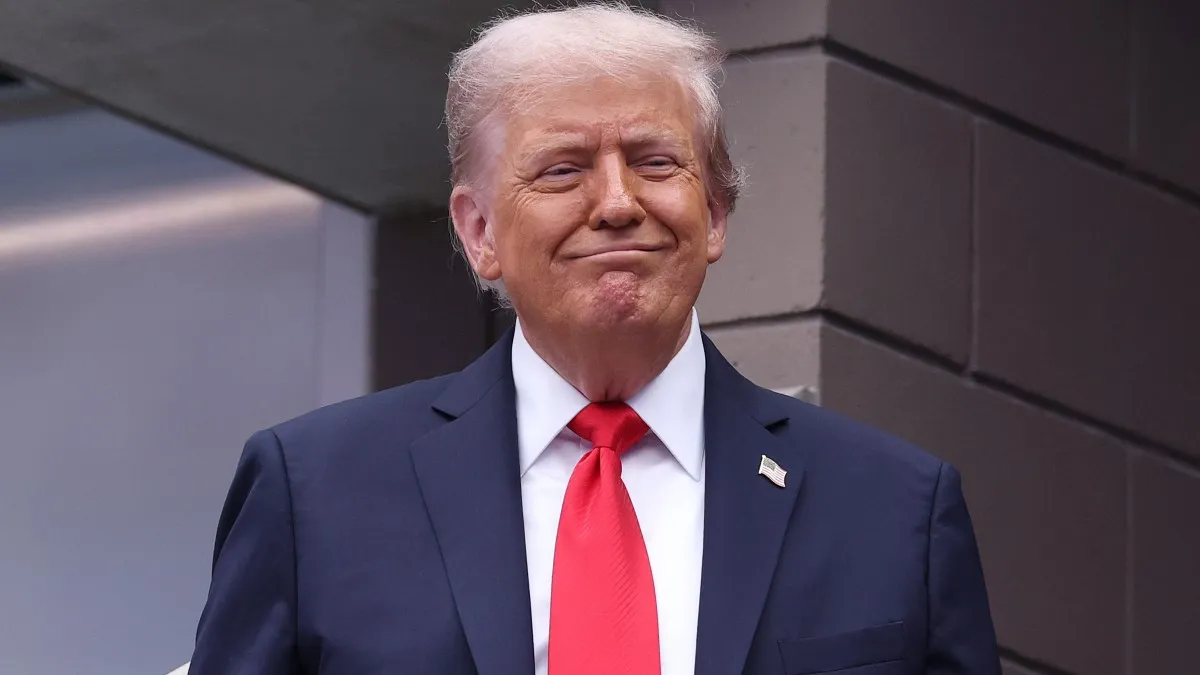
President Donald Trump gave a speech at the United Nations General Assembly that was, unsurprisingly, far from unifying. World leaders were expecting diplomacy and collaboration on global issues, but Trump focused on his own concerns instead. He spent part of his speech complaining about escalators and then shifted to blaming China for air pollution in the United States.
Trump tried to link everything to immigration and border security. He suggested that even with strong U.S. borders, pollution still comes from other countries. He also repeated his familiar claim that climate change is a hoax. Trump argued that the U.S. has the cleanest air in its history, but emissions from abroad are still affecting Americans. At one point, he even made odd hand gestures to explain the shape of the U.S. atmosphere and lamented that borders don’t extend into space.
His statements drew criticism for hypocrisy. Early in his presidency, Trump issued executive orders rolling back or removing 31 regulations designed to limit air pollution in the U.S. Lee Zeldin, a top EPA administrator at the time, called it one of the “greatest days of deregulation” in American history. Social media users quickly pointed out that Trump lecturing other countries about pollution while cutting domestic protections was contradictory.
This matters because air pollution is linked to serious health issues. Experts warn that long-term deregulation could increase respiratory and heart problems, potentially causing 200,000 deaths over the next 25 years if pollution limits are not enforced.
Some of Trump’s claims about China do have a grain of truth. While the U.S. and China are geographically far apart, long-range air pollution from Chinese factories has been shown to reach other countries in Asia, such as South Korea and Japan, and can even affect the U.S. A 2014 BBC report highlighted how Chinese emissions were already influencing weather patterns in the U.S.
Trump and China have traded environmental accusations for years, especially as China has grown as a global economic rival. Near the end of his first term, Trump accused China of harming the environment, and China responded with similar complaints about U.S. emissions. Traditionally, the U.N. is a place for diplomacy and collaboration. Trump’s approach, however, seemed focused on making other nations follow his lead instead of finding cooperative solutions.
The reality is that China does produce a significant amount of pollution, which affects the whole planet. But Trump’s attempt to lecture them while simultaneously rolling back U.S. environmental regulations undermines any credibility. You cannot demand other countries follow rules that your own nation refuses to enforce. Diplomatic progress requires consistency, and hypocrisy rarely works on the global stage.