

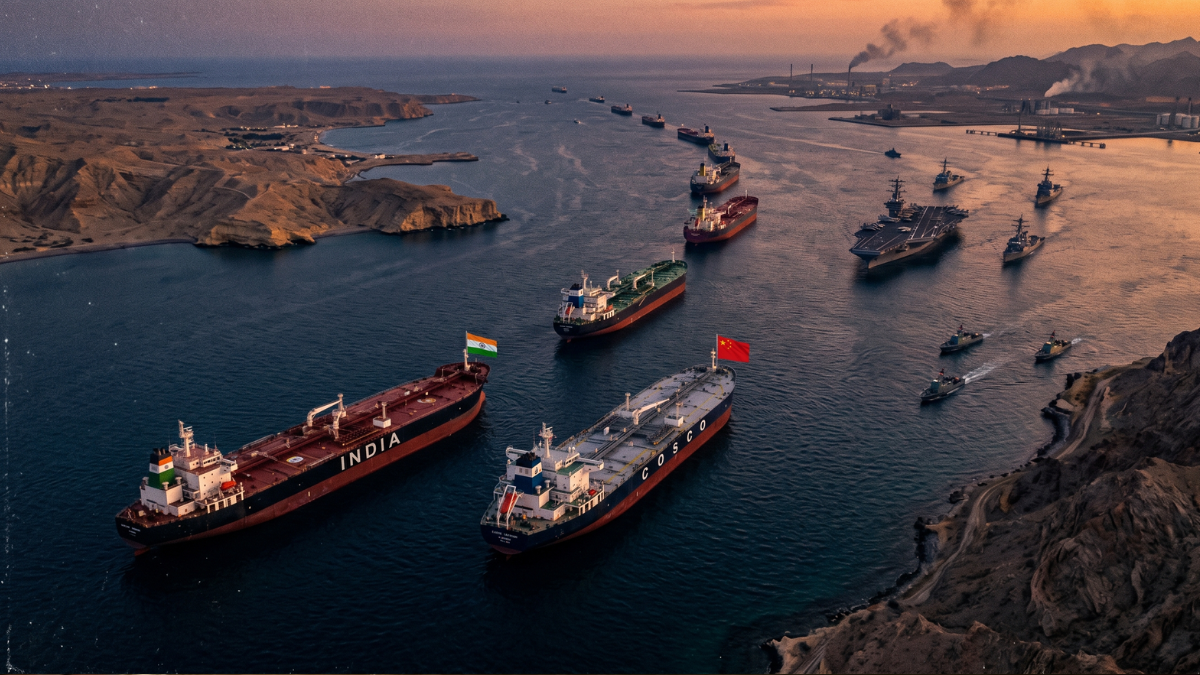
As a result of the collapse of U.S.-Iran peace negotiations in Islamabad, Washington has initiated a naval blockade of the Strait of Hormuz to limit Iran’s oil exports and cost the United States and Iran significant political and economic capital with important partners (China and India). Implementation of the blockade began on April 14, 2026, and applies to ships both entering and leaving Persian Gulf ports, creating choke point disruption in the flow of approximately 20% of the world’s oil and gas.
The overwhelming majority of Iranian crude (approximately 98%) is exported to China, where the Chinese Foreign Ministry has objected to the blockade, labeling it “dangerous and irresponsible,” and has pledged to retaliate against any U.S. tariffs related to the so-called weapons trade with Iran. As a result, a Trump–Xi summit scheduled for mid-May is at risk of cancellation, and may jeopardize the fragile détente between the United States and China. Meanwhile, China is able to absorb the loss of Iranian crude due to its extensive reserve levels of crude oil, which would be sufficient to last more than 120 days of net imports. In addition to that, China will be able to further diversify its sources of crude oil due to the existence of a sufficient reserve base, as well as utilize coal to replace any lost imports from Iranian crude oil.
As the world’s 3rd-largest importer of oil, India has very few buffering options remaining to help support it during this challenging time period. After a 7-year hiatus due to the U.S. sanctions regime against Iran, India has again started buying oil and gas from Iran under a short-term U.S. waiver that will expire shortly. On April 14, Prime Minister Modi had a 40-minute phone call with President Trump, during which both leaders emphasized the importance of reducing tensions between China and India.
According to a Pentagon report earlier today, there has been no record of any ship breaching the blockade imposed by China on India during its first day of existence; therefore, the danger of a naval incident occurring due to miscalculation or errors is greater than ever before. Although the likelihood of major retaliatory action by either Beijing or New Delhi appears very low, the potential for a naval incident resulting in increased tensions between China and India is very real.
This energy crisis is the direct result of the pressure applied by the U.S. on Iran and has created a ripple effect throughout world trade and diplomatic activity.