
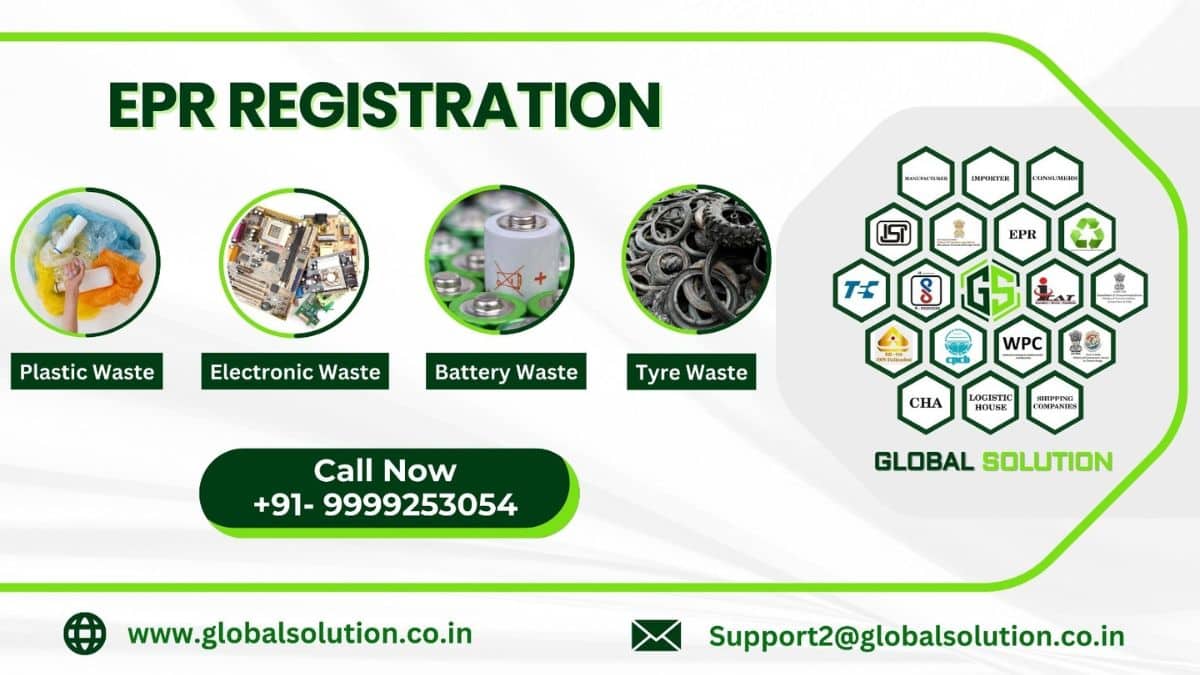
The introduction of Extended Producer Responsibility (EPR) registration has become essential in effectively managing specific waste streams such as e-waste, plastic waste, and battery waste. EPR places the responsibility for waste management on producers, driving them to adopt sustainable practices. This article highlights the significance of EPR registration for each waste stream and the benefits it brings.
E-Waste EPR Registration-
E-waste poses a significant environmental challenge due to its hazardous components and the increasing volume of discarded electronic devices. EPR registration for e-waste ensures that producers of electronic devices and equipment actively participate in the responsible management of their products. By registering for EPR, producers commit to implementing sustainable practices throughout the life cycle of their electronic products, including proper disposal, recycling, and resource recovery. EPR registration helps prevent the improper handling of e-waste, reduces environmental pollution, and promotes the efficient use of resources.
According to the E-Waste (Management) Rules, 2016, manufacturers of Electrical and Electronics (EEE) products/equipment listed in Schedule 1 are responsible for collecting, recycling, and disposing of their final stage EEE product from an authorized dismantler.
Plastic Waste EPR Registration-
Plastic waste has become a global crisis, polluting ecosystems and endangering wildlife. EPR registration for plastic waste aims to shift the responsibility for plastic waste management to producers. By registering for EPR, producers of plastic products and packaging commit to taking measures to reduce plastic waste generation, promote recycling, and explore alternatives such as biodegradable or compostable materials. EPR registration encourages the implementation of sustainable plastic waste management practices, contributing to the reduction of plastic pollution, conserving resources, and fostering a circular economy.
The plastic waste management regulations in 2011 were introduced in order to tackle the problem of plastic waste in a scientific manner, which were later amended in 2022. The Plastic Waste Management Rules 2022 state that entities such as Producers, Importers, Brand-Owners, and Plastic Waste processors are required to acquire an EPR (Extended Producer Responsibility) Certificate for plastic packaging from CPCB (Central Pollution Control Board)
Battery Waste EPR Registration-
Battery waste contains hazardous materials that can harm the environment and human health if not managed properly. EPR registration for battery waste ensures that producers of batteries, particularly those used in electronic devices and vehicles, take responsibility for the entire life cycle of their products. By registering for EPR, battery producers commit to promoting the safe handling, collection, and recycling of batteries. EPR registration helps prevent the improper disposal of batteries, reduces the release of toxic substances into the environment, and encourages the development of more sustainable battery technologies.
It is now mandatory for all battery manufacturers and importers in India to have an EPR registration and EPR certificate in order to comply with the Battery Waste Management Rules, 2022. As outlined in the EPR for battery waste management, the EPR defines a number of functions, including the responsibility for recycling, refurbishing, and bringing batteries back into service, which lies with the producers as well as importers.
Tyre Waste EPR Registration-
Approximately 275,000 tyres are discarded by India every year without any plan for their disposal. There are another 3 million scrap tires imported for recycling. In a case involving the improper management of end-of-life Tires/Waste Tyres (ELTs), the National Green Tribunal (NGT) ordered the Central Pollution Control Board (CPCB) to develop a comprehensive waste management strategy for the disposal of waste tires and their recycling.
The phrase “EPR for Waste Tyres” refers to the duty imposed on tire manufacturers to make sure that used tires are disposed of in a manner that does not affect the environment or human health. The Ministry of Environment, Forests, and Climate Change published the Hazardous and Other Wastes Amendment Rules, 2022, for EPR for Waste Tyre. This amendment, which took effect on July 21, 2022, adds a new Schedule IX that describes how producers, recyclers, and retreaders should utilize and take care of used tires.
Oil Waste EPR Registration-
Considering the benefits of re-refining spent lubricants for the environment and economy, MoEF implemented EPR obligations for companies in the oil and lubricant business on May 2, 2023. The government hopes to advance the circular economy through EPR for Waste Oil, reduce the negative effects of oils and lubricants, support the “polluter pays” idea, and hold manufacturers responsible for a product’s complete lifespan.
The government has given producers, importers, and recyclers enough time to set up a network for collecting and recycling old motor oil and to address the difficulties associated with used oil re-refining. As a result, the aforementioned HWM Rules modifications will take effect on April 1, 2024. The framework has been created to encourage the adoption of environmentally friendly and sustainable products, reduce waste production, improve recycling capabilities, etc.
In conclusion, EPR registration plays a vital role in the responsible management of e-waste, plastic waste, tyre waste, oil waste, and battery waste. By shifting the responsibility to producers, EPR encourages sustainable practices, protects the environment, promotes resource conservation, and contributes to the development of a circular economy. Through EPR registration, producers can actively contribute to a cleaner and healthier future for all.

About Global Solution
One of the service providers in the Specific Liaison work related to Registration/Authorization of Extended Producer Responsibility (EPR) Authorization and BIS (Bureau Indian Standard) Global Solution has been rendering consultancy services since 1997 to importers and exporters in DGFT, DIPP, MOEF, and various authorities from time to time. Our consulting firm provides the best service to customers for hassle-free work-related (Import – Export). Our consultants are knowledgeable and willing to go the extra mile for our customers. We selected the best of the best to consult with our customers.
We excel in all types of license registration, like EPR registration, BIS registration, WPC license, MOEF license, and DGFT. EPR authorization is mandatory for all Indian importers & manufacturers of electrical and electronic goods equipment,plastic packaging, tyre waste management, oil waste management, and battery waste management, according to the Government of India.
Contact Us
Feel free to contact us if you have any questions on any of the given platforms:
+91-9999253054
✉️ support1@globalsolution.co.in, support2@globalsolution.co.in
https://www.globalsolution.co.in/epr-registration-certificate/
A-4, M. P. Enclave, Pitampura, New Delhi – 110034