

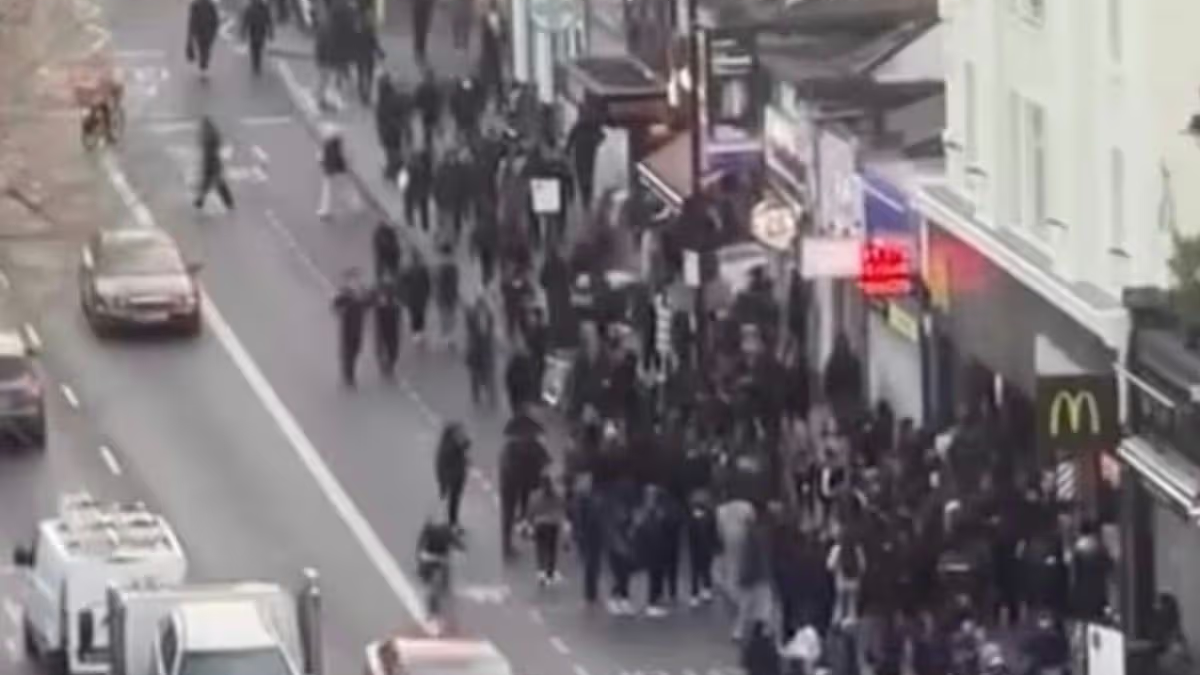
London’s Clapham is bracing for what police describe as a critical 48-hour window in which major disorder is feared, after two consecutive nights of violence, shop looting, and assaults on officers forced the Metropolitan Police to issue an urgent public statement and activate special dispersal powers. Around 100 officers were deployed on Tuesday night alone, five people were assaulted in the chaos, and investigators are now reviewing hours of CCTV and body-worn video to identify those responsible. The force has warned that more arrests are imminent and that anyone returning to the area to join or promote further disorder over the Bank Holiday weekend will face immediate arrest and potential criminal charges. At the heart of the police response is a Section 35 dispersal order, a legal tool that allows officers to exclude individuals from Clapham town centre for up to 48 hours, breaking up groups before they can regroup and escalate.
The legal powers being used
The Section 35 dispersal order is the central legal instrument in the police strategy. Under the Anti-Social Behaviour, Crime and Policing Act 2014, it allows officers to direct people to leave a specified area for up to 48 hours if they believe their presence is likely to contribute to harassment, alarm or distress. Breaching the direction is a criminal offence, punishable by arrest and potential prosecution. This is not a blanket ban on everyone in Clapham, but a targeted power that lets police break up groups, move on agitators and prevent known troublemakers from returning during the highest risk period. The Met has made clear that it is treating the situation as a serious public order threat. Officers are reviewing evidence from Tuesday night’s disorder to identify and charge those involved, while also deploying a highly visible presence to deter repeat offences. The legal message is blunt: participation in disorder will lead to arrest, criminal records and possible custodial sentences, especially for those who assault emergency workers or engage in looting.
Why Clapham is at risk
Clapham has become a flashpoint because it combines a busy nighttime economy, dense housing and a history of spontaneous street disorder. The recent violence appears to have been driven by a mix of opportunistic criminality, group dynamics and social media mobilisation, rather than a single political cause. Shops were targeted, officers were assaulted, and the sense on the streets prompted immediate community alarm. The Bank Holiday weekend adds another layer of risk. Larger crowds, more visitors and extended licensing hours create more opportunities for disorder to reignite if not firmly contained. That is why police are acting preemptively, using dispersal powers before the weekend peaks rather than waiting for violence to escalate again. The fear is not just of more looting, but of a spiral in which each night of disorder encourages copycat behaviour elsewhere in London.
What happens next
The next 48 hours will be the test. If the dispersal order holds and arrests are made quickly, the situation could stabilise before the weekend reaches its peak. If not, the Met may face pressure to extend restrictions, bring in additional public order units or consider further legal measures. For residents and businesses, the immediate advice is clear: avoid the town centre if possible, report any signs of gathering disorder early, and do not engage with agitators. For potential offenders, the message is equally clear: the police are watching, the legal powers are active, and the consequences will be severe. This is no longer a warning. It is an operational reality.